The heat hits you the second you step outside. Not gradually — just instantly. Panama City doesn’t ease you in. It grabs you by the collar and says, here we go.
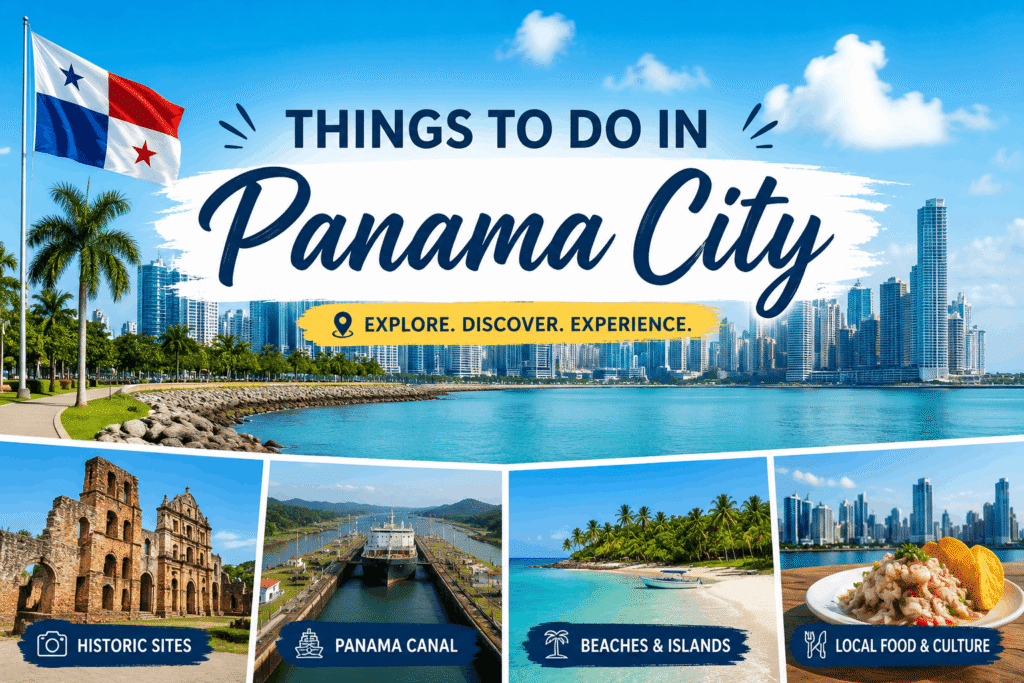
And once you get past that first wall of humidity, you start to realize just how much this place has going on. The things to do in Panama City range from ancient ruins and rainforest boat tours to rooftop bars and one of the most famous engineering feats on the planet. All of it packed into one city that most people fly through without stopping.
That’s a mistake. A big one.
Casco Viejo at Night Is a Different World
Start here. Everyone says it and everyone is right.
Casco Viejo — also called Casco Antiguo or just Casco — is the old colonial quarter of Panama City. UNESCO World Heritage Site. Cobblestone streets, restored Spanish architecture, and rooftop bars that look out over the Pacific at sunset. It’s the kind of place that feels like it belongs in a travel magazine but somehow still feels real when you’re standing in it.
Read: Orlando Attractions
Come in the evening. The daytime heat in this city is serious, and walking around Casco at noon in direct sun is genuinely rough. But around 5pm the light softens, the streets fill up, and the whole neighborhood comes alive.
The rooftop bar scene up here is legitimately good. Views of the old town, cold drinks, and that golden hour light bouncing off the water. You could spend your whole first night just moving between a few of them and not feel like you wasted anything.
A few things to know:
- The historic churches now charge a small entry fee starting from late 2025 — worth it for Iglesia San José alone, with its legendary gold altar
- Get around on the electric scooters if your legs give out — they’re everywhere
- Stick to the restored areas at night, which are well-lit and heavily visited
The Panama Canal Is Not Just a Photo Stop
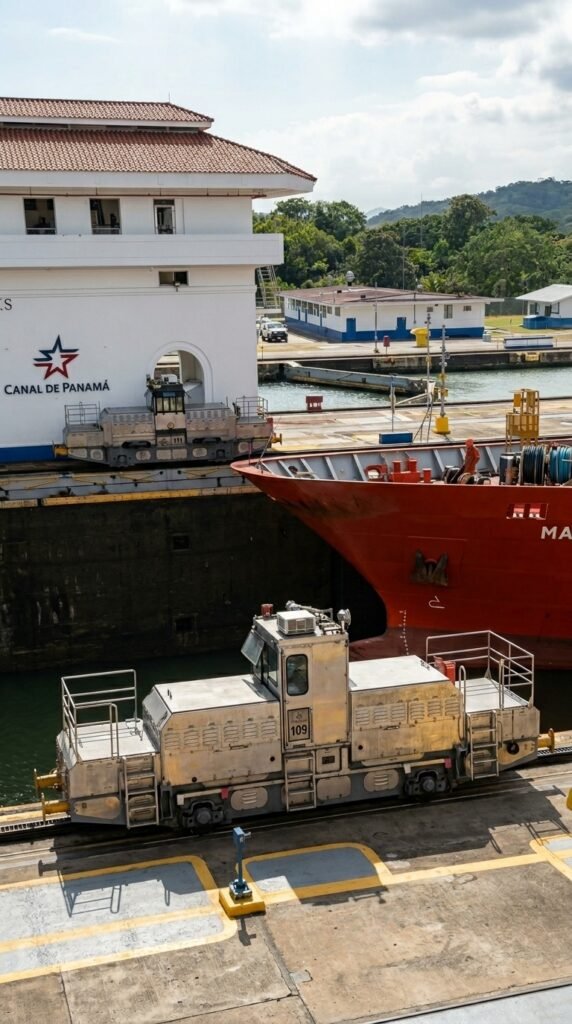
I thought it might be underwhelming. One of those things you feel like you have to see rather than actually want to see.
Wrong.
Standing on the observation deck at Miraflores watching a container ship the size of a city block slide through a lock — slowly, impossibly close — is genuinely something. The scale of it doesn’t compute at first. These ships pay anywhere from tens of thousands to over a hundred thousand dollars just to pass through. And you watch it happen from maybe 30 meters away.
Entry for non-resident adults runs in the range of $17 to $20 depending on the ticket package you choose, which includes the observation decks and the IMAX film narrated by Morgan Freeman. The documentary covers the full history of the canal — the French attempt that killed 20,000 men, Teddy Roosevelt’s engineers stepping in, and the lock system that’s been running ever since.
Arrive between 9am and 11am if you want to see ships actually moving through. Check the vessel schedule online the night before — some visitors show up and wait an hour without seeing a single transit.
The visitor center at Miraflores is also genuinely well-done. Four exhibition halls, good AC, a restaurant with canal views, and a gift shop if you need a Panama Canal fridge magnet for someone back home.
Monkey Island Surprised Me More Than Anything Else
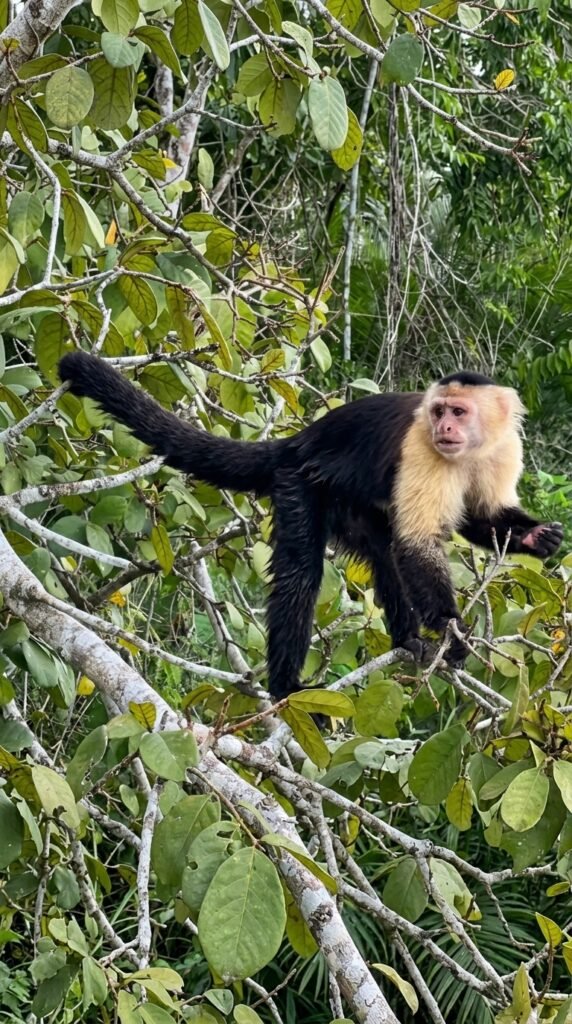
Out in Gamboa, about 45 minutes from the city center, you board a small boat and head out onto Gatun Lake inside the Panama Canal watershed.
The boat ride alone is worth it. You pass enormous container ships crossing from one ocean to the other while you’re sitting in a 10-person wooden vessel. The contrast is almost funny.
Then you reach the islands. And the monkeys come to you.
White-faced capuchins, howler monkeys, Geoffroy’s tamarins — three different species, all wild, all completely unbothered by boats full of people holding cameras.
The small ones especially will climb right down to the edge of the water. A few curious ones will board the boat if you let them.
Tour prices vary depending on the operator and group size, typically landing somewhere in the $70–$100 per person range for a half-day private tour from Panama City. Shared group tours come in lower. Morning departures are strongly recommended — by afternoon the monkeys have already been fed by multiple tour boats and tend to disappear into the trees.
Bring sunscreen. The lake has no shade.
You’ll also likely spot crocodiles along the shoreline, toucans in the canopy, and if you’re lucky, a sloth hanging somewhere in the branches above the water. This is one of the most biodiverse stretches of the Panama Canal zone and it shows.
A few things to know:
- Book in advance — good operators fill up fast, especially on weekends
- Morning departures give you the most active wildlife
- Combine it with the Gamboa Rainforest Reserve if you want a full day out there
The Amador Causeway at Sunset — Simple But Solid
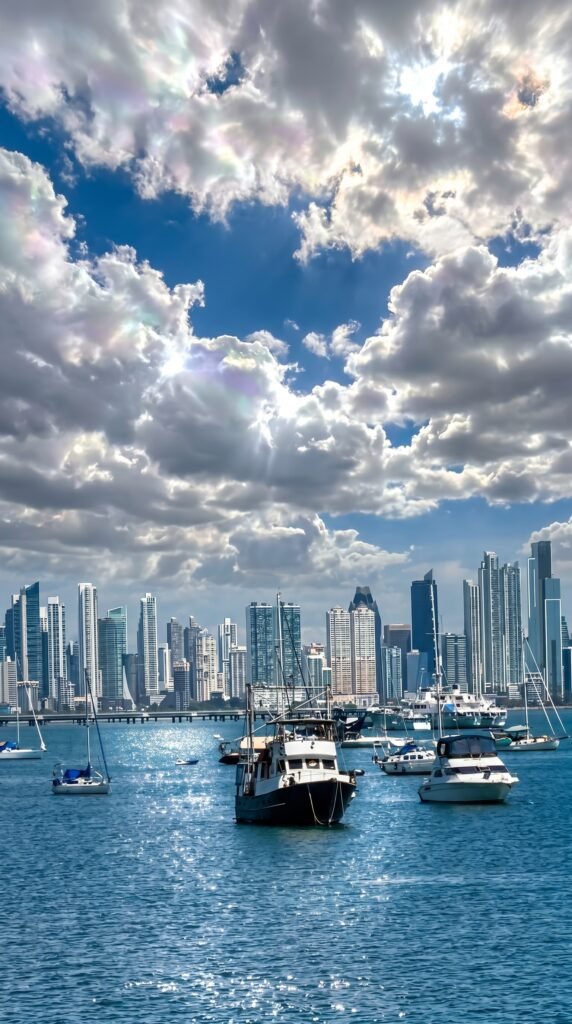
This one doesn’t need a big buildup. The Amador Causeway is a strip of road connecting four small Pacific islands — Naos, Culebra, Perico, and Flamenco — and it offers some of the cleanest views of the Panama City skyline you’ll find anywhere.
You can walk it, rent a bike and ride it, or just drive out and find a spot to sit.
Bike rentals along the causeway run around $3 to $5 per hour depending on the shop. A few operators like Burke Bikes and Bicicletas Moses have been running out here for years. Electric bikes are available too if the heat is winning.
Was it the most thrilling thing I did? No. But arriving around 5:30pm, riding toward the end of the causeway with the city skyline to one side and ships entering the canal mouth on the other — that’s a pretty good evening.
There are restaurants out here ranging from solid to overpriced. Bucaneros is the most well-known. Grab a drink, watch the sun go down, then head to Casco for the rest of the night.
The Bio Museum is also right at the entrance to the causeway — the only Frank Gehry-designed building in all of Latin America. That rainbow-colored structure looks like it landed from somewhere else entirely. More on that below.
The Bio Museum Deserves More Credit Than It Gets
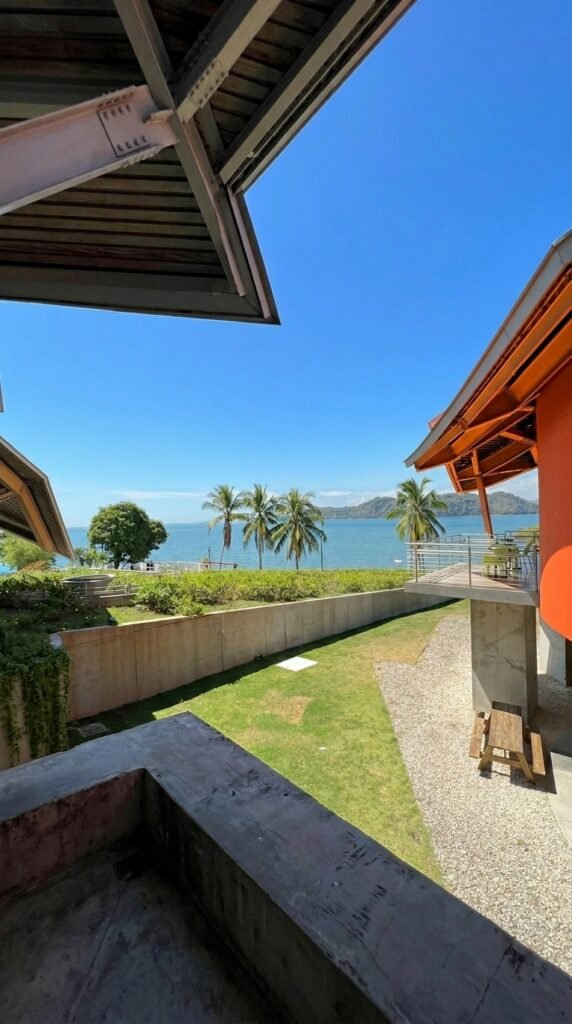
Officially called the Biomuseo, this place sits at the start of the Amador Causeway and gets overlooked by people who assume it’s just another natural history museum.
It’s not.
The building itself — designed by Frank Gehry, his only project in Latin America — is a visual event before you even walk inside. Panels of saturated color, angular shapes colliding from every direction. It genuinely stops people on the sidewalk.
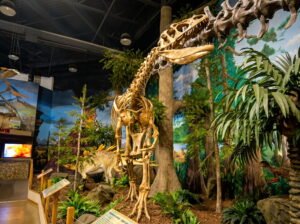
Inside, eight galleries walk you through Panama’s geological formation, how the isthmus rose from the ocean three million years ago, how it connected North and South America and triggered one of the biggest ecological events in the planet’s history. The Panamarama experience — a three-level immersive film surrounded by screens on the floor, walls, and ceiling — is the standout exhibit, especially for anyone visiting with kids.
Entry for non-resident adults currently sits around $20, with reduced rates for seniors and children. The museum closes early (around 3pm last admission), so don’t leave this one for late afternoon. Check their hours before you go.
Give it 90 minutes to two hours. The botanical park outside adds more if you want to keep going.
If You Only Have One Morning for History, Go to Panama Vieja
The Panama La Vieja ruins — the oldest European settlement on the Pacific coast of the Americas, founded around 1510 — are sitting on the eastern edge of the city, mostly ignored by people rushing between the canal and Casco.
That’s a shame.
Walking through what’s left of the original city is a different kind of experience than most Panama City attractions. These aren’t reconstructed ruins. They’re what actually survived — stone towers, crumbling walls, the old cathedral — rising out of a coastal landscape with the modern city skyline visible in the distance.
Captain Morgan raided and burned this place in the 1600s. That detail alone makes it worth a visit.
The on-site museum is air-conditioned and well-organized, covering the history from the original settlement through the sacking and eventual abandonment. Entry fees are low — generally in the range of a few dollars — and the museum is included.
Go in the morning before the heat builds. The ruins themselves are mostly outdoors and the sun out here is relentless by midday.
Panama City Has a Jungle in the Middle of It
Parque Natural Metropolitano — Metropolitan Natural Park — is 232 hectares of actual tropical forest inside Panama City’s city limits. Not a manicured park. A real forest with trails, wildlife, and no real tourist infrastructure beyond the entrance gate.
Entry for foreign visitors is in the $4 to $5 range. Cheap.
The trails wind through dense canopy and range from easy to moderately steep. The main lookout — a 20-minute walk up — gives you a framed view of the Panama City skyline through the treetops. It’s one of those surprisingly good moments you don’t fully expect.
Wildlife here includes capybaras, sloths, coatis, dozens of bird species, iguanas, and more. You won’t necessarily see all of them. I spotted a capybara near the lower trail and a few birds I couldn’t identify. That was it. But the forest itself — the density, the sound, the air — is worth the entry on its own.
Go early. By 10am the heat inside the tree cover is already building and the animals have retreated.
Mercado de Mariscos — The Fish Market That’s Actually an Experience
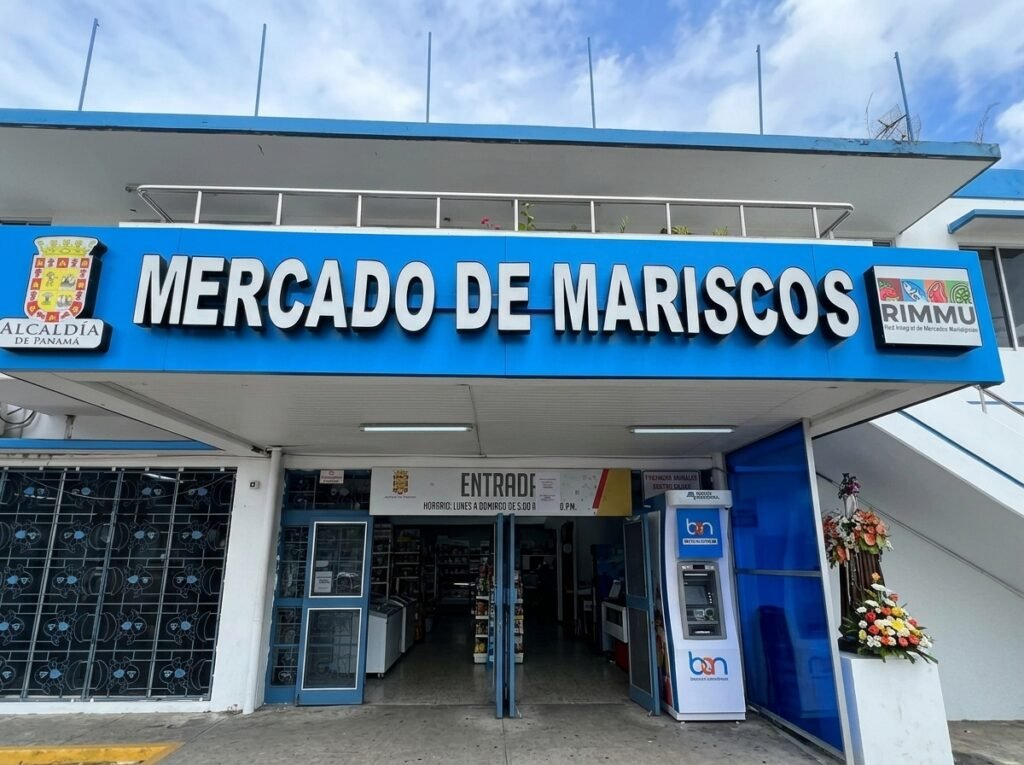
Right on the waterfront near Casco, the Mercado de Mariscos is Panama City’s seafood market. During the day it’s a working market where local fishermen bring in their catch. At night it becomes something closer to a food destination.
Around 27 restaurants operating inside one building. Ceviche everywhere — and the ceviche here is different from anything you’ll find in a hotel restaurant. Fresher, simpler, served in a plastic cup with crackers. The corvina ceviche especially is the move.
You can also buy fresh fish directly from the market floor and have one of the restaurants cook it for you. It’s loud, it smells like the ocean, the floors are wet, and none of that is a bad thing.
Go at night. The energy is completely different after dark. Locals and tourists side by side, seafood dishes coming out of every window, cold beers, and the water right outside. It’s one of the most genuinely Panama City things you can do.
Things to Do in Panama City Beyond the Main Circuit
Most visitors cover the canal, Casco, and the causeway then call it done. But there are a few other things worth knowing about.
Avenida Balboa is the main coastal boulevard running through the financial district. The skyline along here — glass towers pressing right up against the Pacific — looks like Singapore dropped into Central America. Walk it or drive it. The Cinta Costera waterfront promenade runs alongside it and is a solid spot for an early morning or evening stroll.
The Albrook Mall is the largest shopping mall in Central America. If you need to replace something you lost, grab electronics, or just spend an afternoon in solid air conditioning, it delivers. It’s attached to a large Marriott and sits next to the Albrook domestic airport, so it’s useful if you’re catching a flight to Bocas del Toro.
City Sightseeing Panama runs a hop-on hop-off bus that covers the major landmarks. Prices run around $30 for adults and $20 for children, and it includes a walking tour of the canal museum and Casco Viejo. If it’s your first day and you want orientation before going deeper, this is actually a solid way to spend a morning.
The casinos inside the major hotels — Sortis, Hilton, JW Marriott, Hard Rock — are popular at night. Not for everyone, but they’re there if that’s your thing.
Day Trips That Are Genuinely Worth the Drive
San Blas Islands — a 3 to 4 hour drive to the Caribbean side, or a one-hour flight. Home to the Guna indigenous people who have maintained their own autonomous territory here. The islands are small, the water is absurdly clear, and the pace is as slow as it gets. Ferry tickets typically run around $20 each way. This is a full day commitment but one of the most memorable things in Panama.
Bocas del Toro — fly from Albrook airport, about an hour. Caribbean archipelago with a completely different energy from Panama City. Relaxed, colorful, great for snorkeling and walking around the main town. Better accessed through Albrook than through the main international airport.
Colón and Fort San Lorenzo — about an hour and fifteen minutes away. Colón is a port city with a complicated reputation, but Fort San Lorenzo — a Spanish colonial fortress at the mouth of the Chagres River — is genuinely impressive and largely uncrowded. Go with a guide or as part of a tour if it’s your first visit.
A Few Honest Notes About Panama City Itself
The financial district — where most of the international hotels sit — is well-policed and comfortable to walk around at any hour. Casco Viejo at night in the restored sections is the same. Outside those zones, especially after dark, be more deliberate about where you’re going. It’s not a dangerous city by regional standards, but it’s still a city.
The heat is real. Carry water everywhere. A dry shirt in your bag isn’t a bad idea either. Humidity here is not seasonal — it’s constant.
Where to stay breaks down simply. Casco Viejo if you want colonial character and walkable nightlife. The financial district if you want modern hotels, easy taxis, and proximity to Avenida Balboa. The Albrook area near the mall if you’re on a tighter budget and comfortable using the metro system.
The metro, by the way, is clean, cheap, and well-connected. Use it.
The Food Situation Is Better Than Expected
Panama City eats well. The ceviche is the standout — corvina, octopus, shrimp, done simply and done right. Empanadas everywhere, yuca prepared a dozen different ways, and a serious international food scene layered underneath all of it.
Japanese, Korean, Chinese, Mexican, Italian — the financial district in particular has a surprisingly diverse restaurant landscape. If you want something beyond Panamanian food for a night, you’ll find it without any effort.
The fish market ceviche and the tiny café empanadas at the Bio Museum were two of the best things I ate in the city. Neither cost much. Neither was fancy. Both were exactly right.