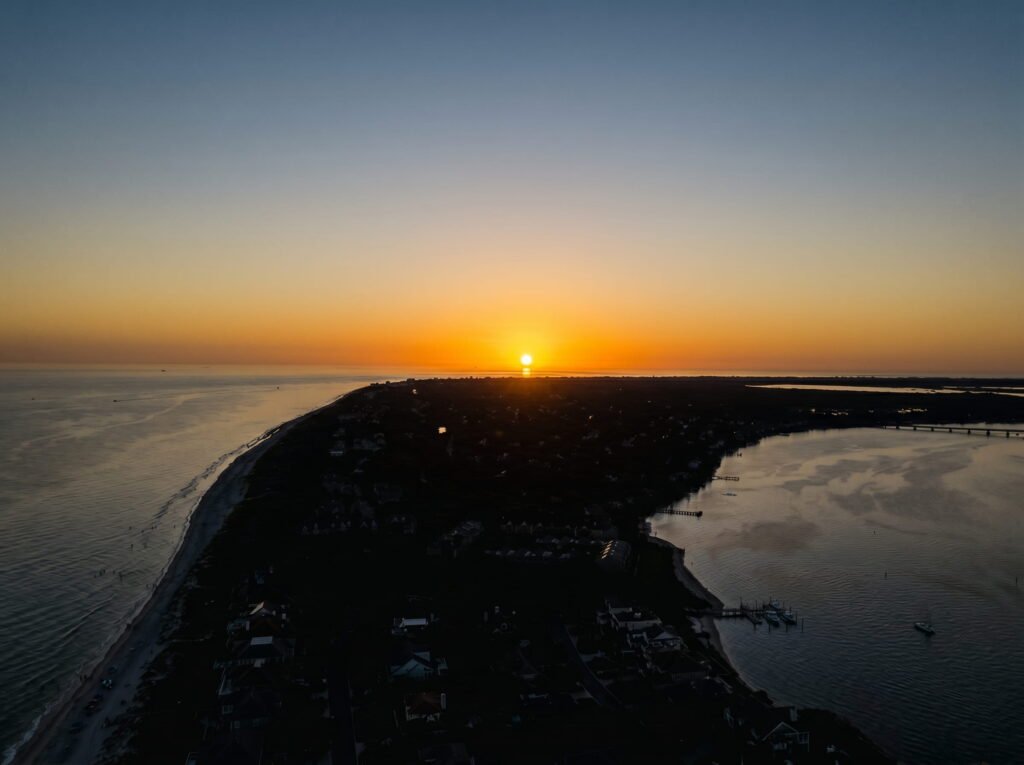
The sand was still stuck between my toes when I realized I’d been to fourteen different “Florida” beaches in one trip and somehow still wanted more.
That’s the thing about the beaches in Florida — you think you know what you’re getting into, and then the Gulf hits you with water so clear it looks fake, or a random Tuesday afternoon turns into a treasure hunt for 300-year-old Spanish shipwreck coins, and suddenly you’re not ready to leave.
I’m going to tell you exactly what I found, what it cost, what went wrong, and what genuinely floored me. In order. Starting from the ones that were solid and working up to the one that stopped me in my tracks.
14. Vero Beach Has a Secret and the Locals Love That You Don’t Know It
South Beach Park in Vero Beach is completely free. No parking fees. No entry gate. Just pull up and walk in. That alone made me suspicious — nothing good in Florida is ever free — but I was wrong to doubt it.
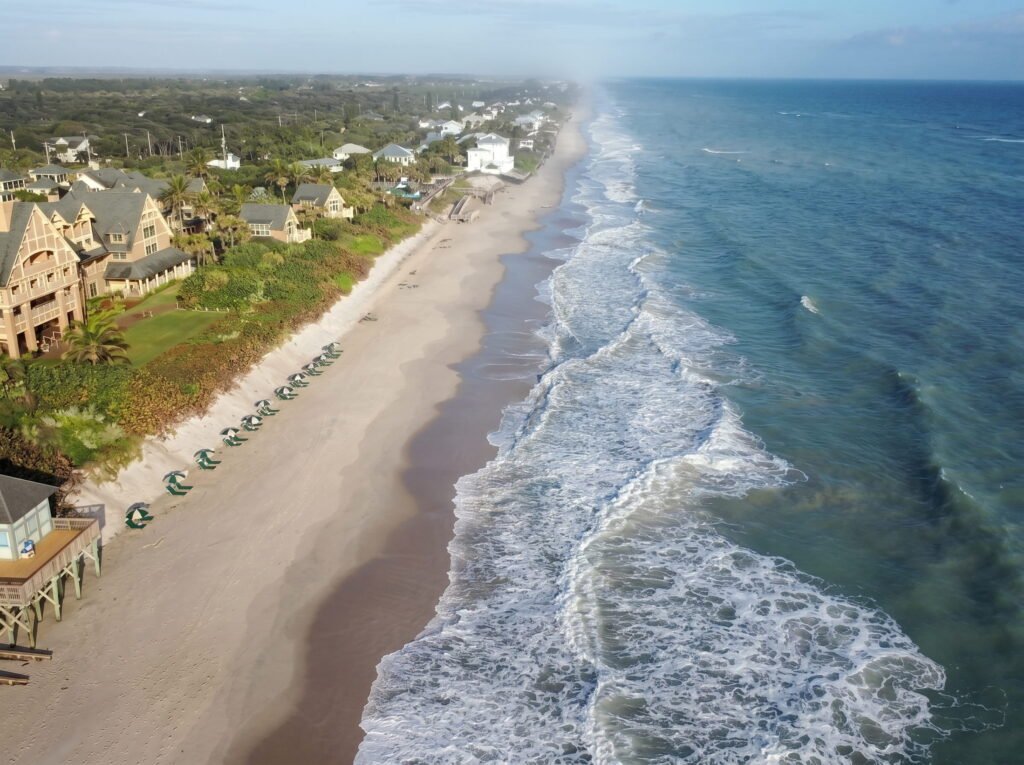
The beach sits along what they call the Treasure Coast, which sounds like a marketing gimmick until you learn it’s actually named after a fleet of 18th-century Spanish galleons that went down in a hurricane just offshore in 1715.
People still find coins and artifacts washing up here. I walked the waterline for about 45 minutes and found exactly zero treasure, which was fine, but the idea of it made every step feel a little more interesting.
The waves are calm. The sand is clean. There’s a pickup volleyball game most mornings if you’re the type. And if you head north, the Pelican Island “National Wildlife Refuge” is worth the short drive — it was actually the first federal bird reservation in the country, established by Teddy Roosevelt in 1903.
A few things to know:
- Entry and parking are completely free
- Lifeguards are on duty from 9:10 AM to 4:50 PM
- Beach wheelchairs are available at no charge — call ahead to reserve one
It’s not flashy. It doesn’t try to be. That’s exactly why I liked it.
13. Miramar Beach Made Me Rethink the Panhandle Entirely
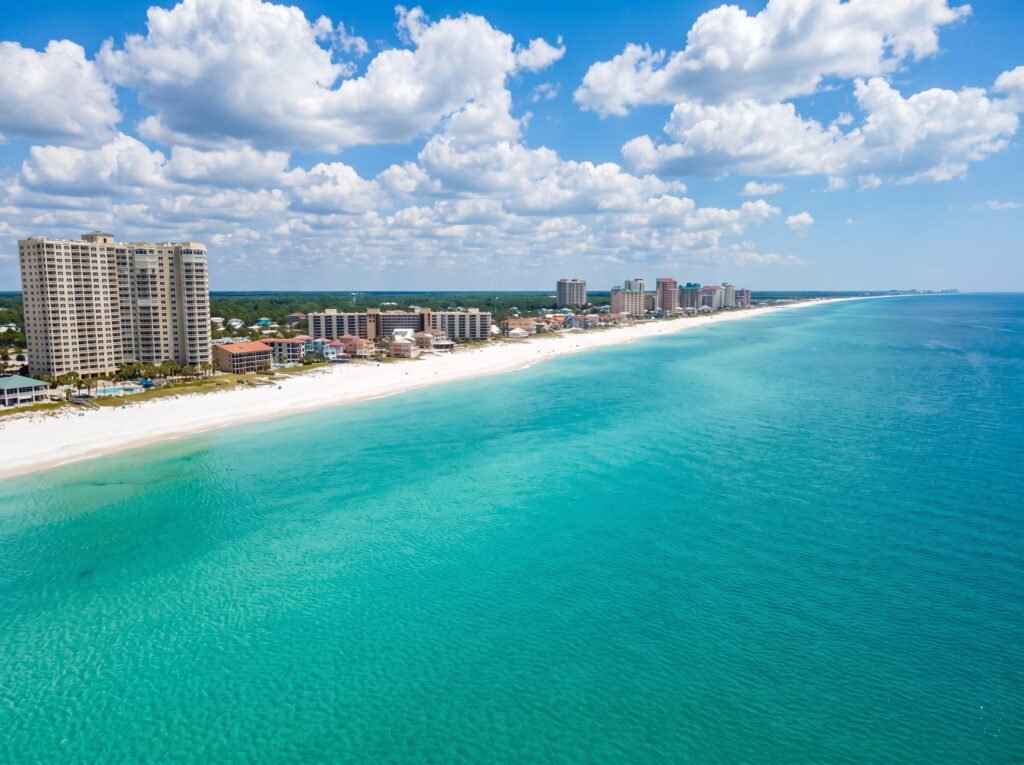
The sand here is a different kind of white. Not just light-colored sand, but genuinely powdery, almost sugary underfoot in a way that feels different from the Atlantic side. It’s quartz, technically, washed down from the Appalachians over thousands of years.
“The Gulf” water next to it is so calm and green it looks like something from the Caribbean.
We spent a morning just posted up in lounge chairs doing absolutely nothing useful. Then wandered into the South Walton neighborhood where there are these small winding beach roads lined with old sea oaks and little antique shops tucked in between vacation rentals.
We found a hand-painted ceramic bowl for $14 and ate lunch at a place with no sign out front that turned out to be extraordinary.
12. Deerfield Beach Is Way More Fun Than the Name Suggests
Okay, “Deerfield Beach, Broward County” is not a phrase that makes you want to book flights. If you have kids, or you’re traveling with a group that has wildly different energy levels, this stretch of Broward County coastline might be the most practical stop on this entire list.
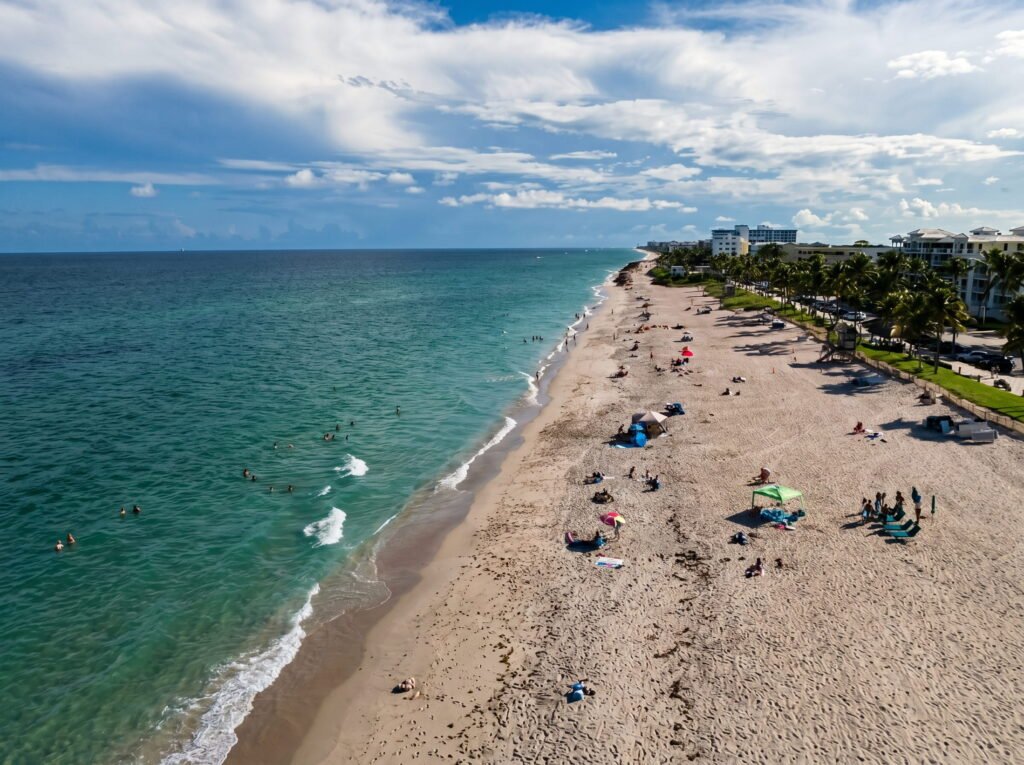
The beach itself is clean, calm, and genuinely family-friendly in the truest sense. Not in that sanitized, everything-is-padded kind of way, but in the way that people actually seem to be enjoying themselves here.
But the real draw is “Quiet Waters Park“, right next door. On weekdays entry is completely free, and on weekends the vehicle fee is $3 for up to eight people — which is almost nothing. Inside: Splash Adventure, an interactive water playground with slides, tunnels, water curtains, and a giant bucket that dumps on everyone below.
Cable skiing on the lake. Mountain bike trails. It’s a lot packed into one park.
Between the beach and a few hours in the water park, the kids were gone. Completely occupied. We sat in actual peace and ate sandwiches. Honestly a win.
11. Fort Zach in Key West Is the Best $6 You’ll Spend Down There
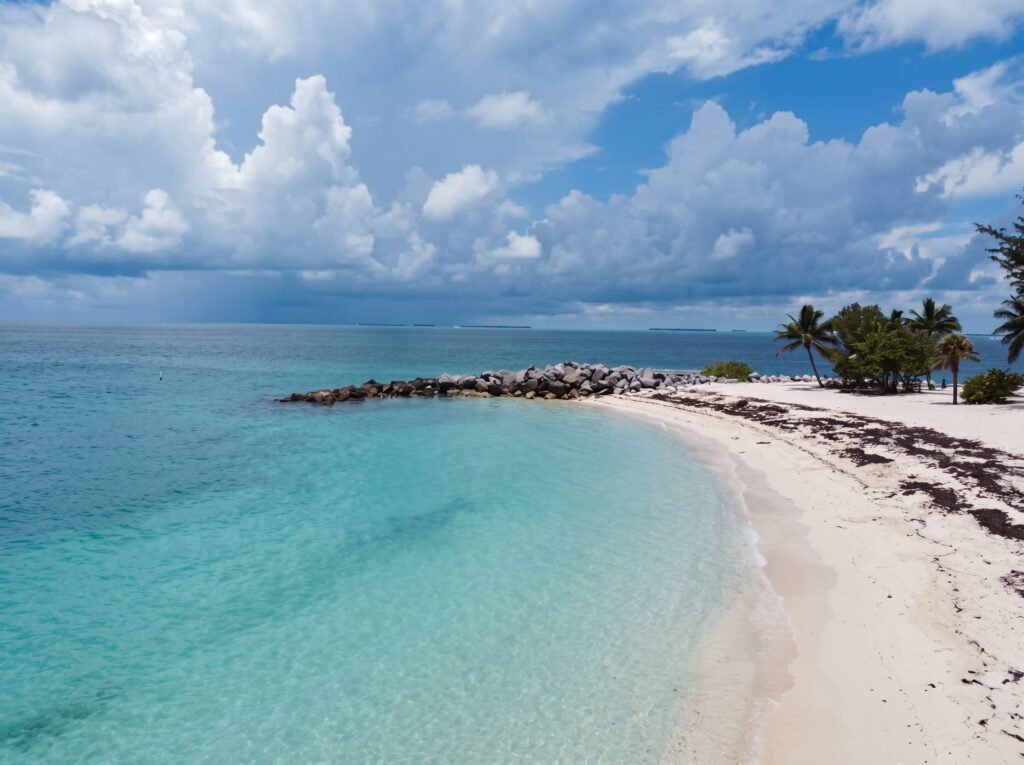
Key West has two kinds of visitors. The ones who come to drink on Duval Street, and the ones who actually explore the island. “Fort Zachary Taylor Historic State Park” is firmly in that second category, and a shocking number of people drive right past the unmarked turn-off without ever finding it.
The entry fee is $6 per vehicle for up to eight people, plus a 50-cent Monroe County surcharge per person. If you bike in — and I highly recommend it — you’re paying just $2.50 each. Between the two of us, we got in for about $8 total. In Key West, that’s basically free.
The beach here isn’t your standard sandy Florida shoreline. It’s rocky limestone — Key West’s actual geological base — so water shoes are non-negotiable. Pack them. But get past that and the water is incredibly calm, the snorkeling is some of the best I found in the Keys, and the reef just offshore has knobby brain coral, starlet coral, and an absurd number of fish moving through it.
The fort itself is a Civil War-era structure that actually saw action in both that war and the Spanish-American War. The guided tours run daily from 9:30 AM to 5 PM. I thought it would be a quick walk-through. We spent almost two hours in there.
A few things to know:
- The fort closes at 5 PM but the park stays open until sunset
- Water shoes are essential — the rocky beach entry will shred your feet otherwise
- The park is alcohol-free, which felt like a meaningful statement given its location
10. Bowman’s Beach on Sanibel Is Legitimately One of a Kind
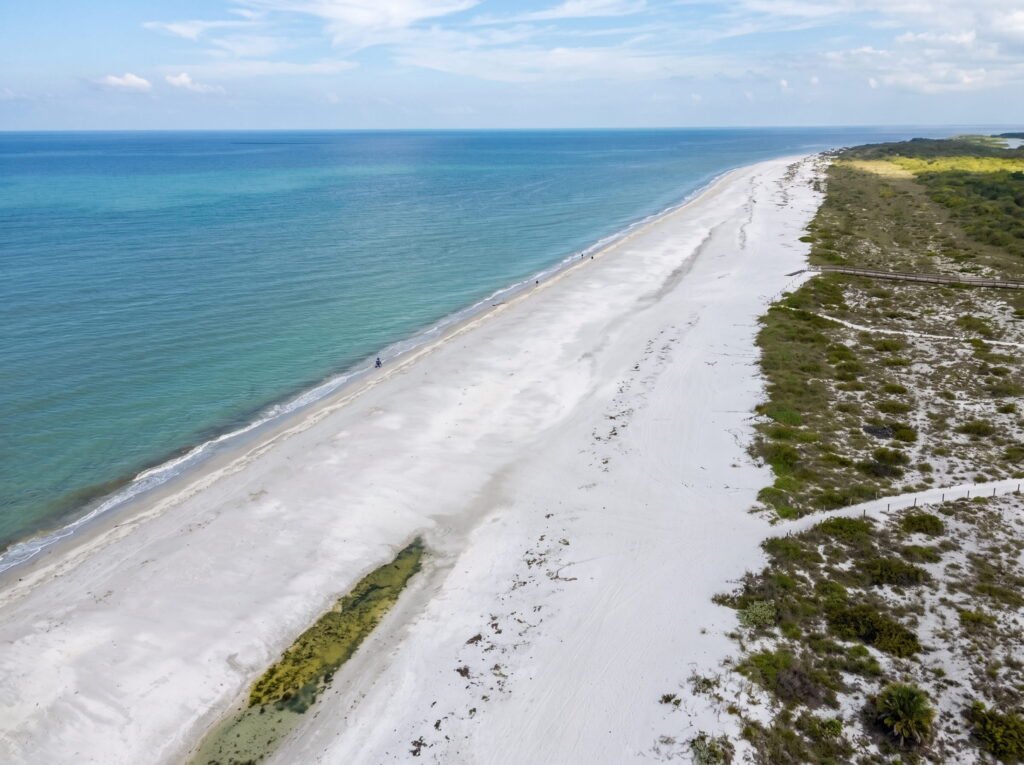
The walk from the parking lot to the actual shoreline is a quarter mile. There’s a footbridge over Clam Bayou in the middle of it where — both times I crossed it — there was an alligator sunning itself in the shallows below.
Parking is $5 per hour, which adds up if you’re there for a full day.
The beach itself is wide and quiet. The water has more current than the calmer Gulf spots further north, which keeps it cool. On a Saturday morning in peak season the parking lot fills by 8 AM, so get there early or bring a bike and skip the queue entirely.
Was it worth driving to the western end of the island for? Yes. Absolutely without question.
9. Delray Beach Is a Whole Afternoon, Not Just a Beach
Most people treat Delray Beach as a place to swim. I’d argue it’s better treated as a whole afternoon with the beach as the anchor point.
The sand is wide and lined with coconut palms. The water is clear enough that you can see your feet in chest-deep ocean. That part is exactly what you’d expect. But then a few blocks back from the shore is Atlantic Avenue, which runs straight through downtown and is full of actual local shops — not just flip-flop vendors and coconut rum stores.
Walk the “Pineapple Grove Arts District” while you’re there. It’s a few blocks of murals, galleries, and small restaurants that have nothing to do with beach tourism. There’s a mural I saw there — a massive painted woman looking out from a two-story building — that I keep thinking about.
The beach itself has free public access. Street parking fills fast. Get there before 10 AM or budget time to loop around a few blocks to find something.
8. Juno Beach Is Quieter Than It Should Be
Most people blow past Juno Beach on their way to Jupiter or West Palm Beach, and that’s a mistake. The park is well-maintained, the water is calm and clear, and the whole place has a slower pace that’s genuinely relaxing rather than just empty.
What really surprised me here was the Loggerhead Marinelife Center. I’d planned to stay maybe 20 minutes and ended up spending almost two hours. It’s a sea turtle rehabilitation facility right on the beach where you can watch injured sea turtles recovering in pools before they’re released back to the ocean. The staff there knew everything and actually wanted to tell you about it. The center is donation-based — we dropped $20 in the box and it felt well-earned.
A short drive from there is John D. MacArthur Beach State Park, which is one of the more underrated coastal parks in South Florida and worth half a day on its own if you have the time.
Pack a picnic. Spend the morning swimming. Walk to the turtle center after. That’s a full day right there.
7. Lowdermilk Park in Naples — Quietly Perfect
Naples has a reputation. Millionaires. Golf courses. Fancy restaurants where you need a reservation. That reputation is not wrong. But Lowdermilk Park is where regular people actually go to spend the day.
The beach is exactly what the Gulf of Mexico coastline does best: white sand, rolling warm waves, shallow entry, pelicans drifting overhead. There’s a playground, covered picnic pavilions, a volleyball net, restrooms, and outdoor showers. Parking is metered.
A few blocks away is Old Naples, where Millionaires’ Row runs along Gulf Shore Boulevard with some of the most spectacular private homes I’ve seen anywhere. Walking that stretch costs nothing and is genuinely worth doing — not in an envious way, just as pure spectacle.
Lowdermilk isn’t going to blow your mind. But it’s the kind of beach that you come home from feeling rested rather than overstimulated, which is actually harder to find than you’d think.
6. Lummus Park Beach, Miami Beach — The People-Watching Is Part of the Experience
This is not a relaxing beach. I want to be upfront about that.
Lummus Park sits in the heart of South Beach’s Art Deco Historic District, which means on any given morning there are volleyball players working harder than I’ve worked in years, rollerbladers doing things I genuinely didn’t know rollerbladers could still do, photographers setting up shoots, and people arriving already dressed like they’re going somewhere important.
The park itself has a wide paved promenade and a grassy shaded area that’s perfect if you need to get out of the direct sun. The beach beyond is beautiful — genuinely beautiful — but the social energy of this place is the actual attraction.
We walked the promenade for about a mile, turned around, and spotted what I’m fairly certain was a film crew setting up on a side street. Someone next to us said they’d seen the same thing three times that week.
The 1980s redesign of the area gave it that pastel-and-neon aesthetic that’s still somehow both dated and timeless. Worth an afternoon, definitely. But don’t come here looking for quiet.
5. Cocoa Beach — I Got Up at 6 AM for This and I’d Do It Again
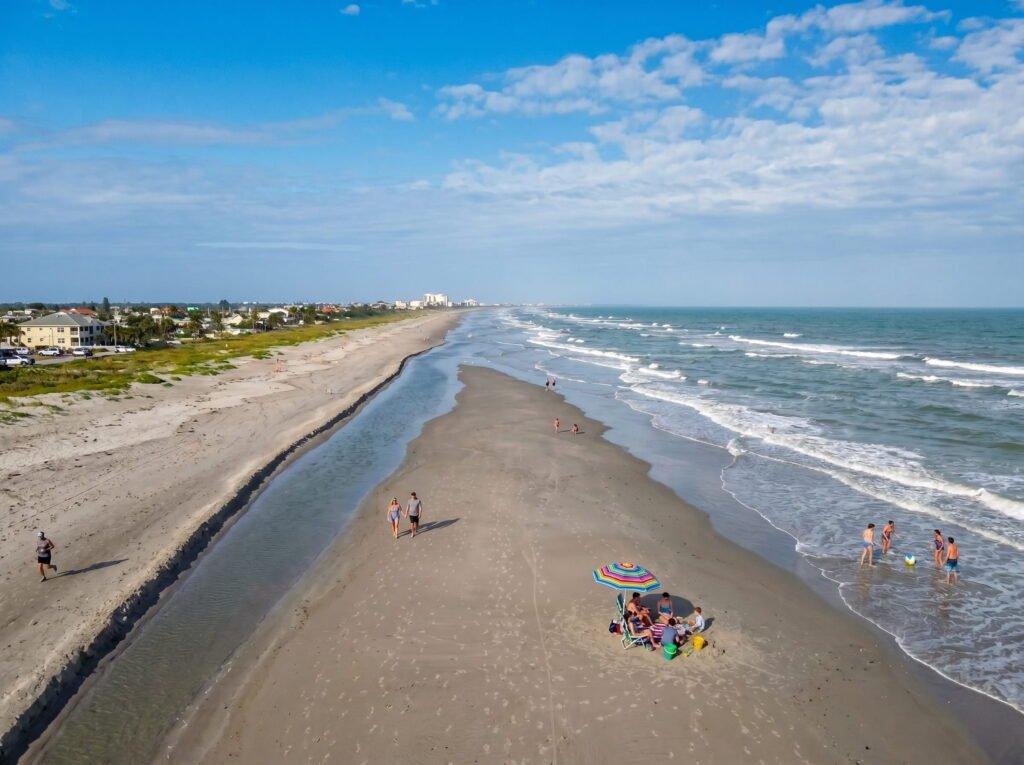
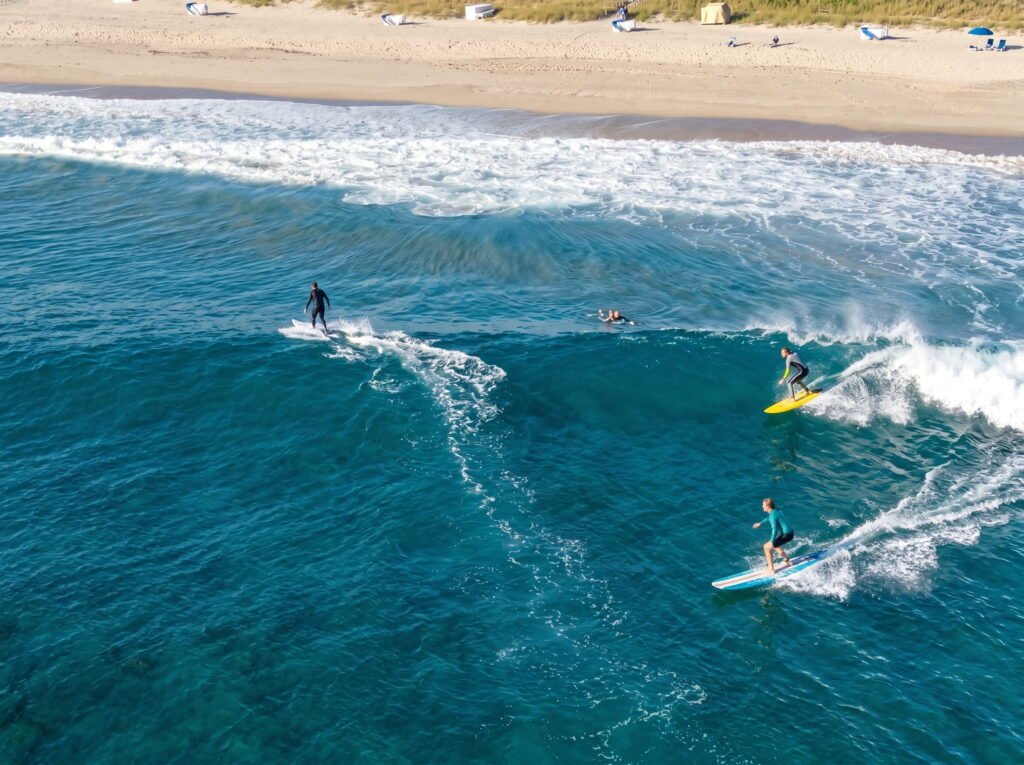
Cocoa Beach has been the East Coast surf capital since the 1960s. Kelly Slater — eleven world championships, Cocoa Beach local — grew up a few miles from the pier. That history is everywhere here: in the old surf shop signs, in the way the locals talk about specific breaks, in the lineup waiting for sets at the pier.
I took a two-hour lesson at one of the local surf schools operating along the beach. Prices run around $75 per person for a group session. I was up and riding — barely, unsteadily, but actually riding — within the first 30 minutes. That surprised me. The instructors are good. Patient. And the waves at Cocoa Beach are forgiving enough for beginners while still being real surf.
After the lesson, the school let us keep the boards for the rest of the morning. By noon I’d eaten something from a waterfront bar and was watching actual surfers work the pier break with an appreciation I didn’t have before.
A few things to know:
- Group surf lessons start around $75 per person
- Private lessons run higher — usually $150+ for a two-hour session
- The pier area gets crowded by midday on weekends; mornings are better for everything
4. Crandon Park, Key Biscayne — The One I Kept Telling People About
Okay, here’s the thing about Crandon Park. On paper it sounds like a nice beach with good snorkeling. That’s true but wildly underselling it.
The mangrove reef just offshore is FOSSILIZED. Like, actual petrified ancient mangrove root structure that has become a reef habitat over thousands of years. I put my head underwater for the first time and genuinely stopped moving because I wasn’t expecting what I was looking at. The colors, the quantity of fish, the absolute strangeness of swimming over something that was once a forest — it doesn’t compute at first.
And then on top of that, Crandon is one of the top bird-watching spots in the entire Miami metro area. Herons working the shoreline, ospreys circling overhead, hawks cutting through the tree line, songbirds everywhere in the interior. We saw a great blue heron standing about six feet from our towels for maybe 15 minutes without moving. Just there.
The Marjory Stoneman Douglas Biscayne Nature Center at the northern end of the park is free to visit and offers guided snorkel tours for anyone who wants more structure. Worth it if you can get a spot.
Vehicle entry into the park runs around $8 on weekends. The parking lot is big but fills early in the summer months.
3. South Beach, Miami Beach — No, But Actually, Yes
I know. South Beach is the obvious one. Everyone goes. Everyone says they’ve “done” South Beach. I thought I’d already done it too.
Then I showed up before sunrise.
There is maybe a 25-minute window around 6:15 AM in summer where the sky over the Atlantic does something with pink and gold and the reflection off the water that I have no adequate words for.
The Art Deco buildings along Ocean Drive caught the light in a way that made them look less like restaurants and more like architecture worth caring about. And for those 25 minutes, the beach was almost empty.
By 8 AM that window was closed and the energy completely changed.
During the day, South Beach is everything the reputation says — crowded, loud, fashionable in an aggressive way, endlessly entertaining if you’re in the right mood for it. South Pointe Park at the southern tip has better views and slightly less intensity if you need a break.
Joe’s Stone Crab on Washington Avenue has been an institution since 1913. A full crab dinner for two runs well north of $150, but four large claws are around $62 and that’s honestly a perfect lunch order. The mustard sauce they serve with it has been made the same way for over 100 years. Eat it. Don’t overthink it.
2. Siesta Key — The Sand Doesn’t Feel Real Until You’re Standing In It
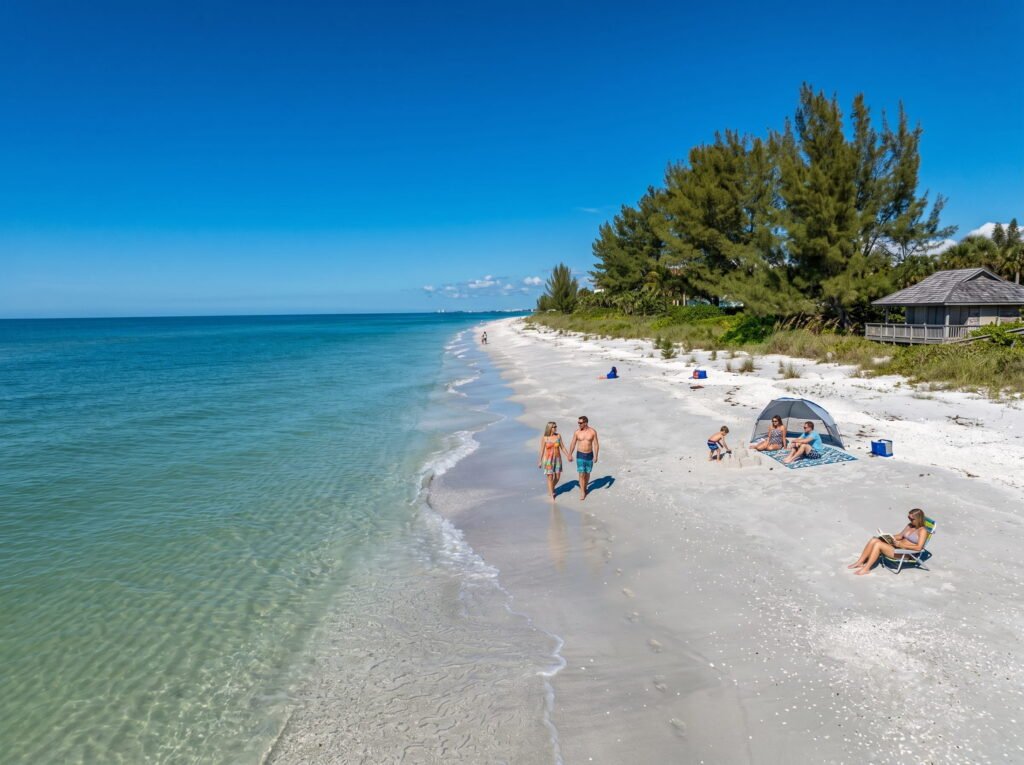
People have been arguing for years about whether Siesta Beach has the whitest sand in the world. I am not going to weigh in on that debate. What I will tell you is that when I walked barefoot across it for the first time, I stopped and looked down and actually said “wait — what?” out loud.
It’s quartz crystal, almost identical to Miramar Beach in the Panhandle — fine enough to squeak under your feet and cool enough that even midday in peak summer it doesn’t burn. The Gulf water next to it is a turquoise that shows up in photos and looks obviously color-corrected. It isn’t.
Siesta Key is a short drive from downtown Sarasota, maybe 15 minutes. The beach village has good food and a few bars with patios overlooking the water. We rented a kayak from “Siesta Key Bike and Kayak on Old Stickney Point Road” and paddled around the Neville Wildlife Preserve for about two hours.
The rental ran us about $30 per hour for a single kayak. We saw ospreys diving, a roseate spoonbill wading in the shallows, and two dolphins that crossed about 20 feet in front of the bow without acknowledging us at all.
The sunsets here. I know every Florida beach claims the best sunset. This one earns it. Get a drink, sit in the sand, face west, and just stay there until it’s over.
Number 1. Clearwater Beach — Every Single Thing They Say About It Is True
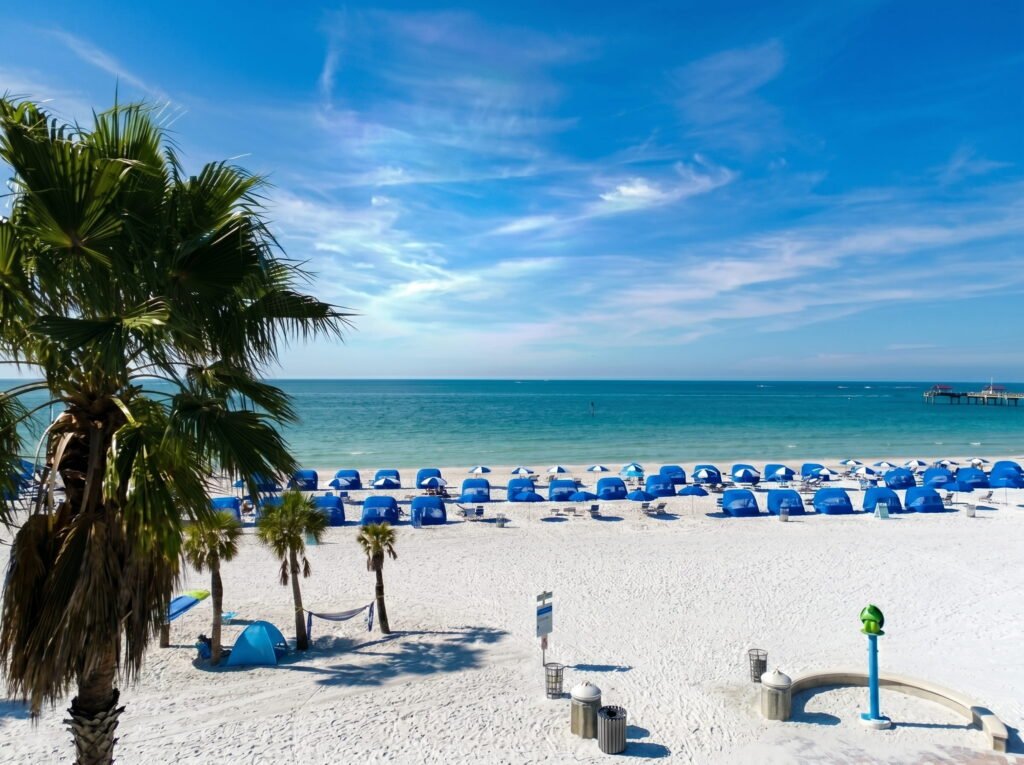
I’d heard it for years. Best beach in Florida. Best beach on the Gulf Coast. Best beach in the country. I was prepared to be underwhelmed by something that famous.
“Clearwater Beach” is the real number one on this list and it’s not a close competition.
The Gulf water is the clearest I’ve ever stood in. Not Caribbean-resort clear, not “clear for the US” clear — just legitimately, alarmingly transparent in a way that makes you look down and feel like you’re floating in air. The sand is white and wide and the waves are gentle enough that it’s safe for small kids and calm enough that adults can actually relax.
Parking runs $3 per hour in the city lots and $3.50 per hour for on-street spots. Rates went up in October 2025 and they’re enforced every day, so budget for it. The Jolley Trolley runs along the beach area and connects to the rest of Clearwater, which is a useful option if you want to park further out and ride in.
Parasailing is available at several outfitters along the strip. Fishing charters leave from the marina early morning. Sunset cruises run nightly and book up fast in summer.
After dark, the strip comes alive in a way that doesn’t feel aggressive — more like a neighborhood that genuinely enjoys itself. There are good bars and solid restaurants, nothing pretentious about any of it, and you can walk the whole main stretch in about 20 minutes if you’re moving at normal speed.
We sat on the beach until almost 9 PM. The sky went through about six different colors before it was over. The water was still warm. Nobody wanted to be the one to say it was time to go.
That’s what the best one feels like.



One Response