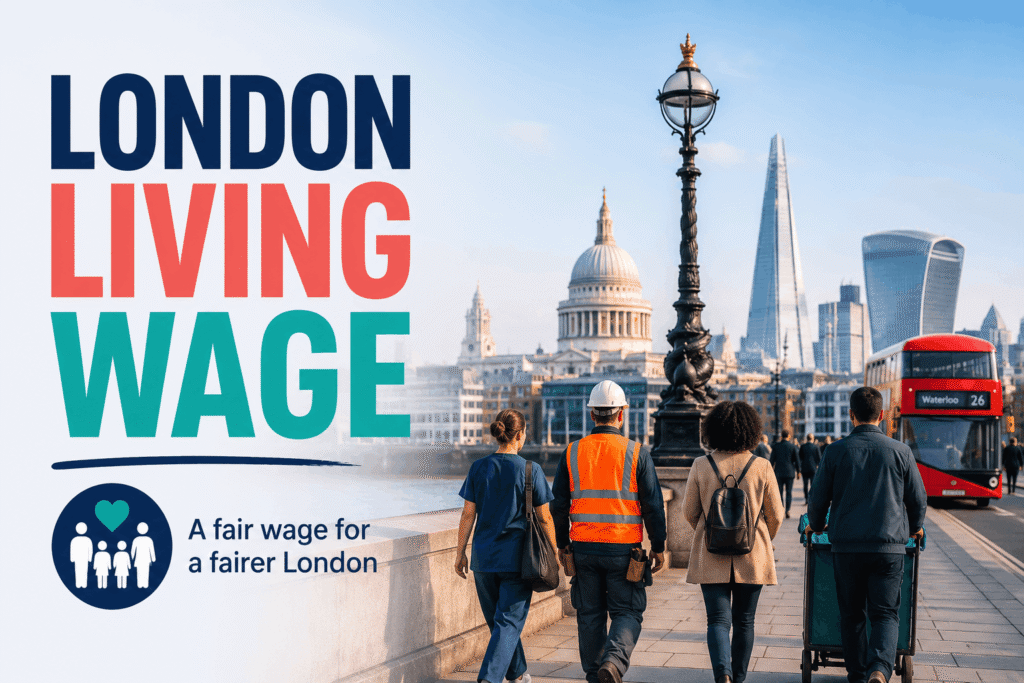
The London Living Wage is an hourly pay rate, currently set at £14.80, and it’s calculated independently to reflect the higher cost of living in the capital, giving a worker in London and their family enough to afford the essentials and to save.
The UK Living Wage rate for 2025-2026 is £13.45, while the London Living Wage rate for 2025-2026 is £14.80. Notice how the London rate is higher? That’s because everything costs more in London – especially rent and transport.
The 2026 Rates: What Changed?
The Living Wage Foundation announced that the Real Living Wage for 2025/26 will increase by 6.7% to £13.45 an hour, with the London Living Wage increasing by 6.9% to £14.80 an hour, and employers signed up to the scheme have until May 1st, 2026 to implement these increases.
So if you’re working in London for a Living Wage employer, you’re looking at a 95p per hour increase from the previous rate of £13.85. That might not sound like much, but let’s break it down:
As an annual salary (based on 37.5 hours per week):
- London Living Wage: £28,860 per year
- UK Living Wage: £26,227.50 per year
The new real Living Wage rates are now worth over £2,418 more per year in the UK than the legal minimum, and over £5,050 more in London. That’s serious money – the difference between struggling and being able to breathe a bit easier.
Read: Costa Rica Places
How Is It Different from the National Living Wage?
This confuses a lot of people, so let’s clear it up. There are actually two different “living wages” in the UK:
The National Living Wage (government minimum):
- Set by the government
- Legally required
- Currently £12.21 per hour (as of April 2025)
- Only applies to workers aged 21 and over
- Based on median earnings across the country
The Real Living Wage/London Living Wage (voluntary):
- Set by the Living Wage Foundation (an independent organization)
- Completely voluntary
- £13.45 UK-wide, £14.80 in London
- Applies to all workers aged 18 and over
- Based on actual cost of living
A full-time worker earning the new, real Living Wage would earn £2,418 a year more than a worker earning the current government minimum, and in London, a full-time worker on the new real Living Wage rate would earn an additional £5,050 a year compared to a worker on the current National Living Wage.
That £5,050 difference in London? That’s roughly equivalent to 16 months’ worth of food, or over six months’ worth of housing costs. It’s the difference between living paycheck to paycheck and having some financial breathing room.
How Is the London Living Wage Calculated?
Living costs are much higher in London than in the rest of the UK – that is why the London Living Wage is higher than the UK rate, and the calculation is based on living costs including rent, childcare, travel costs, food and household bills.
The calculation uses something called the Minimum Income Standard (MIS). Basically, researchers ask groups of ordinary people: “What do you need to buy to live a decent, basic life?” They’re not talking about luxuries – they mean things like:
- A roof over your head (rent or mortgage)
- Food for your family
- Clothes
- Transport to get to work
- Heating and electricity
- A bit put aside for unexpected expenses
Once they figure out what all that costs, they work backwards to calculate what someone needs to earn per hour to afford it all.
The calculation uses a ‘shock absorber’ – defined as CPI plus or minus 3% – which helps to moderate volatility in annual rate changes. This means the rate doesn’t jump around wildly from year to year, which gives both workers and employers some predictability.
The Living Wage Commission oversees the whole process. It’s made up of Living Wage employers, independent experts, trade union representatives, and people from civil society groups. They make sure the calculation is fair and accurate.
Who Benefits from the London Living Wage?

Almost half a million people working for more than 16,000 real Living Wage Employers throughout the country are set for a vital pay boost.
But who are these workers? They’re people in all sorts of jobs:
- Cleaners
- Security guards
- Care workers
- Retail staff
- Hospitality workers (waiters, bartenders, kitchen staff)
- Healthcare assistants
- Admin staff
- Customer service workers
- Delivery drivers
Basically, if you’re in a job that’s typically low-paid, you’re exactly who the Living Wage is designed to help.
Nearly 1 in 5 jobs (17.5%) in London is low-paid – that’s over 600,000 Londoners earning less than what they need for a basic standard of living, and in the past year alone, almost 100,000 more workers have fallen into low pay.
The problem is getting worse, not better. More and more Londoners are working but still can’t afford the basics.
The Reality of In-Work Poverty in London
Here’s something that surprises people: At least half a million people in London are paid less than the London Living Wage, and in-work poverty remains all too common across the capital city.
Think about that. Half a million Londoners go to work every day, put in their hours, and still don’t earn enough to live on. More than half of Londoners in poverty are in work – employment is meant to be the best route out of poverty, but for many, it’s not enough.
Recent research by the Living Wage Foundation shows that as inflation grew over the past year, many of Britain’s 4.5 million low-paid workers have struggled to make ends meet, with two in five (42%) having been forced to use foodbanks in the past year, rising to over half (56%) for low-paid workers with dependent children.
Let that sink in. We’re talking about people with jobs – not unemployed people, but working people – who can’t afford to feed their families without charity. Over a third (36 per cent) of low paid workers in London have regularly skipped meals for financial reasons, with 42 per cent having difficulty paying for food and half (51 per cent) having used a foodbank in the past year.
Which Industries Have the Most Low-Paid Workers?

Many of the industries we rely on most have the highest levels of low pay and in-work poverty – 13% of Londoners in in-work poverty work in health and social care, and 12% work in administrative and support services, which includes cleaners, security guards, and temp agency workers.
So the people taking care of our elderly relatives, cleaning our offices, keeping us safe, and doing essential work are often the ones who can’t afford to live decently themselves. There’s something deeply wrong with that.
Who’s Already Paying the London Living Wage?
Nearly 2,500 new accreditations over the past year show the movement is growing. Big names include:
- Half of the FTSE 100 companies
- Nationwide Building Society
- IKEA
- Everton FC and Chelsea FC
- Aviva
- Uniqlo
- Thousands of small and medium-sized businesses
More than 4,000 organisations headquartered in London are Living Wage accredited, and by committing to pay the Living Wage, more than 52,000 Londoners on the lowest incomes have received payrises.
Even the Mayor of London leads by example. All interns and apprentices at City Hall are paid the London Living Wage.
How to Become a Living Wage Employer

If you’re a business owner thinking about this, here’s how it works:
1. Sign up with the Living Wage Foundation
You go through an accreditation process where you commit to paying all your staff – including contractors like cleaners and security guards – at least the Living Wage.
2. Pay the annual fee
Living Wage Foundation offer a sliding scale of annual accreditation fees based on organisation size, which deliberately includes a low rate of £69 a year for organisations with fewer than 10 employees to make it accessible.
The fees are designed to be affordable, especially for small businesses. They’re much lower than other ethical certifications.
3. Implement the wage
Employers signed up to the scheme have until May 1st, 2026 to implement these increases for the new 2025-26 rates.
Most employers align the increases with their normal pay cycles, so changes usually happen in January or April.
4. Display your accreditation
You get a plaque, digital badges, and other materials to show customers, staff, and the public that you’re a Living Wage employer. You’re also listed on the Living Wage Foundation website.
Some London boroughs even offer grants to help cover the cost of accreditation. For example, Royal Greenwich offers grants to cover the cost of accreditation for a 3-year period for accredited employers with up to 250 employees.
Living Hours: Beyond Just Pay
The Living Wage Foundation has recognized that fair pay alone isn’t enough. Many low-paid workers also struggle with insecure, unpredictable hours.
That’s why they created Living Hours accreditation. The Living Hours standard calls on employers to provide: decent notice periods for shifts of at least 4 weeks’ notice with guaranteed payment if shifts are cancelled within this notice period, the right to a contract that reflects accurate hours worked, and a guaranteed minimum of 16 hours a week (unless the worker requests otherwise).
Think about what it’s like to not know your schedule until a few days before. You can’t plan childcare. You can’t take a second job. You can’t budget. Living Hours addresses that problem.
The Economic Impact
Over 490,000 workers have received a pay rise as a result of the Living Wage campaign, and £4.2bn in extra wages has gone to low paid workers since the real Living Wage campaign began in 2011.
That’s £4.2 billion that’s gone into the pockets of working people instead of staying with corporations or shareholders. That money gets spent in local communities – on rent, on food, in local shops. It circulates through the economy.
There would be a £1.2bn boost to UK economy if 25% of low-paid workers were moved onto the real Living Wage. When people have more money, they spend it, which creates more economic activity and more jobs.
The Timeline for 2026
Here’s what you need to know about the timing:
- October 22, 2025: New rates announced (£14.80 for London, £13.45 for UK)
- October 22, 2025 – April 30, 2026: Transition period
- May 1, 2026: Deadline for all Living Wage employers to implement the new rates
Employers committed to paying the London Living Wage have until May 1, 2026 to implement the new London Living Wage across their workforce.
Most employers will actually implement the changes earlier, either in January 2026 (at the start of the calendar year) or April 2026 (at the start of the tax year), depending on when they normally do pay reviews.
Challenges Ahead
Despite the progress, there are still major problems:
Still Too Many Low-Paid Jobs: Despite London having previously been amongst the regions with the lowest incidence of low pay, there is now a higher rate of low pay in London compared to the UK as a whole (13.3 per cent vs 12.9 per cent).
Slow Progress: Of all UK regions, London has seen the least progress on eradicating low pay since 2012, with only a 3-percentage point decrease in the proportion of low paid jobs between 2012 and 2023, less than half the UK’s average reduction over the same period.
Cost of Living Crisis: Even with the Living Wage increases, the rising cost of housing, energy, and food means many workers are still struggling.
Not Enough Employers Signing Up: While 16,000 accredited employers sounds good, there are millions of employers in the UK. The vast majority haven’t signed up.
Real Stories from Real People
The Living Wage Foundation shares stories from workers whose lives have changed:
One worker said: “Now I’m paid a real Living Wage and have secure hours, I’m settled in a comfortable home, pay all my bills by direct debit and can go out and enjoy life with friends and family. I’m free to live on my own terms, not caught in the trap of having no money.”

Another shared: “I spent years in low paid jobs, desperate to move out of my parents’ house and into my own place. Within months of working at Love Joes, I was able to make that a reality. Not only are we now settled in a lovely home, the extra money the real Living Wage provides means I can afford to treat my family now and then too.”
What About NHS and Public Sector Workers?
The current minimum rate in the NHS in England is £12.51, which is short of both the previous real living wage rate (£12.60) and the new one (£13.45 for UK, £14.80 for London).
This is causing serious problems. Healthcare workers, who we all depend on, are being paid less than the Living Wage in many cases. A UNISON survey of NHS England staff found the vast majority (93%) said it was important to increase the lowest NHS pay rate to stay ahead of the real living wage each year.
The worry is that NHS workers will leave for private sector jobs that pay the Living Wage – like supermarkets and retail stores. If that happens, who will take care of us when we’re sick?
How You Can Support the Living Wage
If you’re an employer:
- Get accredited as a Living Wage employer
- Pay all your staff, including contractors, at least the Living Wage
If you’re a worker:
- Ask your employer if they’ve considered becoming a Living Wage employer
- Join or support unions that campaign for fair pay
If you’re a consumer:
- Support businesses that pay the Living Wage
- Look for the Living Wage Employer logo
- Ask companies about their pay practices
If you’re a voter:
- Support politicians who back fair pay initiatives
- Contact your local council to ask them to promote Living Wage employers
The Bigger Picture
The London Living Wage is about more than just money. It’s about dignity. It’s about saying that if someone works full-time, they should be able to afford a decent life.
By paying the real Living Wage, employers are voluntarily taking a stand to ensure their employees can earn a wage which is enough to live on – that basic fairness is at the heart of what the Living Wage campaign is trying to achieve.
In one of the wealthiest cities in the world, it’s shameful that hundreds of thousands of working people can’t afford food, are falling behind on bills, and are living in poverty. The London Living Wage doesn’t solve everything, but it’s a step in the right direction.
Looking Ahead
The movement is growing. More employers are signing up every year. More workers are receiving pay rises. More people are talking about fair pay.
But there’s still a long way to go. Until every working person in London can afford to live with dignity, the fight continues.
The 2026 rate of £14.80 per hour represents progress, but it’s just one step on a longer journey toward economic justice and fairness for all workers.






3 Responses