Hello, and welcome back to my blog about things to do in Tauranga! My name is Danish, and I am a full-time SEO (Search Engine Optimization) specialist and part-time traveler.
I have visited Tauranga twice — the first time I traveled alone, and the second time with my wife, Diyana. In this guide, I will share the top 14 things to do in this beautiful city based on my experience.
So, let’s get started!
McLaren Falls Park
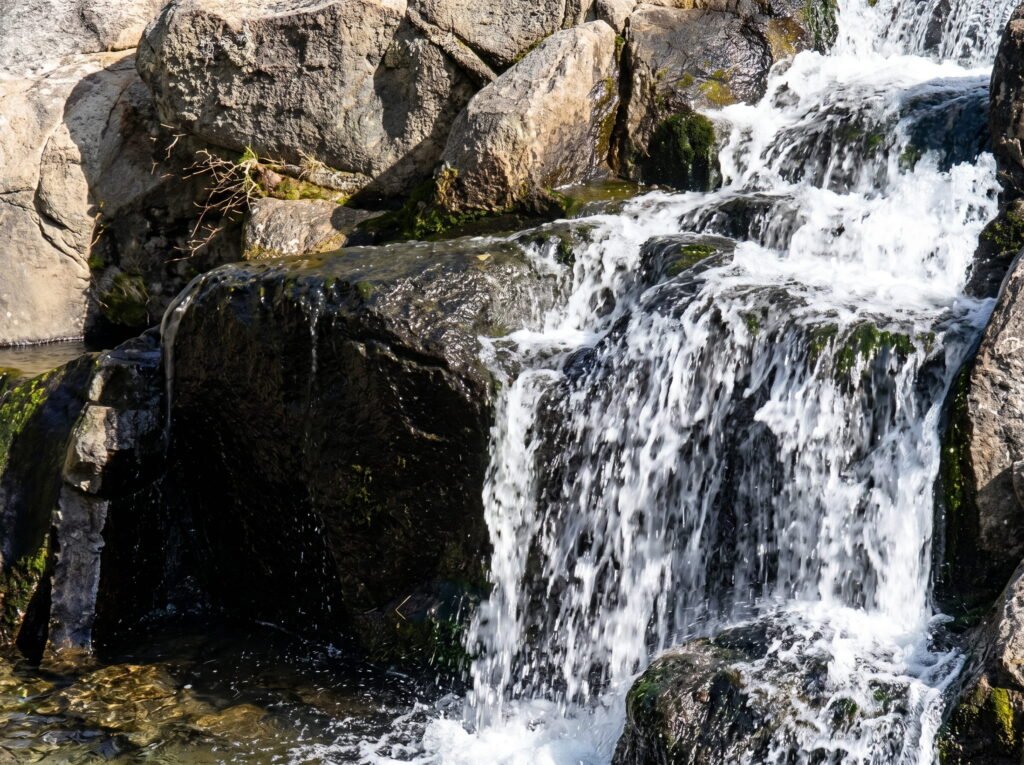
First up at the entrance is McLaren Falls itself — and don’t be fooled by the name, because it’s not just a “single” waterfall. In fact, it’s several beautiful waterfalls cascading down a wide river surrounded by massive boulders, offering a truly impressive sight from the moment you arrive.
These falls originate from the ” Wairoa River ” and become an incredibly popular spot in the summer. On a sweltering day, you’ll see many people slipping into the water to cool off, despite the fences!
Besides the waterfalls, there’s plenty more to discover within the park. One of the most photogenic spots is Cherry Bay — a charming picnic area situated on the banks of a beautiful stream and surrounded by cherry trees. It looks absolutely magical in spring and fall, and there’s also a free barbecue available, which is perfect for a relaxing afternoon outdoors.
Read: Things to do in Puerto Rico
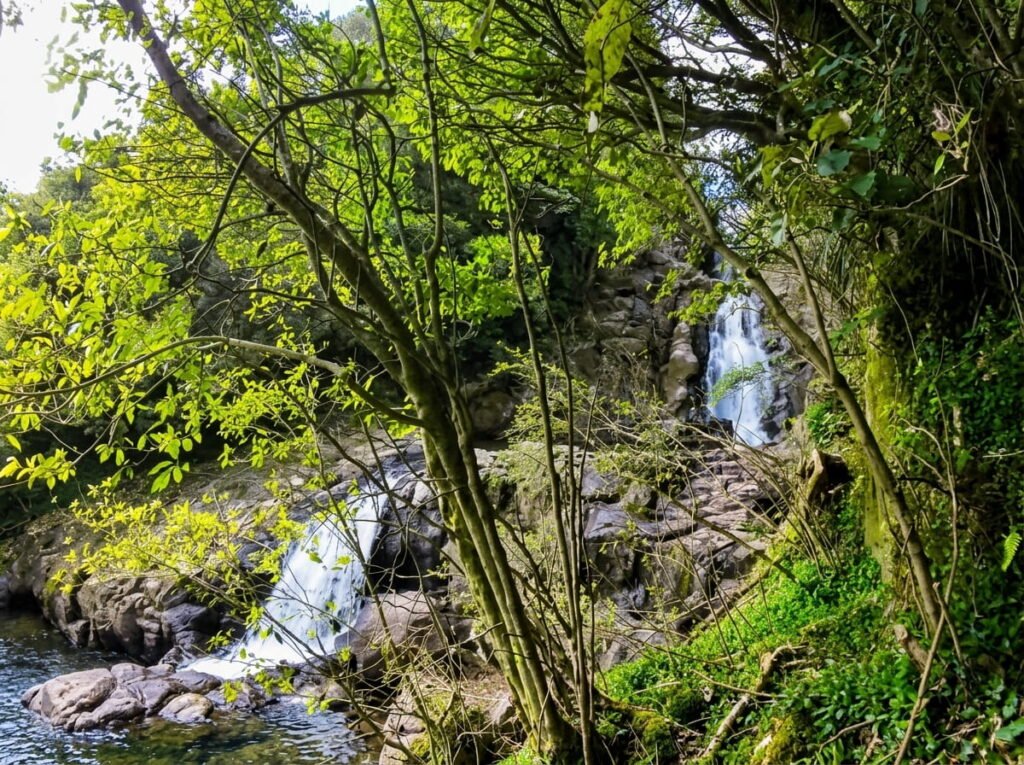
For those who love a good hike, the ” Waterfall Track ” is a must. It’s a short 20-minute loop that winds through New Zealand’s dense, towering native forest, and halfway along the trail you’re treated to a spectacular waterfall plunging in a long, dramatic arc through the trees.
If you’re up for more walking, the park also has these trails:
- Lake Side Track — a 45-minute walk along the beautiful McLaren Lake.
- Rimu Totara Track — a 25-minute stroll through lush native forest.
- Ponga Track — a short 10-minute walk to a spectacular spot with waterfall views.
Mount Maunganui Beach
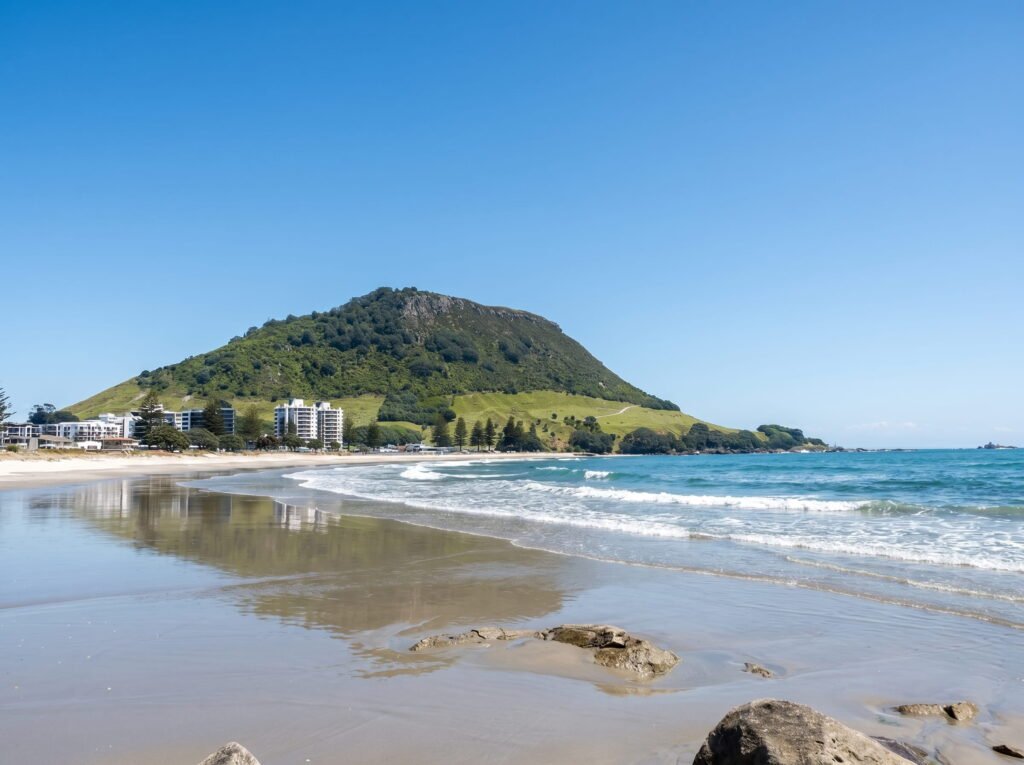
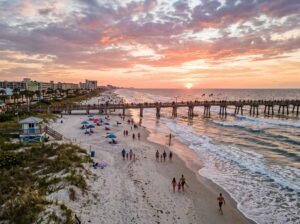
Start your morning on Maunganui Road, the area’s famous and busy street. Here you’ll find great cafés and brunch spots where you can have breakfast. After that, head to the beautiful Maunganui Beach, where you can rent surfboards, wetsuits, and other gear for water fun.
A little further along the beach you’ll reach Moturiki Island, also known as Leisure Island. It’s a beautiful protected spot where dogs aren’t allowed. Here you can enjoy stunning ocean views, and people go kayaking, snorkeling, and scuba diving.
Read: Visit of Russia
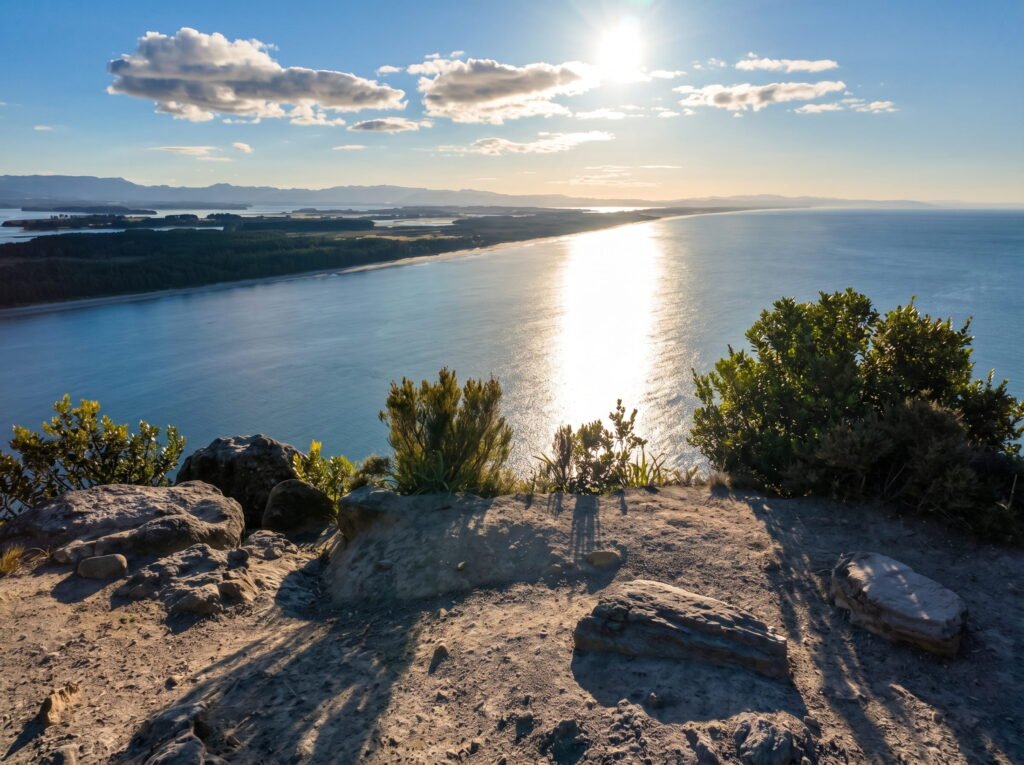
The highlight of a visit here is hiking to the summit of the mountain. It’s a 232-meter-high extinct volcano, and the climb takes about 45 minutes. Once you reach the top, you’re treated to stunning 360° views of the “Bay of Plenty” and the coastline.
If you go at sunrise or sunset, the experience becomes even more memorable.
If you have extra time, you can take a roughly 30-minute drive to Omanawa Falls.
Kaiate Falls
Kaiate Falls — also known by their Māori names Te Rerekawau and Maui — are waterfalls made up of multiple tiers cascading down three separate cliffs into the pools below. They’re not as well-known as they ought to be, which means you can often have them almost entirely to yourself, even on weekends.
The falls drop about 25 meters in total from all three levels. The surrounding vegetation is dense and lush — native forest that envelops the trails, and the entire hike makes you feel as if you’re deep in a wilderness setting.
Some trails take you alongside and above the waterfall, where you can see the water cascading down the rocks from different angles.
What most people come for, and what I would specifically come back for, is the swimming hole at the base of the waterfall. A deep, cold, clear pool lies below where the water collects after falling. Jumping into it after the climb is one of those simple pleasures you won’t soon forget.
Read: Beaches in El Salvador
Papamoa Beach
Papamoa is one of Tauranga’s fastest-growing suburbs, and when you spend time there, you understand why people keep moving here.
Perched above the coast, Papamoa Hills Regional Park offers the best views of the ” Bay of Plenty ” from its summit. The trail up isn’t very long, and the view from the summit—the ocean, the beach, the farmland, and the distant Mount—is one of the best in the Bay of Plenty, all achievable without a strenuous climb.
In the hills you can also see the remains of ancient Māori pā sites—these preserved villages remind you how long this landscape has been home to people.
Read: Things to do in Zurich
Back near the coast, the Papamoa suburb has quietly become one of the best places to eat and drink in the Tauranga area. Over the past decade, great coffee shops, brunch spots, and a few truly excellent restaurants have sprung up here. It feels more local and less touristy than the Mount Maunganui strip, which I personally prefer.
Waihi Beach
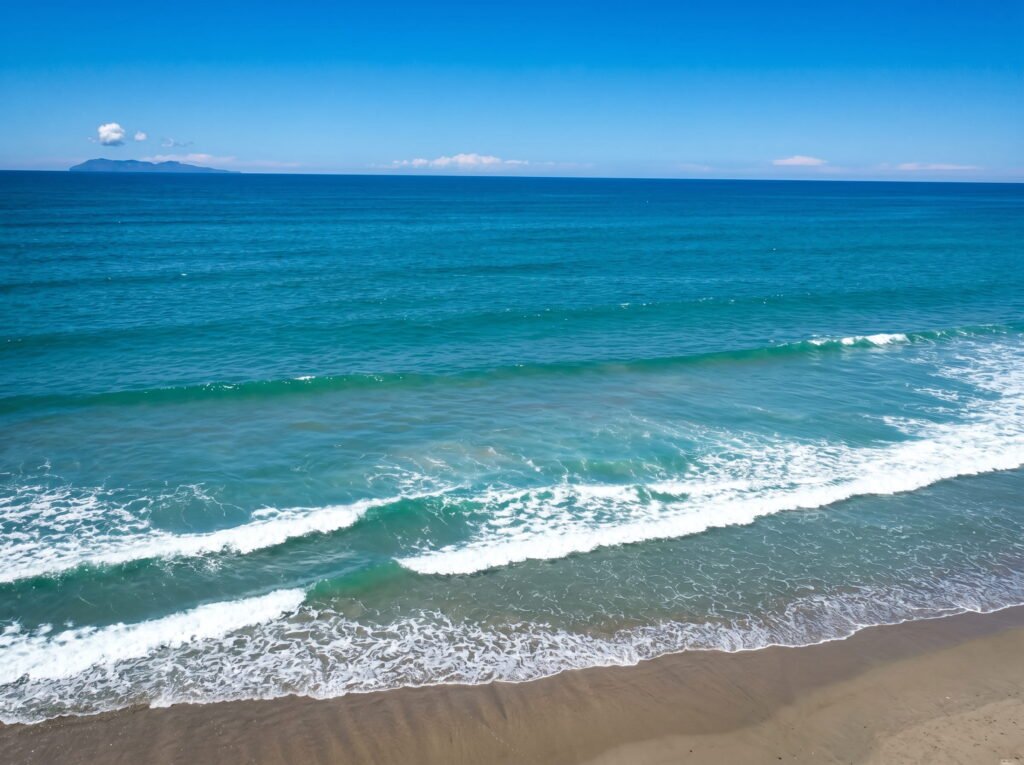
What I like about Waihi Beach, and what I don’t always find at more famous spots, is its slow pace. It’s a small coastal town that hasn’t seen much development. On one side there’s a sheltered bay where you can swim peacefully, and on the other side there’s the main beach with space for surfing and long walks.
The local shops and restaurants are small and authentic. It feels like New Zealand in the days when life wasn’t so busy.
If you’re staying in Tauranga for three or four days or more, drive north.
White Island (Whakaari)
It is located about 50 kilometers off the coast of the Bay of Plenty and is New Zealand’s most active marine volcano. The island continuously emits smoke. The crater is filled with steam-belching vents, boiling mud pools, and foul-smelling salt-covered terrain.
The scene is desolate, spectacular, and utterly unlike anything you’ll find on the mainland.
Access here is only possible by air tour—helicopter flights that take you over and onto the island with expert guides who explain the site’s geology, volcanic activity, and history. These tours aren’t cheap.
Read: Things to do in Temba bay
But the experience of standing on an active volcano in the middle of the ocean, surrounded by boiling mud and searing steam, is something that can’t be replicated anywhere else in New Zealand.
Important note: White Island’s recent history is complex. The December 2019 volcanic eruption was a tragedy that resulted in loss of life. Since then, tours to the island have resumed with modern safety protocols and monitoring.
Before your visit, check the current tour status and volcano alert levels. Go with a reputable operator that takes safety briefings seriously.
While heading to the island, dolphins, flying fish, sea turtles, and seabirds are commonly seen alongside the boat or helicopter.
Tauranga Art Gallery
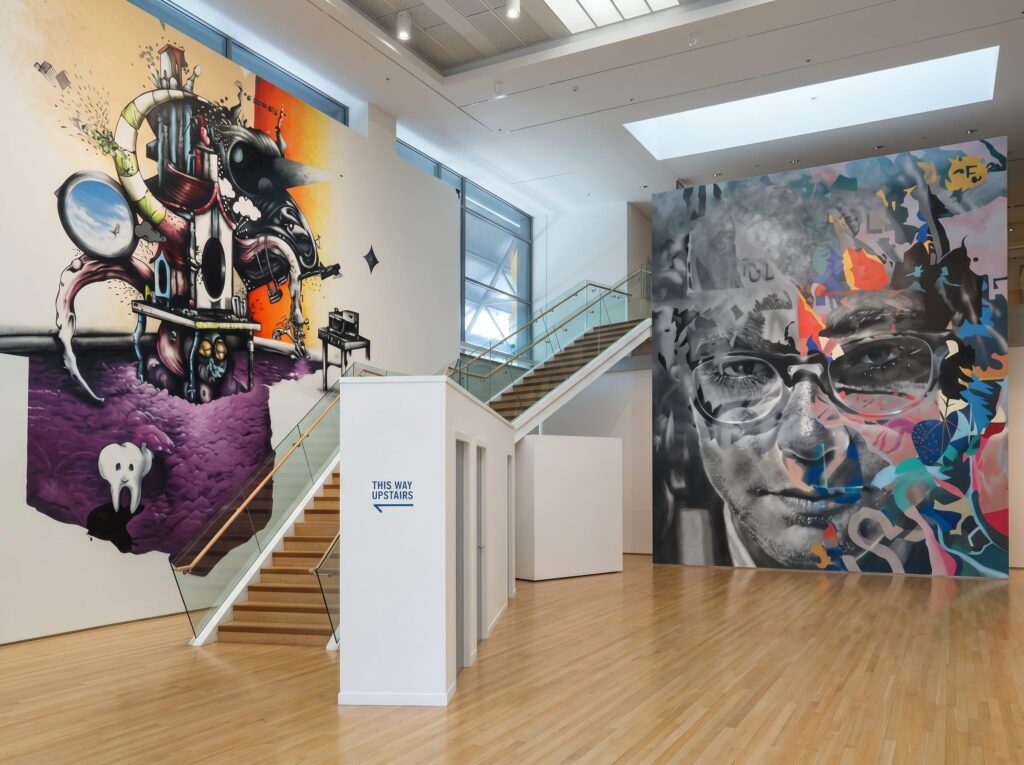
In the city center is the Tauranga Art Gallery, a place that people usually spend little time at, even though it’s really worth seeing.
This gallery was originally the Bank of New Zealand building, a beautiful historic structure. It has been beautifully transformed into bright, open exhibition spaces. The building itself is so stunning that you’re impressed even before you see the art.
Inside, you’ll find a variety of artworks by local and international artists spread over two floors. There are around 500 pieces, including paintings, photographs, sculptures, and contemporary video installations.
The permanent collection features New Zealand landscapes and portraits in particular, while the rotating exhibitions offer something new each time.
This venue first opened to the public in 2007 and is now counted among Tauranga’s most important cultural sites. Admission to view the permanent collection is completely free.
Read: Things to do in Naples
Te Puke
This place is located about 20 minutes east of Tauranga, in the inland part of the Bay of Plenty. Its volcanic soil and warm climate have made it an important center of New Zealand’s kiwifruit industry. Large orchards stretch in every direction, and during harvest season—from late winter through spring—the activities here are well worth seeing.
But Te Puke isn’t just the name on a fruit label you see in the supermarket. This town offers an authentic rural New Zealand experience—peaceful, simple, and easy to explore.
Read: Things to do in Tauranga
Its cafés and restaurants serve fresh local produce, especially the honey kiwis and avocados for which the region is famous. Some farms also offer tours where you can see how the fruit is grown and buy it directly from the farm.
Besides horticulture, around Te Puke there are bush walks, nearby beaches, and beautiful country roads where driving is a pleasant experience even if you don’t have a specific destination.
Te Puna Quarry Park
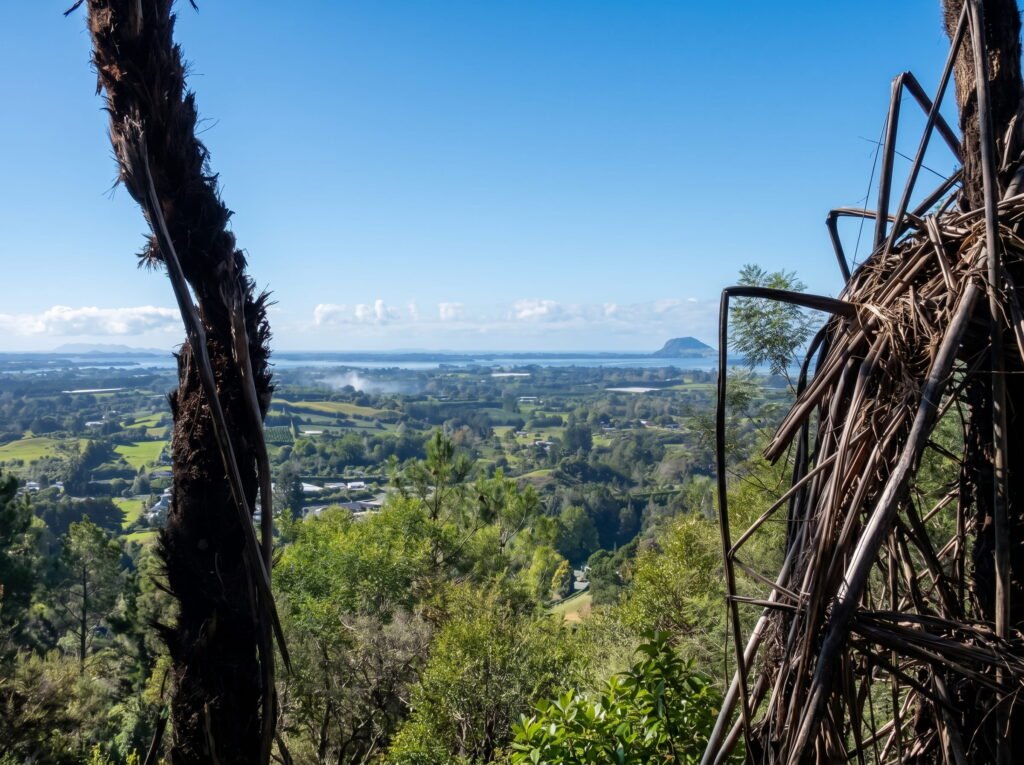
Te Puna Quarry Park is a place with a very interesting story. It was originally an old, abandoned quarry, but some volunteers came together and decided to turn it into a beautiful park. Today it is counted among New Zealand’s most unique and charming parks.
Over the years, a hardworking team of volunteers has planted many trees here, created colorful flower gardens, preserved old mining machines as historical monuments, and installed beautiful public artworks throughout the park. As a result, the place sometimes feels like a botanical garden, sometimes like a sculpture trail, and sometimes like a community art project.
Here you’ll find a variety of plants and flowers, including irises, cacti, succulents, and New Zealand native species.
Tauranga Historic Village
This place is a living museum showcasing New Zealand’s colonial and early settler history. In a large outdoor area, there are several original and relocated historic buildings. These include Victorian-era houses, shops, a church, a schoolhouse, and various commercial buildings.
They are all decorated in the same style as they would have appeared in the late 1800s and early 1900s.
But this place isn’t just a collection of old buildings. Throughout the year, markets, craft fairs, artisan demonstrations, and various events take place here, keeping the village alive and interesting.
Some buildings are also home to local craftspeople, and if you visit at the right time, you can watch traditional skills being created and put to use.
The Elms Mission House
This house and its surrounding gardens are still preserved in much the same condition as they were when the Brown family lived here. For this reason, the place offers a unique opportunity to get a close look at early colonial life in New Zealand.
The gardens here are truly beautiful. The large trees the Brown family planted in the 19th century still stand, casting shade over the entire area.
The garden’s layout is also very special—some sections are formal and beautifully designed, while others feel more natural and forest-like. This makes it one of the most peaceful places in the city where you can relax and spend time.
Guided tours are also available here, and they’re really informative.
Tauranga Harbour and Wharves
The Tauranga waterfront and the historic wharves of The Strand are places where it’s best to wander around at your leisure without any particular plan.
The city’s waterfront sits opposite the inner harbor, offering beautiful views of Mount Maunganui and the surrounding hills. The Strand, the waterfront’s main street, features waterside restaurants, cafés, and bars. On warm evenings in particular, it becomes one of the city’s most picturesque spots.
The historic wharf area has been beautifully developed, yet it still retains its original working feel. Tauranga is truly a very busy port city and is counted among New Zealand’s largest container ports.
Don’t miss my guide on warm places to visit in the USA in December.
Surfing and Water Sports
Mount Maunganui’s surf is very famous throughout New Zealand. National competitions are held here, good, consistent waves roll in, and the surfing culture has been passed down through generations. If you surf, Mount Maunganui is the best place.
And if you want to learn, there are surf schools on the beach where, on the right day, beginners can stand up and learn to surf in just a few hours.
Besides surfing, the harbor water is quite calm, so kayaking and stand-up paddleboarding are also very popular here.
The lake at McLaren Falls Park is also a great spot for kayaking, but the atmosphere there feels completely different and more natural.
Read: Places to Visit Without a Passport
Exploring the Food and Coffee Scene
In the Mount Maunganui area, you’ll find the best variety of cafés and restaurants, especially on Pacific Avenue and the streets near the beach. Brunch culture here is very popular. People throughout New Zealand place great importance on brunch, but in Mount Maunganui there are some spots where people line up on weekend mornings.
In the Tauranga CBD, The Strand and the surrounding streets also feature many excellent restaurants. Here, the focus is on fresh local seafood and Bay of Plenty produce.
Read also
4 Responses