Before we get into every city and municipality on this island, a quick note. On this site I have already covered Puerto Rico in depth — the basic information people need before they arrive, the best things to do across the island, the best beaches, the most common tourist mistakes to avoid, the festivals and cultural events worth planning around, and the best resorts and places to stay. If you have not read those, start there. They give you the foundation.
This guide is different. This is specifically about the municipalities and cities of Puerto Rico — all 78 of them.
Puerto Rico is not just San Juan. It is not even Ponce, and Rincón. It is 78 municipalities, each with its own identity, its own character, its own geography, and its own reasons to visit. Most travelers see three or four. This guide covers all of them.
Puerto Rico organizes its 78 municipalities into six travel regions. I have used that structure here because it makes geographic sense. Within each region, I cover every municipality — its location, its size, its population, its character, and the points it is most known for.
A Note on Puerto Rico’s Municipalities
Puerto Rico does not have counties the way US states do. Instead, the island is divided into 78 municipalities — locally called municipios — that function somewhat like counties but are more like self-governing towns with their own mayors and legislatures. Each municipality covers a town center (the pueblo) and the surrounding rural land, barrios, and neighborhoods. When Puerto Ricans say they are from a certain place, they usually name their municipality.
The total population of Puerto Rico is approximately 3.2 million people spread across these 78 municipalities. The largest by far is San Juan. The smallest by population is Culebra, the small island off the east coast.
Region 1: Metro San Juan
The metropolitan area of Puerto Rico is the economic, cultural, and political heart of the island. It encompasses seven municipalities and is home to more than 2 million people — roughly two-thirds of Puerto Rico’s entire population. If you fly into Luis Muñoz Marín International Airport, you are landing in this region.

1. San Juan
Region: Metro | Location: Northeastern coast | Area: approximately 76 square miles | Population: approximately 393,000 (municipality)
San Juan is the capital of Puerto Rico and the oldest city under US jurisdiction, founded by Spanish colonizers in 1521. It is the island’s largest city, its main port of entry, and the hub of virtually everything — government, finance, tourism, nightlife, food, and culture.
The municipality of San Juan encompasses several distinct neighborhoods, each with its own character:
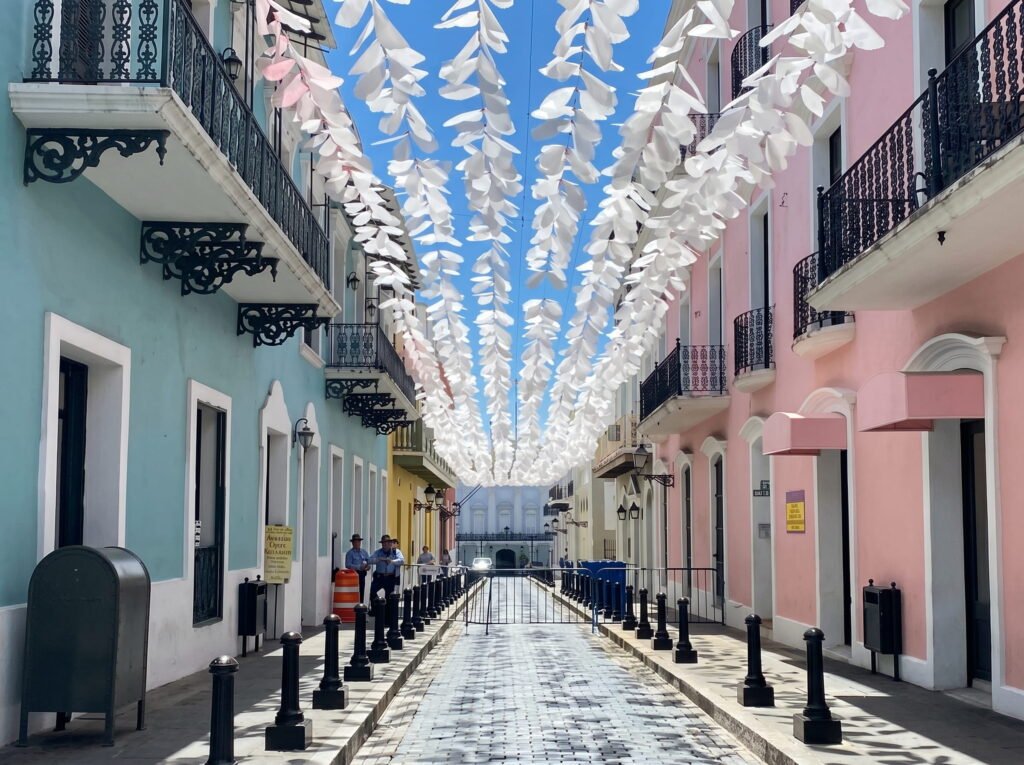
Old San Juan (La Perla included) is the historic walled city on a small peninsula on the northwestern edge of the metro. This is where the blue cobblestone streets are, where the pastel-colored colonial buildings line the narrow lanes, and where the two massive Spanish fortresses — Castillo San Felipe del Morro (El Morro) and Castillo San Cristóbal — stand as the most iconic landmarks in Puerto Rico. Both are UNESCO World Heritage Sites. The Paseo de la Princesa along the waterfront and the Plaza de Armas at the city’s center are defining public spaces. La Perla, a neighborhood built along the ocean wall outside the city gates, is a distinctive and historically significant community.
Condado is the main hotel and beach strip, walking distance from Old San Juan. It is modern, commercial, and tourist-oriented, with beach access on the Atlantic side and a canal on the other.
Miramar is a transitional neighborhood between Condado and Santurce, known for its historic architecture and a growing restaurant scene.
Santurce has become the cultural center of contemporary San Juan — murals on nearly every wall, a thriving independent restaurant and bar scene, live music venues, galleries, and the Mercado de Santurce, one of the best weekend markets on the island. La Placita de Santurce is the social epicenter of San Juan’s nightlife.
Ocean Park is a quieter, more residential beach neighborhood east of Condado, favored by locals and repeat visitors who want beach access without the resort-area density.
Hato Rey is San Juan’s financial district — the business center of the island.
Río Piedras is home to the University of Puerto Rico’s main campus, the largest university in Puerto Rico, and has a more academic, local character. The Río Piedras market is one of the city’s best.
Puerta de Tierra is the narrow strip connecting Old San Juan to the rest of the metro, home to government buildings and the Capitol of Puerto Rico.
San Juan is approximately 76 square miles but feels much larger because of its density and the number of distinct neighborhoods within it. Nearly every visitor to Puerto Rico starts here.
2. Bayamón
Region: Metro | Location: Just west of San Juan | Area: approximately 44 square miles | Population: approximately 185,000
Bayamón is the second largest municipality in Puerto Rico and effectively functions as a suburb and extension of the San Juan metro. It is one of the most densely populated areas on the island and a major commercial and industrial hub.
Bayamón is known for its large shopping centers — it has some of the biggest retail corridors in Puerto Rico — and for its industrial parks. It is also home to the Parque de las Ciencias Luis A. Ferré, a science and technology park that is one of the better family attractions in the metro area, featuring an aerospace museum, a natural sciences museum, a planetarium, and the largest outdoor art collection in Puerto Rico.
The city center has a traditional Spanish colonial plaza and a historic church. Bayamón has produced numerous notable Puerto Rican athletes, particularly in baseball, and takes considerable pride in that legacy.
3. Carolina
Region: Metro | Location: East of San Juan, adjacent to the airport | Area: approximately 46 square miles | Population: approximately 158,000
Carolina is the third largest municipality in Puerto Rico and is immediately east of San Juan, bordering Luis Muñoz Marín International Airport. Because of its location, it has become one of the most tourist-oriented municipalities outside San Juan proper.
The Isla Verde neighborhood — technically part of Carolina — is one of the most important hotel and beach zones in Puerto Rico. Isla Verde Beach is a wide, well-maintained Atlantic beach flanked by major resort hotels. Many visitors who stay in “San Juan” are actually staying in Isla Verde, which is in Carolina.
Carolina is also the birthplace of Roberto Clemente, one of the most celebrated baseball players in history and a figure of profound importance in Puerto Rican culture. The Roberto Clemente Sports City and museum in Carolina honor his legacy.
4. Guaynabo
Region: Metro | Location: Southwest of San Juan | Area: approximately 27 square miles | Population: approximately 90,000
Guaynabo is one of the wealthiest municipalities in Puerto Rico and has a reputation for being one of the most well-maintained and efficiently governed. It is largely suburban and residential, popular with professionals who work in San Juan.
Guaynabo is historically significant as the site of Caparra, the first permanent European settlement in Puerto Rico, established by Juan Ponce de León in 1508 before the capital was moved to San Juan. The ruins of Caparra still exist and are a recognized historical site. The Guaynabo Performing Arts Center is a notable cultural venue. The municipality also has significant upscale dining and shopping.
5. Cataño
Region: Metro | Location: On the western shore of San Juan Bay | Area: approximately 5 square miles | Population: approximately 25,000
Cataño is the smallest municipality on the main island of Puerto Rico and sits directly across San Juan Bay from Old San Juan. It is connected to Old San Juan by a short and inexpensive ferry — one of the most underrated transportation options in the metro.
Cataño is primarily known as the home of the Bacardí rum distillery — Casa Bacardí — one of the largest rum distilleries in the world and a major tourist attraction. The distillery offers tours and tastings and is easily combined with a visit to Old San Juan via the ferry.
6. Toa Baja
Region: Metro | Location: Northwest of San Juan along the coast | Area: approximately 24 square miles | Population: approximately 79,000
Toa Baja is a coastal municipality on the northern shore west of San Juan. It is largely residential and less visited by tourists than other metro municipalities. The Levittown neighborhood — one of Puerto Rico’s first planned communities — is located here. Toa Baja has beaches on its northern coast, including Punta Salinas and the area around Puerto Nuevo, though these are more popular with locals than tourists.
7. Trujillo Alto
Region: Metro | Location: South of San Juan, inland | Area: approximately 21 square miles | Population: approximately 67,000
Trujillo Alto is an inland municipality southeast of San Juan, largely residential and suburban in character. It has no coastline. The municipality is primarily a bedroom community for the San Juan metro. The Carraízo Reservoir, one of the most important water reservoirs serving the metro area, is located here and defines much of the landscape. Trujillo Alto is less tourism-oriented than its neighbors but is a significant part of the metro’s residential fabric.
Region 2: Porta del Sol (West Coast)
The western coast of Puerto Rico is a different world from the metro. Slower, more naturally oriented, home to the island’s best surf, dramatic cliffs, fertile agricultural valleys, and a laid-back coastal culture that attracts visitors looking for something further from the tourist mainstream. This region runs along the western and northwestern coast and includes some of the island’s most scenic geography.
8. Aguadilla
Region: Porta del Sol | Location: Northwestern coast | Area: approximately 36 square miles | Population: approximately 55,000
Aguadilla is the largest city in the northwestern corner of Puerto Rico and the main urban center of the Porta del Sol region. It has its own airport — Rafael Hernández Airport (BQN) — which receives flights from several US cities, making it a practical alternative entry point for travelers who want to base themselves on the west coast without driving from San Juan.
Aguadilla is a surf city. Crash Boat Beach, located here, is one of the most photographed beaches in Puerto Rico — unusually clear water for the north coast, colorful fishing boats moored in the bay, and a local energy that is entirely its own. The beaches at Wilderness, Gas Chambers, and Pressure Point are significant surf breaks known regionally.
The city also has Las Cascadas Water Park, one of the largest in the Caribbean, and the Aguadilla Ice Skating Arena — a genuinely unexpected attraction in a tropical island city. The former Ramey Air Force Base, which closed in 1973, left a significant infrastructure footprint that the city has partly repurposed.
9. Aguada
Region: Porta del Sol | Location: Northwestern coast, south of Aguadilla | Area: approximately 40 square miles | Population: approximately 39,000
Aguada is a coastal municipality that holds a special historical claim — many historians believe Christopher Columbus first landed on Puerto Rico here in 1493, not at another location. A monument and cross mark the traditional landing site, though the exact location remains disputed among historians.
The municipality is known for the Aguada Pyramid (a local architectural landmark), the Church of San Francisco de Asís, and the Coloso Sugar Cane Refinery — a remnant of the island’s sugar industry past. The Aguada transmission station is the tallest man-made structure in Puerto Rico. Several good beaches run along Aguada’s coast, including Espinar Beach and Tres Hermanos Beach.
10. Añasco
Region: Porta del Sol | Location: Northwestern coast, south of Aguada | Area: approximately 40 square miles | Population: approximately 27,000
Añasco sits at the mouth of the Añasco River where it meets the Mona Passage. The municipality is known for its river and the freshwater fishing it supports, as well as its agricultural character — this is one of the areas of Puerto Rico where farming remains a significant part of local life. The Añasco lighthouse and its coastal views are a local attraction. The town center has a traditional plaza and a Catholic church typical of Puerto Rico’s Spanish colonial municipal design.
11. Rincón
Region: Porta del Sol | Location: Westernmost point of Puerto Rico | Area: approximately 14 square miles | Population: approximately 14,000
Rincón is one of the smallest municipalities in Puerto Rico by area, but it punches far above its size in terms of its reputation and visitor appeal. It sits at the westernmost tip of the island and is the undisputed surf capital of Puerto Rico — and one of the top surf destinations in the Caribbean.
Rincón’s fame in the surf world dates to the 1968 World Surfing Championships, which were held here and put the town on the international surfing map. Today it draws surfers from around the world from November through April when swells from the Atlantic produce some of the most consistent and powerful waves in the region. Domes Beach, Sandy Beach, and Indicators are among the most recognized breaks.
But Rincón is more than surfing. From January to March, humpback whales pass through the Mona Passage directly offshore — whale watching from the beaches or from boats is a genuine highlight. The sunsets here, viewed from the cliffs on the western point near the old lighthouse, are among the most dramatic in Puerto Rico.
The town itself is small, relaxed, and unhurried. Boutique guesthouses, surf camps, beachside restaurants, and yoga studios make up the character of the place. It attracts people who want to decompress, and it delivers.
12. Mayagüez
Region: Porta del Sol | Location: Western coast | Area: approximately 77 square miles | Population: approximately 73,000
Mayagüez is the third largest city in Puerto Rico and the largest on the west coast. It is the cultural and commercial capital of western Puerto Rico — a real city with university energy, a working port, seafood culture, and a street life that belongs entirely to locals.
The University of Puerto Rico’s Mayagüez campus is here — known as the RUM (Recinto Universitario de Mayagüez) — and it is the engineering and science flagship of the UPR system, giving the city a younger demographic and a certain intellectual atmosphere.
Mayagüez is known for its exceptional seafood. The stretch along the waterfront road near the port has some of the best fresh fish and shellfish restaurants on the island. The Mayagüez Zoo is the only zoo in Puerto Rico and one of the largest in the Caribbean. The city’s central plaza, with its distinctive statues and cathedral, is one of the more handsome main squares in Puerto Rico. The city is also historically associated with the mango — it hosts an annual Mango Festival and is considered by many to have the best mangoes in the Caribbean.
13. Hormigueros
Region: Porta del Sol | Location: Inland from Mayagüez | Area: approximately 10 square miles | Population: approximately 17,000
Hormigueros is one of the smallest municipalities in Puerto Rico and sits just inland from Mayagüez. It is known primarily for the Our Lady of Monserrate Basilica, a significant pilgrimage church that draws visitors from across Puerto Rico for its religious festivals, particularly in September. The basilica is built on a hill and is visually distinctive. The municipality is otherwise a quiet residential community.
14. Cabo Rojo
Region: Porta del Sol | Location: Southwestern tip of Puerto Rico | Area: approximately 72 square miles | Population: approximately 50,000
Cabo Rojo is one of the most geographically varied and visually striking municipalities in Puerto Rico. It occupies the southwestern corner of the island and is named for the reddish cliffs that define its landscape.
The Punta Jaguey cliffs — often called the Red Cliffs or Los Morrillos — are among the most dramatic natural features in Puerto Rico. The old Spanish lighthouse at the point dates to 1882 and sits above cliffs that drop directly into the Caribbean. This is one of the most photographed spots on the island.
The salt flats of Cabo Rojo — Las Salinas — are a significant wildlife refuge and one of the best bird-watching sites in Puerto Rico. More than 100 species have been recorded here, including flamingos, herons, and pelicans.
Boquerón, a neighborhood of Cabo Rojo on the western coast, is a beloved beach town with a long, calm bay, a lively boardwalk, and a string of food kiosks selling fresh seafood and local dishes. Combate Beach, further south, is a local favorite. Playa Sucia near the lighthouse is one of the most beautiful and least crowded beaches on the main island.
Cabo Rojo municipality is also a significant agricultural area, producing coffee, plantains, and fishing products.
15. San Germán
Region: Porta del Sol | Location: Inland southwest | Area: approximately 55 square miles | Population: approximately 33,000
San Germán is the second oldest city in Puerto Rico, founded in the early 16th century. It is one of the most historically significant cities on the island — a quiet, undervisited place that preserves more of its colonial architectural heritage than almost anywhere else outside Old San Juan.
The Porta Coeli Chapel, dating to the late 17th century, is considered one of the oldest churches in the Western Hemisphere and is a national historic landmark. The city has two central plazas — an unusual feature — and the surrounding streets contain some of the finest examples of colonial and early 20th-century vernacular architecture in Puerto Rico. The Inter American University of Puerto Rico has its oldest campus here, giving the city student energy despite its historic character.
San Germán is consistently overlooked by tourists, which is exactly what makes it worth visiting.
16. Lajas
Region: Porta del Sol | Location: Southwestern coast | Area: approximately 60 square miles | Population: approximately 23,000
Lajas is most famous for La Parguera — a fishing village on its southern coast that is home to one of Puerto Rico’s three bioluminescent bays, Bahía Fosforescente (Phosphorescent Bay). The bay glows with blue-green bioluminescence when disturbed, produced by dinoflagellates in the water. It is accessible by boat tour from the La Parguera docks.
La Parguera itself is a pleasant waterfront village with seafood restaurants, guesthouses, and a string of small mangrove-surrounded cays just offshore. Lagoon hopping by boat is a popular activity.
The municipality also has significant agricultural activity — it sits in one of the drier parts of Puerto Rico — and a wildlife refuge at Laguna Cartagena.
17. Sabana Grande
Region: Porta del Sol | Location: Inland southwest | Area: approximately 43 square miles | Population: approximately 23,000
Sabana Grande is a small inland municipality in the southwestern part of the island. It has a quiet agricultural character and is known in Puerto Rico for the Shrine of Our Lady of Monserrate at Hormigueros — Sabana Grande has its own religious significance, specifically related to a reported Marian apparition in 1953 that drew pilgrims for years. The municipality also sits near important coffee-growing areas. It is rarely visited by tourists but offers an authentic slice of interior Puerto Rican life.
18. Maricao
Region: Porta del Sol | Location: Mountain region, western interior | Area: approximately 40 square miles | Population: approximately 6,000
Maricao is one of the most sparsely populated municipalities in Puerto Rico and one of the most beautiful. It sits in the coffee-growing mountains of the western interior — this is genuine high-altitude coffee country, where Puerto Rican coffee has been produced for over two centuries.
The Maricao State Forest (Bosque Estatal de Maricao) is one of the most biodiverse forests on the island, home to dozens of endemic bird species. The Monte del Estado lookout tower offers panoramic views across the western mountains and coastline on clear days.
Maricao hosts an annual Coffee Harvest Festival that is one of the most authentic agricultural festivals in Puerto Rico. The town is tiny, unhurried, and surrounded by coffee farms and mountain scenery.
19. Las Marías
Region: Porta del Sol | Location: Western mountains, inland | Area: approximately 47 square miles | Population: approximately 9,000
Las Marías is a small, quiet mountain municipality in the western interior. It is known for its agricultural production — particularly coffee and plantains — and for its natural beauty. The municipality has a reputation as one of the greener, more forested parts of the island’s interior. It is rarely visited by tourists and has little in the way of visitor infrastructure, but offers genuine mountain Puerto Rico.
Region 3: Porta Atlántico (Northern Coast)
The northern coast of Puerto Rico runs along the Atlantic Ocean and is a region of caves, underground rivers, scenic beaches, and historic sites. It is less developed than the metro area but more accessible than the south coast, and it contains some of the most geologically spectacular landscapes on the island.
20. Arecibo
Region: Porta Atlántico | Location: North coast | Area: approximately 127 square miles | Population: approximately 87,000
Arecibo is the largest municipality by land area in Puerto Rico. It is located on the northern coast at the mouth of the Río Grande de Arecibo and has a long history as one of the most important cities outside San Juan.
Arecibo was known globally for the Arecibo Observatory — for decades the largest radio telescope on earth, used for groundbreaking research in astronomy and the search for extraterrestrial intelligence. The telescope structure collapsed in December 2020, one of the most significant losses in the history of scientific infrastructure in the Americas. The site still exists and has become a visitor attraction in its own right, with a science center that honors the observatory’s legacy.
Arecibo is also home to the Birth of the New World statue — a massive monument to Christopher Columbus that at over 300 feet is among the tallest statues in the Western Hemisphere. The Arecibo harbor, the Cambalache State Forest, and the city’s waterfront are other notable features. The Arecibo Lighthouse and Historical Park is a popular family attraction on the northern cliffs.
21. Barceloneta
Region: Porta Atlántico | Location: North coast, west of Arecibo | Area: approximately 15 square miles | Population: approximately 22,000
Barceloneta is a small coastal municipality known primarily for two things: its pharmaceutical industry — it has one of the highest concentrations of pharmaceutical manufacturing plants in Puerto Rico, part of the island’s significant pharma sector — and its outlet shopping mall, Premium Outlets Barceloneta, which is one of the largest and most visited shopping centers in Puerto Rico.
The municipality has beaches on its northern coast and a quiet town center inland.
22. Camuy
Region: Porta Atlántico | Location: North coast | Area: approximately 47 square miles | Population: approximately 31,000
Camuy is best known for the Río Camuy Cave Park — one of the most spectacular cave systems in the Western Hemisphere and one of the top natural attractions in Puerto Rico. The Río Camuy is the third largest underground river in the world, and the cave park gives visitors access to enormous cavern chambers, sinkholes, and cathedral-like underground spaces. It is a genuinely awe-inspiring natural site and should not be missed by anyone visiting the north coast.
Beyond the caves, Camuy has a pleasant town plaza and is surrounded by agricultural land.
23. Quebradillas
Region: Porta Atlántico | Location: North coast | Area: approximately 24 square miles | Population: approximately 24,000
Quebradillas is a coastal municipality with dramatic sea cliffs, small beaches, and a scenic natural pool called La Guancha — not to be confused with the boardwalk of the same name in Ponce. The Guajataca Lake, a reservoir that supplies water to much of northwestern Puerto Rico, sits partly within Quebradillas and partly in Isabela. The area has good surf and a rocky, rugged coastal character.
24. Isabela
Region: Porta Atlántico | Location: North coast | Area: approximately 55 square miles | Population: approximately 43,000
Isabela is a significant surf municipality on the northwestern Atlantic coast. Jobos Beach (Playa Jobos) is one of the most popular surf breaks in Puerto Rico and a social hub for the local surf community. Shacks Beach is another well-known break.
Beyond surfing, Isabela has a beautiful agricultural landscape inland — rolling hills and cattle farms — and the Guajataca Forest with hiking trails. The Guajataca Lake and its dam are visible from the main road. The municipality is less touristy than Rincón but has a similar laid-back coastal character.
25. Hatillo
Region: Porta Atlántico | Location: North coast | Area: approximately 42 square miles | Population: approximately 40,000
Hatillo is known as the “City of Masks” — it hosts one of the most unique and vibrant festivals in Puerto Rico, the Festival of Masks (Festival de las Máscaras), held every December 28. The festival traces its roots to colonial-era traditions and features elaborately costumed participants parading through the streets in handmade masks. It is one of the most distinctive cultural events in Puerto Rico.
Hatillo also has a significant dairy farming industry — it produces a large share of Puerto Rico’s milk — and a scenic northern coast with beach areas.
26. Arecibo (already covered)
27. Manatí
Region: Porta Atlántico | Location: North coast | Area: approximately 47 square miles | Population: approximately 40,000
Manatí is a coastal municipality between Arecibo and Barceloneta. It has some of the best beaches on the north coast, including Balneario Manuel Morales (Mar Chiquita) — a natural cove sheltered by limestone rocks that creates a protected, shallow pool. The Cueva del Indio, a sea cave with pre-Columbian Taíno petroglyphs carved into its walls, is one of the most significant indigenous archaeological sites on the north coast. Manatí also has a strong dairy and pineapple farming heritage.
28. Florida
Region: Porta Atlántico | Location: Inland, north-central | Area: approximately 11 square miles | Population: approximately 12,000
Florida is one of Puerto Rico’s smallest and most inland northern municipalities. It is a quiet, largely rural community with a small town center and agricultural character. Despite sharing a name with the US state, it is among the least-visited municipalities in Puerto Rico and rarely appears on tourist itineraries.
29. Ciales
Region: Porta Atlántico | Location: Central-north, mountain transition | Area: approximately 67 square miles | Population: approximately 16,000
Ciales is a municipality in the transition zone between the northern coast and the central mountains. It is known for its rivers — the Río Grande de Arecibo and several tributaries run through here — and for its scenic mountain landscape. Coffee is grown in the higher elevations. The municipality is associated with traditional Puerto Rican country life and is sometimes visited as part of mountain driving routes.
30. Dorado
Region: Porta Atlántico | Location: North coast, west of San Juan metro | Area: approximately 23 square miles | Population: approximately 38,000
Dorado is one of the most affluent and exclusive destinations in Puerto Rico. Located about 25 miles west of San Juan on the northern coast, it is synonymous with luxury — most notably because of the Dorado Beach, A Ritz-Carlton Reserve, which is among the most prestigious resort properties in the Caribbean and occupies land that was once a Rockefeller family estate.
Beyond the resort, Dorado has excellent golf courses — some of the best in Puerto Rico — a pleasant beach, and a residential character that attracts affluent residents from San Juan. The town center is small and quiet. Dorado is for visitors who want luxury, privacy, and premium golf.
31. Toa Alta
Region: Metro / transition | Location: Inland, north of Bayamón | Area: approximately 28 square miles | Population: approximately 74,000
Toa Alta is an inland municipality between the metro area and the northern agricultural zone. It is largely residential and suburban, a bedroom community for the San Juan metro. The Río de la Plata runs through the municipality. It has little in the way of tourist attractions but is a significant residential community.
32. Vega Alta
Region: Porta Atlántico | Location: North coast | Area: approximately 28 square miles | Population: approximately 38,000
Vega Alta is a coastal municipality between Dorado and Manatí. It has beaches on its northern shore and an interior that is largely agricultural and residential. The municipality is not a primary tourist destination but has a pleasant coastal character and is home to some of the north coast’s quieter beach spots.
33. Vega Baja
Region: Porta Atlántico | Location: North coast | Area: approximately 45 square miles | Population: approximately 54,000
Vega Baja is a coastal municipality with a significant beach — Balneario de Cerro Gordo — that is popular with local families on weekends. The lagoon system near the coast creates a distinctive waterscape. Vega Baja has a working town center and agricultural land in its interior. It is more of a local destination than a tourist one.
34. Morovis
Region: Porta Atlántico / Central transition | Location: North-central, inland | Area: approximately 40 square miles | Population: approximately 30,000
Morovis is an inland municipality in the hills south of the north coast. It has a strong agricultural character and is known for its natural scenery — rivers, waterfalls, and forested hills. The Morovis area is associated with traditional crafts and local food. It is one of those municipalities that rewards visitors who make the detour from the main highways.
35. Corozal
Region: Porta Atlántico / Central | Location: North-central, inland | Area: approximately 40 square miles | Population: approximately 34,000
Corozal is an inland municipality in the hilly north-central part of the island. Its landscape is a mix of agricultural land, rivers, and secondary forests. The municipality has a traditional character and is not heavily visited by tourists, but it is a pleasant example of interior Puerto Rican life. The Río de la Plata passes through the municipality.
36. Naranjito
Region: Porta Atlántico / Central | Location: North-central, inland | Area: approximately 27 square miles | Population: approximately 28,000
Naranjito is a small inland municipality known for its scenic mountain scenery and agricultural character. Coffee and plantains are grown in the area. The town center is a traditional Puerto Rican plaza surrounded by modest commercial activity. It is rarely on tourist itineraries but is passed through on routes between the north coast and the central mountains.
Region 4: Porta Caribe (South Coast)
The south coast of Puerto Rico is the driest part of the island — the rain shadow of the Cordillera Central means this coast receives far less rainfall than the north. It has a different feel: more arid, more spacious, less developed, and home to some of Puerto Rico’s most interesting historical sites and genuine local culture. Ponce, the second city of Puerto Rico, anchors this region.
37. Ponce
Region: Porta Caribe | Location: South-central coast | Area: approximately 116 square miles | Population: approximately 143,000
Ponce is the second largest city in Puerto Rico, the largest outside the San Juan metro, and a place with an enormous pride in its own identity — a pride that locals call being ponceño. It sits on the southern coast facing the Caribbean and is known as “La Perla del Sur” — the Pearl of the South.
The city has a walkable, handsome downtown centered around the Plaza Las Delicias — one of the most beautiful public squares in Puerto Rico, anchored by the Cathedral of Our Lady of Guadalupe and the Parque de Bombas, the famous red-and-black striped firehouse from 1882 that has become the most photographed landmark in Ponce.
The Museo de Arte de Ponce is widely considered the finest art museum in the Caribbean, with an impressive collection of European and Puerto Rican art spanning several centuries. The Tibes Indigenous Ceremonial Center, north of the city, is the most significant pre-Columbian archaeological site in Puerto Rico, preserving Taíno and pre-Taíno ball courts and burial grounds.
La Guancha boardwalk on the southern waterfront is where ponceños go on weekends — a lively strip of seafood restaurants, music, and activity. The Hacienda Buena Vista, a restored 19th-century coffee hacienda north of the city, is a remarkable living history site.
Ponce is frequently undervisited by tourists who stay in San Juan — which is a genuine mistake. It is a different, prouder, more local Puerto Rico.
38. Juana Díaz
Region: Porta Caribe | Location: South coast, east of Ponce | Area: approximately 60 square miles | Population: approximately 43,000
Juana Díaz is most famous in Puerto Rico for two things: its Three Kings Day celebration, one of the largest and most traditional Epiphany celebrations on the island, and its morcilla (blood sausage), which is considered among the best in Puerto Rico. The municipality has a traditional character, a sugar-industry history, and an attractive town plaza. It is not a primary tourist destination but is worth a stop for those driving the south coast.
39. Coamo
Region: Porta Caribe | Location: South-central, inland | Area: approximately 82 square miles | Population: approximately 39,000
Coamo is one of the oldest municipalities in Puerto Rico, founded in 1579. It is known for its thermal springs — the Baños de Coamo — which have been visited for their supposed medicinal properties since Spanish colonial times. The thermal springs feed into a public spa complex that has been a destination for Puerto Ricans for centuries. Coamo also has significant historical architecture in its town center. The municipality hosts one of the most iconic road races in Puerto Rico, the San Blas de Illescas Half Marathon, one of the largest in the Caribbean.
40. Santa Isabel
Region: Porta Caribe | Location: South coast | Area: approximately 35 square miles | Population: approximately 21,000
Santa Isabel sits on the dry southern coast and is known for its agricultural production, particularly pineapples. The municipality has a coastal character and some beach areas. The Jobos area has a beach and natural pools formed by the rocky coastline. Santa Isabel is a quiet, agricultural municipality without significant tourism infrastructure.
41. Salinas
Region: Porta Caribe | Location: South coast | Area: approximately 70 square miles | Population: approximately 28,000
Salinas is known in Puerto Rico for two things above all: its seafood restaurants — particularly along the Playita Salinas waterfront — and the Aguirre Forest, a coastal dry forest and mangrove reserve that is one of the largest protected coastal areas on the south coast. The Caja de Muertos island, a nature reserve off the coast of Ponce, is administered from this general area. Salinas has a working fishing village character and its Sunday seafood scene draws visitors from across the island.
42. Guayama
Region: Porta Caribe | Location: Southeast coast | Area: approximately 67 square miles | Population: approximately 40,000
Guayama is known as “La Ciudad Bruja” — the Witch City — a nickname that comes from local legend and tradition. It has a handsome town center with a well-preserved historic district, a central plaza, and the Casa Cautiño Museum, housed in a beautiful 19th-century mansion. The Arroyo-Guayama area has some significant industrial activity. Guayama also has a horse racing tradition — the Hipódromo Camarero, Puerto Rico’s horse racing track, is technically in nearby Canóvanas, but horses and equestrian culture have deep roots in this southeastern region.
43. Arroyo
Region: Porta Caribe | Location: Southeast coast | Area: approximately 16 square miles | Population: approximately 18,000
Arroyo is a small coastal municipality on the southeastern shore. It is known for having one of the few remaining steam trains in the Caribbean — a historic narrow-gauge train that once served the sugar industry and is now a tourist attraction. The municipality has beaches and a pleasant waterfront. The town center retains a colonial character.
44. Patillas
Region: Porta Caribe | Location: Southeast coast | Area: approximately 46 square miles | Population: approximately 17,000
Patillas is known as “the Emerald of the South” for its unusually green landscape relative to other south coast municipalities — it sits at the transition point between the dry south and the more humid eastern coast. The Patillas Reservoir is the largest lake in Puerto Rico. The municipality has a beach, a small town center, and a scenic drive along the coast.
45. Maunabo
Region: Porta Caribe | Location: Southeastern tip | Area: approximately 21 square miles | Population: approximately 11,000
Maunabo occupies the southeastern corner of Puerto Rico and is known for Punta Tuna lighthouse, a 19th-century lighthouse on the southeastern point that is one of the most photographed lighthouses in Puerto Rico. The municipality is small, quiet, and removed from the main tourist circuit. Its beaches have a wild, windswept character on the Atlantic side. It is a place for people who like finding the edge of the map.
46. Guánica
Region: Porta Caribe | Location: Southwest coast | Area: approximately 40 square miles | Population: approximately 17,000
Guánica is historically significant as the site where US troops first landed in Puerto Rico during the Spanish-American War on July 25, 1898. The Guánica State Forest is one of the most important ecological areas in Puerto Rico — a dry subtropical forest that is a UNESCO Biosphere Reserve, home to endemic species found nowhere else on earth. The forest and coastline are exceptional for bird-watching. The municipality has small beaches and a quiet, off-the-beaten-path character. Gilligan’s Island — a small mangrove cay off the coast that is accessible by boat — is one of the most popular natural swimming spots in the southwest.
47. Guayanilla
Region: Porta Caribe | Location: Southwest coast | Area: approximately 42 square miles | Population: approximately 19,000
Guayanilla is an industrial and agricultural municipality on the southwest coast. It has significant petrochemical infrastructure and is part of Puerto Rico’s industrial south coast corridor. The municipality also has natural areas including the Guayanilla Bay and some scenic coastal areas. It is not a primary tourism destination.
48. Peñuelas
Region: Porta Caribe | Location: South-central | Area: approximately 45 square miles | Population: approximately 22,000
Peñuelas is an inland and coastal municipality between Ponce and Guayanilla. It has agricultural land in its interior and industrial activity along the coast. The municipality is known for its mango production and hosts a mango festival. It is not a primary visitor destination.
49. Yauco
Region: Porta Caribe | Location: Southwest, inland and coastal | Area: approximately 70 square miles | Population: approximately 34,000
Yauco is Puerto Rico’s coffee capital — a mountain city with a deep coffee-farming heritage and some of the most celebrated coffee in the island’s history. Café Yauco and other brands from this area have won international recognition. The city has an attractive downtown with colonial architecture and an ongoing urban art revitalization project that has covered buildings with large-scale murals. The combination of coffee culture, mountain scenery, and street art has made Yauco one of the more interesting smaller cities in Puerto Rico for visitors who make the detour.
50. Villalba
Region: Porta Caribe / Central | Location: South-central, inland | Area: approximately 36 square miles | Population: approximately 22,000
Villalba is an inland municipality in the south-central mountains. The Toa Vaca Reservoir is located here — one of Puerto Rico’s most important water bodies — and the surrounding landscape is scenic. The municipality is agricultural and residential. The town center is quiet. It is off the main tourist circuit but passes through on inland driving routes.
51. Adjuntas
Region: Porta Caribe / Central | Location: Central mountains | Area: approximately 67 square miles | Population: approximately 17,000
Adjuntas is nicknamed “the Switzerland of Puerto Rico” for its cool mountain climate and alpine scenery — a striking contrast to the tropical coast. It sits in the Cordillera Central at high altitude and is significantly cooler than coastal cities, making it a refreshing destination.
Adjuntas is known for its coffee production, its scenery, and the Casa Pueblo — a community environmental organization housed in a historic building in the town center that has become a model of grassroots environmental and cultural conservation in Puerto Rico. The Bosque Estatal de Guilarte is a state forest in the municipality with hiking and camping. The Gozalandia waterfalls in the region are popular natural swimming spots.
Region 5: Porta del Este (East Coast & Island Municipalities)
The eastern part of Puerto Rico is where the island’s wettest and most biologically diverse landscapes are found. El Yunque rainforest dominates the interior. The coast has some of the best sailing and snorkeling waters in the Caribbean, and the offshore islands of Vieques and Culebra are world-class destinations in their own right.
52. Río Grande
Region: Porta del Este | Location: Northeast coast | Area: approximately 60 square miles | Population: approximately 50,000
Río Grande is the municipality that contains El Yunque National Forest — the only tropical rainforest in the US National Forest system and one of the most visited natural sites in Puerto Rico. The El Portal Rainforest Center serves as the main visitor entrance to El Yunque and is located in the municipality’s Palmer neighborhood.
Beyond El Yunque, Río Grande has a significant tourism infrastructure including several large resort hotels on its northeastern coast. The Wyndham Grand Río Mar Beach Resort is one of the largest resort properties in Puerto Rico and sits on the coast at the base of the rainforest. The beach at Río Mar is one of the better public beaches on the northeastern coast.
53. Luquillo
Region: Porta del Este | Location: Northeast coast | Area: approximately 10 square miles | Population: approximately 18,000
Luquillo is one of the smallest municipalities in Puerto Rico but one of the most visited by locals. Balneario La Monserrate — commonly known as Luquillo Beach — is one of the most popular public beaches on the island, a long arc of calm water sheltered by the eastern mountains. The famous food kiosk strip alongside the beach is one of the best places in Puerto Rico to eat traditional street food in a beach setting — dozens of kiosks selling alcapurrias, bacalaítos, pinchos, and fried fish.
Luquillo is also the base for many visitors exploring El Yunque, as it is right at the edge of the rainforest.
54. Fajardo
Region: Porta del Este | Location: Northeastern tip | Area: approximately 30 square miles | Population: approximately 32,000
Fajardo is the eastern hub of Puerto Rico and the main gateway to the outer islands and cays. Las Croabas area in Fajardo is the departure point for ferries to Culebra and Vieques (though the ferry terminal was moved to nearby Ceiba). Fajardo is a sailor’s city — Las Croabas has one of the largest marina complexes in Puerto Rico, and the waters just offshore contain some of the most spectacular snorkeling and sailing in the Caribbean, including the Reserva Natural La Cordillera, a chain of small cays with pristine reefs.
Laguna Grande, the bioluminescent bay near Fajardo, is one of Puerto Rico’s three bio bays and is accessible by kayak tour. The El Conquistador Resort — one of the most ambitious resort properties in Puerto Rico — is located in Fajardo, built into the cliffs with views of the offshore cays.
55. Ceiba
Region: Porta del Este | Location: East coast | Area: approximately 28 square miles | Population: approximately 12,000
Ceiba is the current home of the Puerto Rico ferry terminal that connects to Culebra and Vieques — relocated here from Fajardo. The municipality is built on the former grounds of Roosevelt Roads Naval Station, one of the largest US naval bases in the world, which closed in 2004. The repurposing of this enormous site is an ongoing project. The municipality has beaches and a strategic location for eastern Puerto Rico access.
56. Naguabo
Region: Porta del Este | Location: East coast | Area: approximately 53 square miles | Population: approximately 24,000
Naguabo is a coastal municipality with the Playa Húcares waterfront — a small, charming fishing village boardwalk with seafood restaurants and views of the offshore cays. Cayo Santiago, just offshore from Naguabo, is famous as a free-ranging rhesus monkey colony that has been studied by primatologists for decades. The municipality has a quiet character and is a pleasant stop on the eastern coastal drive.
57. Humacao
Region: Porta del Este | Location: East coast | Area: approximately 66 square miles | Population: approximately 52,000
Humacao is the main city on the east coast, a working city with its own commercial and residential life. The Palmas del Mar resort community on its southern coast is one of the most significant planned resort and residential communities in Puerto Rico, with beaches, golf, a marina, and a range of accommodation. The Universidad del Este has a campus in Humacao. The surrounding area has wetlands and wildlife refuges.
58. Yabucoa
Region: Porta del Este | Location: Southeast | Area: approximately 56 square miles | Population: approximately 34,000
Yabucoa is at the southeastern corner of the main island, at the transition between the wet eastern coast and the dry south. The municipality has mountains, coastal land, and some beaches. The Punta Yeguas area and Playa Lucia are local beach destinations. Sugar cane was historically important here. The town center is a quiet, working municipality.
59. Vieques
Region: Porta del Este | Location: Island 8 miles off the east coast | Area: approximately 51 square miles | Population: approximately 8,000
Vieques is a separate island municipality about 8 miles off the eastern coast of mainland Puerto Rico, accessible by ferry from Ceiba or by small plane from San Juan or Ceiba. It is one of the most dramatically beautiful and ecologically significant places in Puerto Rico.
For decades, the US Navy controlled much of Vieques for weapons testing and training. The Navy’s departure in 2003 returned approximately two-thirds of the island to public use, and most of that land is now managed as the Vieques National Wildlife Refuge.
Vieques has some of the finest and least crowded beaches in Puerto Rico. Playa La Chiva (Blue Beach), Pata Prieta (Secret Beach), and Sun Bay are among the most beautiful. The island moves at a different pace — horses roam freely on the beaches, traffic is minimal, and the atmosphere is genuinely unhurried.
But Vieques is perhaps most famous globally for Mosquito Bay — consistently ranked by scientists and travel publications as the brightest bioluminescent bay on earth. The concentration of bioluminescent dinoflagellates in this protected bay creates a glowing blue-green light when the water is disturbed, visible best on moonless nights. The experience is unlike anything else available anywhere in the world.
Vieques is worth a dedicated trip of at least one night, ideally two or three.
60. Culebra
Region: Porta del Este | Location: Island 17 miles off the east coast | Area: approximately 10 square miles | Population: approximately 1,800
Culebra is the smallest municipality in Puerto Rico in terms of population and one of the smallest by area. It is a small island about 17 miles off the eastern tip of the main island, accessible by ferry from Ceiba or by small plane.
What Culebra lacks in size it more than compensates for in natural beauty. Flamenco Beach — on the island’s northern side — is consistently ranked among the top beaches in the world. The water is turquoise, the sand is white and fine, the bay is sheltered, and the surrounding hills are undeveloped. It is genuinely exceptional.
Beyond Flamenco, Culebra has several other excellent beaches, snorkeling spots, and a small town (Dewey) with a handful of restaurants, guesthouses, and dive shops. The pace of life here is extremely slow. There are no large hotels, no resort developments, and very few cars. Culebra is the kind of place where people arrive for two days and stay for a week.
The Culebra National Wildlife Refuge protects most of the island’s undeveloped land and is an important nesting site for sea turtles and seabirds.
61. Las Piedras
Region: Porta del Este / transition | Location: East-central, inland | Area: approximately 33 square miles | Population: approximately 37,000
Las Piedras is an inland municipality in the eastern part of the island. It is a growing residential community with some light industrial activity. The municipality has a quiet town center and agricultural land in its surroundings. It is not a visitor destination but is a significant residential community for people who work in the Humacao or San Juan areas.
62. Juncos
Region: Porta del Este | Location: East-central, inland | Area: approximately 29 square miles | Population: approximately 40,000
Juncos is an inland municipality in the eastern part of Puerto Rico. It has a pharmaceutical industry presence and is a growing residential community. The town center is pleasant with a traditional plaza. Juncos is not a visitor destination in the traditional sense but has scenic countryside in its surroundings.
63. Gurabo
Region: Porta del Este / Metro transition | Location: East-central | Area: approximately 27 square miles | Population: approximately 46,000
Gurabo has a history dating back to the 17th century when it was part of Caguas. It is now a growing municipality with a mix of residential development and light industry. The Universidad del Turabo (now Ana G. Méndez University) has a major campus here, giving the municipality a significant student population. The Gurabo River and surrounding rural land offer some natural scenery.
64. San Lorenzo
Region: Porta del Este / transition | Location: East-central, inland | Area: approximately 55 square miles | Population: approximately 38,000
San Lorenzo is an inland municipality known for its coffee production and scenic mountain landscape. It sits in the hills between the east coast and the central mountains. The municipality has a traditional agricultural character and is associated with quality coffee. It is not heavily visited by tourists.
65. Canóvanas
Region: Metro / Porta del Este | Location: East of San Juan metro | Area: approximately 32 square miles | Population: approximately 46,000
Canóvanas is home to the Hipódromo Camarero — Puerto Rico’s main horse racing track, one of the most important in the Caribbean. Horse racing has a long cultural tradition in Puerto Rico and Camarero draws regular crowds. The municipality also has significant residential development as part of the expanding San Juan metro commuter belt.
66. Loíza
Region: Porta del Este / Metro | Location: Northeast coast | Area: approximately 18 square miles | Population: approximately 27,000
Loíza is one of the most culturally distinct municipalities in Puerto Rico. It has the highest concentration of Afro-Puerto Rican cultural heritage on the island — the community here traces its roots most directly to the African enslaved people brought to Puerto Rico during the colonial period, and this heritage is alive and visible in the music, dance, crafts, and traditions of the municipality.
The Loíza Fiesta de Santiago Apóstol — the Festival of Santiago Apostle — is held every July and is one of the most vibrant and unique cultural festivals in Puerto Rico, featuring traditional bombé drums, vejigante masks made from coconut shells (different from the papier-mâché masks of Ponce), and African-derived ceremonial elements. It is one of the most authentic cultural experiences available in Puerto Rico.
Loíza also has beaches on its coast and is bisected by the Río Grande de Loíza.
Region 6: Porta Cordillera (Central Mountains)
The central mountain region of Puerto Rico — the Cordillera Central — is the backbone of the island. Running east-west across the interior, these mountains reach over 4,000 feet at their highest and contain some of the most dramatic, beautiful, and authentic Puerto Rican landscape. Coffee is grown here. Rivers begin here. The towns are quieter, older, and less changed by tourism.
67. Caguas
Region: Central / Metro | Location: Central, south of San Juan | Area: approximately 58 square miles | Population: approximately 127,000
Caguas is the fifth largest municipality in Puerto Rico and the largest inland city on the island. It sits in a fertile valley south of San Juan — the Turabo Valley — and has become one of the most significant commercial and residential centers in Puerto Rico outside the metro.
Caguas has a well-developed downtown with a historic plaza, a baseball stadium (Estadio Ildefonso Solá Morales), and several cultural institutions. The Botanical and Cultural Garden of Caguas is a significant urban park. The municipality has a strong Dominican and other Caribbean immigrant community, giving it a distinct demographic character. Caguas is considered one of the better-run municipalities in Puerto Rico in terms of infrastructure and services.
68. Cayey
Region: Porta Cordillera | Location: Central mountains | Area: approximately 52 square miles | Population: approximately 44,000
Cayey sits in the mountains at the crossroads between the metro area and the south coast. It is a university city — the University of Puerto Rico’s Cayey campus is here — and has a cool mountain climate relative to the coast. The city has a pleasant plaza and traditional architecture. The mountain scenery around Cayey is beautiful and the drive through on Route 52 and the surrounding mountain roads is scenic.
69. Cidra
Region: Porta Cordillera | Location: Central mountains | Area: approximately 36 square miles | Population: approximately 41,000
Cidra is known as “la ciudad de las aguas” — the city of waters — for its numerous rivers and streams. The Cidra Reservoir is a major water source for the San Juan metro area. The municipality is surrounded by forested hills and has a cool, humid mountain climate. It is primarily residential and agricultural.
70. Aguas Buenas
Region: Porta Cordillera | Location: North-central mountains | Area: approximately 30 square miles | Population: approximately 26,000
Aguas Buenas is known for its cave system — the Aguas Buenas Caves — which are among the more accessible cave systems in Puerto Rico outside of Camuy. The caves contain pre-Columbian Taíno artifacts and pictographs. The municipality has a traditional hill town character with some scenic views across the northern valleys.
71. Barranquitas
Region: Porta Cordillera | Location: Central mountains | Area: approximately 34 square miles | Population: approximately 28,000
Barranquitas is the birthplace of Luis Muñoz Rivera — one of the most important political figures in Puerto Rican history and the father of Luis Muñoz Marín, the first elected governor of Puerto Rico. The Muñoz Rivera family home is a museum. The municipality sits in scenic mountain terrain with rivers and waterfalls nearby. The Barranquitas Artisans Fair is one of the oldest and most traditional craft fairs in Puerto Rico, held every July.
72. Aibonito
Region: Porta Cordillera | Location: Central mountains | Area: approximately 31 square miles | Population: approximately 24,000
Aibonito is the highest city in Puerto Rico by elevation and has one of the coolest climates on the island. It is known as “the City of Flowers” and hosts the Puerto Rico Flower Festival every June and July — one of the most popular and colorful festivals on the island, drawing visitors from across Puerto Rico to see elaborate floral displays and competitions. The Cañón de San Cristóbal, just outside town, is one of the deepest canyons in the Caribbean — a dramatic gorge carved by the Río Usabón that is one of Puerto Rico’s most impressive natural features.
73. Orocovis
Region: Porta Cordillera | Location: Geographic center of Puerto Rico | Area: approximately 67 square miles | Population: approximately 21,000
Orocovis sits at the geographic center of Puerto Rico, in the heart of the Cordillera Central. It is the municipality that is farthest from the coast in all directions. The scenery is spectacular — ridgelines, forested peaks, and river valleys in every direction. The municipality is known for its handcrafted mundillo (bobbin lace) tradition and other traditional crafts. Adventure tourism — including zip lines through the mountain forest — has developed here in recent years.
74. Jayuya
Region: Porta Cordillera | Location: Central mountains | Area: approximately 44 square miles | Population: approximately 15,000
Jayuya is often called the indigenous capital of Puerto Rico. The municipality has the highest concentration of surviving Taíno cultural heritage and pride on the island. The Cemi Museum — named for the Taíno spiritual objects called cemís — houses a collection of pre-Columbian artifacts. Piedra Escrita, a river rock covered in Taíno petroglyphs, is one of the most significant indigenous archaeological sites in Puerto Rico.
Jayuya is also coffee country — some of the highest-altitude coffee on the island is grown here. The Puerto Rico Indigenous Heritage Festival is held here each November. The landscape is mountainous, green, and genuinely beautiful.
75. Utuado
Region: Porta Cordillera | Location: Central mountains | Area: approximately 115 square miles | Population: approximately 28,000
Utuado is one of the largest municipalities by area in Puerto Rico and one of the most scenically spectacular. It is home to the Caguana Indigenous Ceremonial Park — the most important Taíno ceremonial site in the Caribbean, featuring ten ball courts (bateyes) used for the ancient Taíno ball game, surrounded by monolithic stone markers carved with petroglyphs. The park is a deeply significant cultural and historical site.
Utuado also has the Dos Bocas Lake — a reservoir surrounded by forested mountains where a free government ferry crosses the water, offering some of the most beautiful scenery in the Puerto Rican interior. Adventure tourism, river activities, and hiking are increasingly popular here.
76. Lares
Region: Porta Cordillera | Location: West-central mountains | Area: approximately 65 square miles | Population: approximately 26,000
Lares is one of the most politically and historically significant municipalities in Puerto Rico. On September 23, 1868, the Grito de Lares — the Lares Uprising — took place here: the most significant armed rebellion against Spanish colonial rule in Puerto Rican history. Though the rebellion was quickly suppressed, it became a defining moment in Puerto Rican national consciousness, and September 23 is celebrated as a cultural holiday across the island.
Lares is also famous for its ice cream — the Heladería de Lares, a locally famous ice cream shop in the town plaza, offers unusual flavors made from local ingredients including rice and beans, corn, and other Puerto Rican foods. It is one of those genuinely Puerto Rican things that is hard to explain and easy to love.
Coffee is grown in the surrounding hills. The town center retains a traditional plaza-centered layout.
77. San Sebastián
Region: Porta Cordillera / Porta del Sol | Location: West-central | Area: approximately 71 square miles | Population: approximately 38,000
San Sebastián is a mid-sized municipality in the western interior, known primarily as the home of the San Sebastián Street Festival — the Festival de la Calle San Sebastián — which takes place every January in Old San Juan but takes its name from this municipality. (The festival is actually held in San Juan, not in San Sebastián itself, but the cultural connection is significant.) The municipality itself is an agricultural and commercial center for the western interior. Coffee and plantains are grown in the surrounding hills.
78. Moca
Region: Porta del Sol / Central | Location: Northwest, interior | Area: approximately 39 square miles | Population: approximately 37,000
Moca is known as the lace-making capital of Puerto Rico — mundillo, the traditional Puerto Rican bobbin lace, is made here and has been for generations. The craft is recognized as part of Puerto Rico’s intangible cultural heritage. The Mundillo Festival, held in Moca, celebrates this tradition annually. The municipality is agricultural and quiet, sitting between the coast and the western mountains.