I am going to be straight with you from the beginning. Puerto Rico is one of those places that people either completely fall in love with or leave feeling like they missed something. And most of the time, the ones who feel like they missed something — missed it because nobody gave them the full picture before they arrived.
This is that full picture.
I have put together everything you need to know about Puerto Rico in one place — what it actually is, where it is, how to get around, what to eat, where to stay, what to do, and how to avoid the mistakes that ruin trips. I also have separate detailed posts on things to do in Puerto Rico, the best beaches in Puerto Rico, the most common tourist mistakes to avoid, and the best hotels and places to stay across the island.
For now — let’s start from the beginning.
Is Puerto Rico Part of the United States?
Yes. Puerto Rico is part of the United States — but it is not one of the 50 states.
I know that sounds confusing, so let me explain it clearly because this is the most searched question about Puerto Rico and it matters for how your trip actually works.
Puerto Rico is a US territory. It has been since 1898, when Spain ceded it to the United States after the Spanish-American War. That makes it part of the US, under the US federal government, using US dollars, operating under many US federal laws — but it is not a state and it is not an independent country.
Officially it is called a Commonwealth, which in Spanish is Estado Libre Asociado — Free Associated State. The word “commonwealth” sounds like it carries a lot of weight, but in practical legal terms it means Puerto Rico has its own local government and constitution while remaining under the authority of the US federal government.
Here is what that means for you as a visitor from the US mainland:
- You do not need a passport. This is a domestic flight.
- You go through no customs, no immigration, no border checks.
- Your US dollars work exactly as they do at home.
- Your phone works on your existing plan with no roaming charges.
- You land at the airport the same way you would in any US city.
Is Puerto Rico a Country?
No. Puerto Rico is not a country. It does not have its own president, it is not a member of the United Nations as an independent nation, and it does not have its own foreign policy.
People ask this constantly and I understand why — Puerto Rico has its own distinct culture, its own language, its own flag, its own music, its own food, its own identity. In every cultural sense it feels like its own place. But in a legal and political sense it is a US territory.
Does Puerto Rico Have a President?
Puerto Rico does not have a president. It has a Governor, who leads the local government, and a legislature. The Governor is elected by Puerto Rican residents.
Puerto Rico falls under the US President, but Puerto Ricans living on the island cannot vote in US presidential elections. That is one of the central frustrations of Puerto Rico’s political status.
And yes — the story about Trump saying he talked to the “president of Puerto Rico” circulated widely. There is no such title. The correct term is Governor.
Is Puerto Rico a State?
No. Puerto Rico is not one of the 50 US states. It is a territory.
The question of whether it should become a state — the 51st state — is a real and ongoing political debate. Puerto Ricans have voted in multiple referendums on statehood. In recent votes, the majority has favored statehood. But Congress has not acted on it, and the decision ultimately rests with Congress, not with Puerto Rico alone.
There are people on the island who support statehood, people who prefer the current commonwealth status, and a smaller group that supports full independence. The reasons Congress has not acted include partisan calculations about political representation, questions about Puerto Rico’s economic situation, disagreement within Puerto Rico itself, and the general difficulty of passing major legislation.
Are Puerto Ricans US Citizens?
Yes. People born in Puerto Rico are US citizens by birth. This has been the case since the Jones Act of 1917.
Puerto Ricans can move freely to any US state, serve in the US military, and pay certain federal taxes. But those living on the island cannot vote in US presidential elections, and Puerto Rico has no voting representation in the US Senate or House of Representatives. It sends a Resident Commissioner to Washington who can participate in debate but cannot cast votes on legislation.
This is the core tension of Puerto Rico’s political situation — US citizens who do not have full political representation in the government that ultimately governs them.
Is Puerto Rico Hispanic?
Yes. Puerto Rico is a Hispanic Caribbean island with a deeply Spanish-influenced culture, language, and history. Puerto Rico’s cultural roots come from three main sources: the indigenous Taíno people who originally inhabited the island, Spanish colonizers who arrived in the early 1500s, and African enslaved people brought over during the colonial period. That mix shaped the food, the music, the language, the traditions, and the people.
Puerto Rican racial identity is diverse — the island’s population includes people of European, African, indigenous, and mixed descent. Puerto Rican is not a race; it is a nationality and a cultural identity that includes people of many different backgrounds.
What Is Puerto Rico to the United States?
The simplest way to put it: Puerto Rico is a US territory that is neither a state nor an independent country. It sits in a legal category that gives it partial integration with the US government while maintaining its own local governance.
US federal law applies in many areas. The US dollar is the currency. The federal court system operates there. But Puerto Rico also has its own constitution, its own tax system, its own governor, and its own legislature.
The technical term is “unincorporated organized territory.” It is not a particularly satisfying category for anyone — which is why the political debate about its future continues.
Where Is Puerto Rico?
Puerto Rico is in the Caribbean Sea, in the northeastern Caribbean specifically. It sits east of the Dominican Republic and west of the US Virgin Islands, and is part of the Greater Antilles island chain.
It sits at about 18 degrees north latitude, firmly in the tropics. The island of Hispaniola — shared by Haiti and the Dominican Republic — is about 80 miles to the west. The US Virgin Islands are about 40 miles to the east.
If you are flying from the US East Coast, it is roughly a 3-hour flight from New York and about 2.5 hours from Miami. From the US West Coast, expect 8 hours or more with a connection.
San Juan, the capital, is on the northeastern coast and is the natural starting point for exploring the island.
How Big Is Puerto Rico?
Puerto Rico is approximately 3,500 square miles — about 100 miles long from east to west and 35 miles wide from north to south. That makes it slightly smaller than the state of Connecticut.
The terrain is varied for its size. The northern coast is more developed and gets more rainfall. The central mountains — the Cordillera Central — reach over 4,000 feet. The south coast is significantly drier and more arid. The east side has tropical rainforest. The west coast has some of the best surf breaks in the Caribbean.
With a rental car you can reach almost any part of the island in a couple of hours.
What Is Puerto Rico Known For?
Puerto Rico is known for a lot of things, but here are the biggest ones:
Old San Juan. One of the most well-preserved examples of Spanish colonial architecture in the Western Hemisphere. The blue cobblestone streets, the painted buildings, the two massive fortresses — there is genuinely nowhere else in the US quite like it.
El Yunque. The only tropical rainforest in the US National Forest system. Waterfalls, dense forest, cloud-covered peaks, and hiking trails that most people do not expect to find on a Caribbean island.
The food. Mofongo, lechón, tostones, alcapurrias, rice and beans cooked with sofrito. Puerto Rican food is real, flavorful, and deeply rooted in its cultural history.
The music. Salsa was born here — or at least grew up here. Reggaeton as a global genre traces directly back to Puerto Rico. Music is everywhere on this island, at all hours, at a volume that includes the neighbors.
Bioluminescent bays. Puerto Rico has three of the brightest bioluminescent bays in the world, including Mosquito Bay on Vieques.
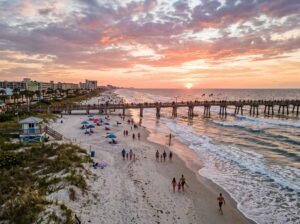
The beaches. From the calm turquoise water at Flamenco Beach on Culebra to the surf breaks at Rincón to the local scene at Luquillo — the beaches here are genuinely excellent and varied.
The rum. Bacardí has been made in Puerto Rico for over a century. The island produces more rum than almost anywhere else in the world. A visit to the Bacardí distillery near San Juan is worth a half day.
What Is the Capital of Puerto Rico?
San Juan is the capital of Puerto Rico. It is also the largest city on the island and the center of government, commerce, tourism, and culture. San Juan sits on the northeastern coast and is home to just under 400,000 people in the city proper. It is where most flights arrive and where most first-time visitors spend the majority of their time.
What Is the Population of Puerto Rico?
Puerto Rico’s population is approximately 3.2 million people, though this number has shifted significantly over the past decade. Hurricane Maria in 2017 caused a major wave of emigration as residents left for the US mainland.
There is also a substantial Puerto Rican diaspora on the US mainland — particularly in New York, Florida, and New Jersey — that actually outnumbers the population living on the island itself.
What Language Does Puerto Rico Speak?
Puerto Rico has two official languages: Spanish and English.
Spanish is the primary language — what you will hear in daily life, in local restaurants, in markets, in neighborhoods away from the tourist areas. English is widely spoken in tourist areas, hotels, and restaurants in San Juan. The further you get from the city, the more Spanish-dominant things become.
You can absolutely visit Puerto Rico without speaking Spanish — but learning a few phrases is worth the effort. Buenos días, gracias, por favor, con permiso. Locals notice and respond warmly.
What Currency Does Puerto Rico Use?
US dollars. No exchange needed, no conversion math. Every ATM, every restaurant, every shop operates in US dollars.
Puerto Rico has an 11.5% sales tax that applies to food, drinks, shopping, and most services. Outside San Juan, costs drop significantly — local restaurants called fondas serve full meals at a fraction of what a hotel restaurant charges.
What Time Zone Is Puerto Rico In?
Puerto Rico runs on Atlantic Standard Time (AST) year-round and does not observe daylight saving time.
- In winter, Puerto Rico is 1 hour ahead of Eastern Standard Time.
- In summer, when the US East Coast moves to Eastern Daylight Time, both are on the same time.
What Is the Drinking Age in Puerto Rico?
Not 21. The legal drinking age is 18, and it is enforced — IDs are checked at bars and venues.
Drinking in public is also legal in Puerto Rico. You will see people walking around Old San Juan with drinks in hand and that is completely normal and legal.
Is Weed Legal in Puerto Rico?
Medical cannabis is legal. Recreational cannabis is not fully legalized in the same way some US states have done it, but medical dispensaries operate across the island and enforcement of recreational use varies. Check current laws before you go and use common sense in public.
Does Puerto Rico Pay Taxes?
Puerto Ricans pay some US federal taxes — including Social Security and Medicare payroll taxes — but they do not pay US federal income tax on income earned in Puerto Rico. Puerto Rico has its own separate income tax system and collects its own taxes locally, including the 11.5% sales tax.
Corporations doing business in Puerto Rico have historically received significant tax incentives from the US government, which is one reason pharmaceutical companies and other businesses have a large presence on the island.
Can Puerto Rico Vote for President?
No. Puerto Ricans living on the island cannot vote in US presidential elections. Puerto Ricans who move to one of the 50 states gain full voting rights immediately — but as long as they live on the island, they cannot participate in presidential elections.
When Did Puerto Rico Become Part of the United States?
Puerto Rico became a US territory in 1898. The Treaty of Paris, which ended the Spanish-American War, transferred Puerto Rico from Spain to the United States along with Guam and the Philippines.
Puerto Rico had actually achieved a significant degree of autonomy from Spain just before the war, through the Carta de Autonomía of 1897 — effectively ended when the US took control. The island had been under Spanish colonial rule since 1493, when Columbus arrived during his second voyage.
Puerto Ricans were granted US citizenship in 1917 through the Jones-Shafroth Act — notably, just before the US entered World War I, which meant Puerto Ricans could be drafted into the US military.
When Was Puerto Rico Founded?
Spanish colonial settlement began in 1508, when Juan Ponce de León established the first permanent European settlement. San Juan was formally established in the early 1520s and became one of the most important Spanish colonial cities in the Americas.
The island had been inhabited by the Taíno people long before European arrival. The Taíno called the island Borikén — which is why you will hear Puerto Ricans refer to themselves as Boricuas, a term of cultural pride rooted in that indigenous name.
Is Puerto Rico Safe?
Yes — for the vast majority of visitors, Puerto Rico is safe and the experience is positive.
The honest version: Puerto Rico has areas with high crime rates, mostly concentrated in certain urban neighborhoods that tourists do not typically visit. The areas where visitors spend most of their time — Old San Juan, Condado, Ocean Park, Santurce, the beaches and towns across the island — are generally safe with normal awareness.
The same common sense applies here as anywhere: do not walk alone in unfamiliar areas late at night, keep an eye on your belongings, do not leave valuables visible in a parked car. Locals are genuinely warm and welcoming and most will go out of their way to help you if you need something.
Is Puerto Rico Expensive?
It depends entirely on how you travel.
It can be very affordable. Eat at local fondas, stay outside the main tourist zones, and live something close to how locals live — your money goes a long way. Roadside food stalls are cheap and excellent.
It can also be expensive. Stay at a resort hotel in Condado, eat at upscale Old San Juan restaurants every night, drink at hotel bars — the bill adds up fast, especially with the 11.5% sales tax on everything. Prices in tourist-heavy areas feel comparable to a major US city.
The island rewards people who explore beyond the obvious and eat where locals eat.
The Capital: San Juan
San Juan is where most people start, and there is a good reason for that. The city has history, food, nightlife, beaches, and some of the best-preserved Spanish colonial architecture in the Western Hemisphere.
Old San Juan — the historic walled city on a small peninsula — is where you will find the colorful buildings, the blue cobblestone streets, and the two massive Spanish fortresses: Castillo San Felipe del Morro and Castillo San Cristóbal. Both are UNESCO World Heritage Sites and genuinely worth your time.
Outside the old city, Santurce has become the center of the island’s contemporary food and art scene — street murals, local restaurants, independent shops, and a nightlife scene that has nothing to do with the tourist crowd. The Mercado de Santurce on weekend mornings is a great introduction to local food culture.
Condado is the main hotel strip, walking distance from the old city, with beach access and everything you would expect from a resort neighborhood.
Ocean Park, just east of Condado, is quieter, more residential, and preferred by people who want a beach without the crowds.
The Rest of the Island
San Juan gets the attention, but the rest of Puerto Rico is where the island opens up.
El Yunque is about 45 minutes east of San Juan — the only tropical rainforest in the US National Forest system. Go early; it gets crowded by midmorning and it almost always rains in the afternoon.
Rincón is on the west coast, about two hours from San Juan. The surf capital of Puerto Rico and one of the most relaxed places on the island. Humpback whales pass through from January to March. Boutique guesthouses and a completely different pace from San Juan.
Cabo Rojo is in the southwest corner. The red cliffs at Punta Jaguey are striking and unlike anything else in Puerto Rico. The salt flats nearby attract birds and photographers. The beaches at Boquerón are among the calmest and most beautiful on the island.
Ponce is the second largest city, on the south coast, with its own proud cultural identity and a walkable downtown. The Museo de Arte de Ponce is one of the best art museums in the Caribbean.
Aguadilla is in the northwest with a smaller airport — useful if you want to do a one-way drive and fly back from the west side rather than backtracking to San Juan.
Vieques and Culebra are two smaller islands off the east coast, reachable by ferry or small plane. Culebra has Flamenco Beach — widely considered the best beach in Puerto Rico. Vieques has Mosquito Bay, consistently ranked the brightest bioluminescent bay on earth. Both islands move at a noticeably slower pace than the main island.
Food
Puerto Rican food is one of the best reasons to visit and one of the most underrated things about the island.
The base of the cuisine is built around rice, beans, plantains, and pork, seasoned with sofrito — a blend of herbs, peppers, garlic, and onion that is the foundation of most traditional cooking. You will encounter it everywhere and it tastes different in every kitchen.
Mofongo is the dish most associated with Puerto Rico — fried plantains mashed with garlic and olive oil, typically served with meat or seafood.
Lechón is whole roasted pig, slow-cooked over wood. The best place to eat it is along Route 184 southeast of San Juan, known as La Ruta del Lechón — a stretch of roadside restaurants that do nothing but roast pig. Go on a weekend when it is fully operational.
Tostones are fried green plantains, pressed flat and fried again. They come with almost everything and are always the right call.
Alcapurrias and bacalaítos are street food — fritters made from ground plantain or yuca and fried codfish batter. You will find them at beach kiosks and roadside stands.
Piraguas are shaved ice cones sold by street vendors with flavored syrups. On a hot afternoon they are hard to argue with.
Outside San Juan, a local fonda will feed you a full plate of rice, beans, meat, and plantains for a few dollars. That is where the real food is.
What to Do in Puerto Rico
Puerto Rico has enough to fill two weeks without repeating yourself. I have a full separate post on things to do in Puerto Rico that covers everything in detail. Here is the overview:
Old San Juan: Walk the cobblestone streets, visit the two fortresses, eat your way through the restaurants, watch the sunset from the city walls. Give it at least a full day, ideally two.
El Yunque Rainforest: Hiking trails, waterfalls, dense forest. Go early.
Bioluminescent Bays: Puerto Rico has three — Mosquito Bay on Vieques, Laguna Grande near Fajardo, and La Parguera in the southwest. Kayaking through one at night is genuinely one of the most unusual experiences available anywhere.
La Ruta del Lechón: Route 184 in the mountains southeast of San Juan. Go on a weekend and eat until you cannot anymore.
Bacardí Distillery: Near San Juan in Cataño, accessible by a short ferry from Old San Juan. Tours available, rum included.
Cabo Rojo: The red cliffs, the salt flats, and Boquerón beach. Stunning and very different from the rest of the island.
Ponce: Worth at least a day trip from San Juan. The Museo de Arte de Ponce alone justifies the drive.
San Juan nightlife: Santurce and La Placita are the centers of the local scene. It starts late, goes until early morning, and the music is live and excellent.
Culebra and Vieques: Plan to stay at least one night rather than doing them as a day trip.
Best Beaches in Puerto Rico
Puerto Rico has beaches that suit almost every type of traveler. I have a complete separate post on the best beaches in Puerto Rico covering each one in detail. Here is the overview:
Flamenco Beach (Culebra): White sand, clear turquoise water, consistently ranked among the best in the Caribbean. Worth the ferry or small plane to get there.
Luquillo Beach: On the northeast coast, about 45 minutes from San Juan. Popular with families and locals. The kiosk row sells excellent local food.
Crash Boat Beach (Aguadilla): A local favorite in the northwest. Unusually clear water, colorful fishing boats, good energy.
Boquerón Beach (Cabo Rojo): Long, flat, calm, and very popular with locals on weekends.
Playa Sucia (Cabo Rojo): Near the red cliffs of Punta Jaguey. Remote, stunning, worth the effort.
Ocean Park Beach (San Juan): The best beach within easy reach of the city. Calmer and less crowded than the Condado strip.
Playa Buyé (Cabo Rojo area): A local favorite that most tourists never find.
Where to Stay in Puerto Rico
Where you stay shapes your trip more than almost any other decision. I have a full separate post on hotels and places to stay in Puerto Rico with specific recommendations by area, budget, and travel style.
San Juan — Condado: The main hotel strip. Beach access, walkable to Old San Juan, full range of options from budget to luxury.
San Juan — Old San Juan: Boutique hotels, cobblestone streets out your door, restaurants and bars within walking distance. Less beach access but more atmosphere.
San Juan — Ocean Park: Quieter, more residential, locally loved beach. Good balance of convenience and local feel.
Rincón: The place to stay for the west coast surf-and-sunset experience. Boutique guesthouses, surf camps, vacation rentals.
Culebra and Vieques: Limited accommodation, slower pace, world-class beaches and bioluminescent bays. Worth the effort.
Cabo Rojo area: Less developed and more local. Good base for the southwest corner of the island.
Puerto Rico does have all-inclusive resorts — a handful, mostly around the San Juan area.
When to Visit Puerto Rico
Best time overall: December through April. Dry season, lower humidity, cooler temperatures. Also peak tourist season with higher prices and more crowds.
Best value: May and early June. Crowds thin out, prices drop, and the serious hurricane risk has not yet arrived. This is the window I would personally recommend for most first-time visitors with flexibility.
Hurricane season: June through November, with peak risk in August and September. Puerto Rico was devastated by Hurricane Maria in September 2017. Travel insurance that covers weather disruption is worth purchasing if you travel during this window.
Christmas and New Year: Extremely busy and prices are high, but the island is genuinely festive in a way that makes it worth considering if you do not mind crowds.
Spring break: Busy in the San Juan tourist zones. Book accommodation well in advance.
Getting to Puerto Rico
Flying: Luis Muñoz Marín International Airport (SJU) in San Juan is the main entry point. Direct flights operate from most major US cities. Aguadilla’s Rafael Hernández Airport (BQN) on the west coast has service from a smaller number of carriers including JetBlue. Southwest also operates flights to San Juan from several US cities.
It is a domestic flight. No passport required for US citizens. No customs. No immigration checkpoints.
Getting Around Puerto Rico
In San Juan: Uber works well throughout the metro area. Taxis are available — agree on the price before you get in if the taxi is not metered.
Beyond San Juan — rent a car. If you want to see more than San Juan, a rental car is not optional. It is the difference between seeing Puerto Rico and seeing a small, expensive corner of it. Rental cars typically cost $50–$100 a day. Book directly through the rental company’s website and pre-pay when you can, especially in high season.
Driving notes: Gas stations charge by the liter and you pay inside rather than at the pump. Road signs are in Spanish but use standard symbols. Google Maps and Waze both work reliably. The driving style is more assertive than most US cities.
Ferries: The main public ferry connects Ceiba on the east coast to Culebra and Vieques. The Cataño ferry from Old San Juan to Cataño is a quick and cheap way to reach the Bacardí distillery.
When Is the Puerto Rican Day Parade?
The Puerto Rican Day Parade in New York City typically takes place on the second Sunday of June along Fifth Avenue in Manhattan — one of the largest parades in the United States.
Puerto Rico itself has many festivals throughout the year. The San Sebastián Street Festival in Old San Juan in January is one of the biggest — four days of live music, food, art, and street celebrations. Fiestas patronales, the patron saint festivals held in each municipality, are worth catching if your timing lines up.
Is Lady Gaga Puerto Rican?
No. Lady Gaga was born in New York City and is of Italian-American descent.
Is Jessica Alba Puerto Rican?
No. Jessica Alba is of Mexican and French-Canadian descent and was born in California.
That’s it. If you liked this article, don’t forget to share it with your friends and family so they can learn all about Puerto Rico.
Read Also
4 Responses