The coffee hit differently that first morning. Rich, dark, almost smoky — the kind that makes you stop mid-sip and just sit with it. That was Puerto Rico announcing itself. And honestly, nothing that came after surprised me any less.
If you’ve got three days on this island, you’re going to be busy. Not rushed-tourist busy. Just — there’s so much here that’s genuinely worth your time, and three days is exactly enough to feel like you actually experienced it rather than just passed through.
Here’s everything I did. What it cost. What caught me off guard. And what I’d do again without hesitation.
So, let’s start with the best things to do in Puerto Rico.
Day 1 — Old San Juan Does Something to You
Read: Places to visit in Old San Juan
Start the Morning at Caficultura
I almost skipped breakfast and just grabbed coffee to go. Glad I didn’t.
Caficultura sits right in the heart of Old San Juan and it has this warm, slightly chaotic energy that just works. The kind of place where the tables are close together and you can hear three conversations at once but it doesn’t feel crowded — it just feels alive.
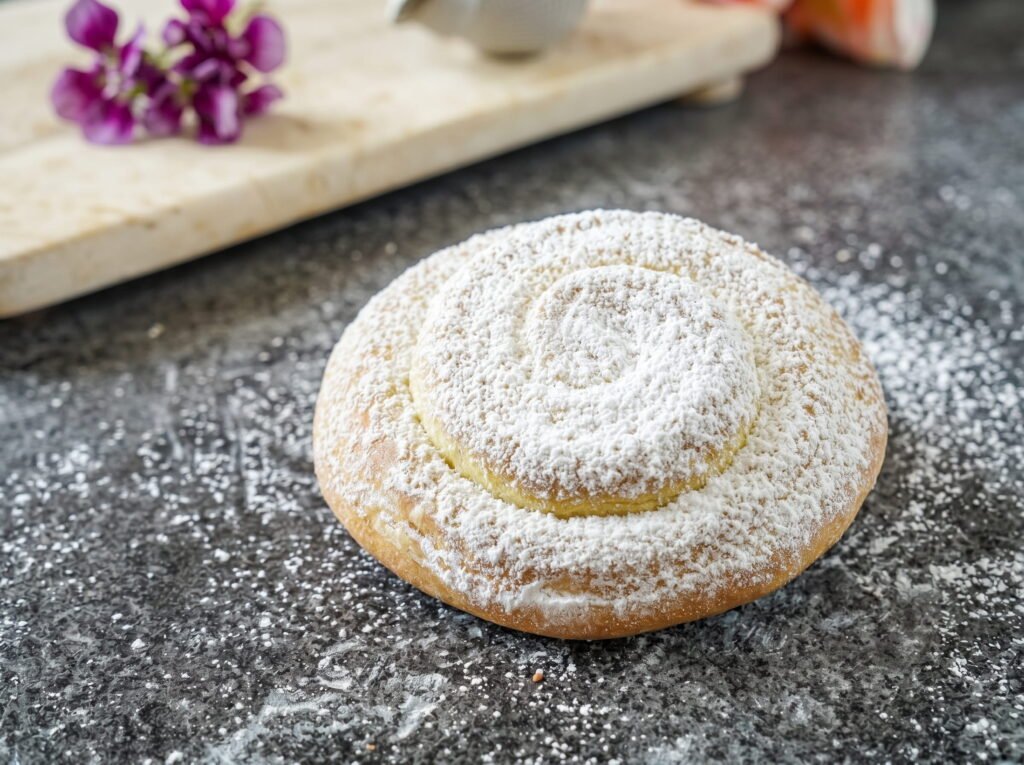
I went with the mango pancakes. Tropical syrup, fluffy inside, a little crisp on the edges. My travel partner had the mallorca sandwich — sweet bun, ham, cheese, dusted with powdered sugar — and kept saying “this shouldn’t work but it works.” We both had the Puerto Rican coffee. Between the two of us, breakfast came out to just under $30, which felt completely fair.
A few things to know:
- Arrive early, before 9am if you can — it fills up fast
- The street view from the window seats is worth asking for
- Don’t rush this. The morning outside is worth watching
Plaza de Armas and the Umbrella Street
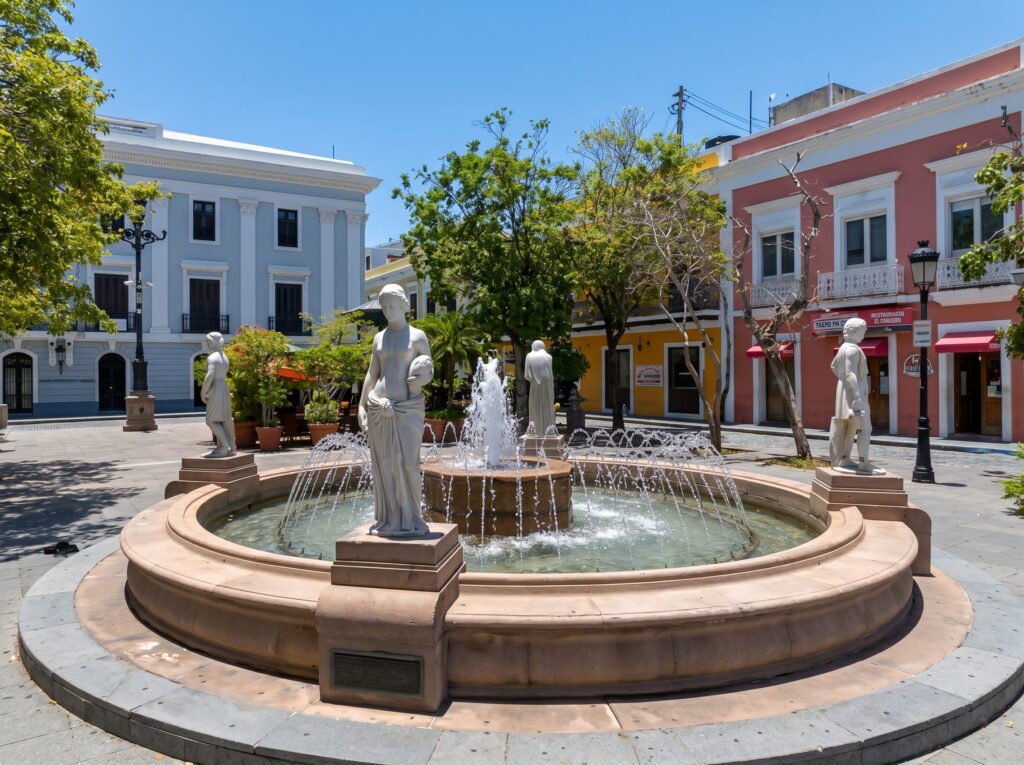
From there it’s a short walk to Plaza de Armas, the main square of the old city. Colonial architecture all around, statues of the four seasons in the center, vendors selling fresh coconuts. I bought one for $4 and stood there watching a street performer for longer than I planned to.
Then Calle Fortaleza. Okay — the umbrella canopy. I thought it was going to feel like a tourist trap. Turns out I was completely wrong.
The colors above you are genuinely beautiful, and the murals on the walls below them are even better. Each one tells something specific about Puerto Rican history or culture. I could have walked that street three times. The artisan shops sell vejigante masks, handmade jewelry, and local coffee — not the generic souvenir stuff you expect.
Read: Best Beaches in Puerto Rico
El Morro — You Have to Do This
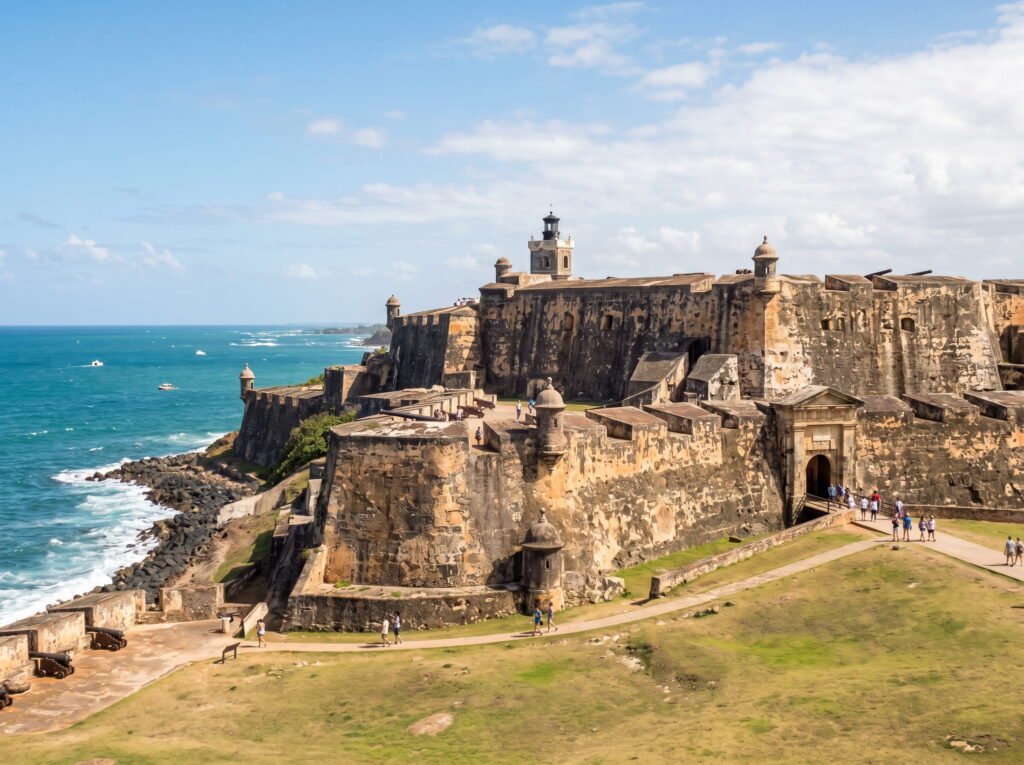
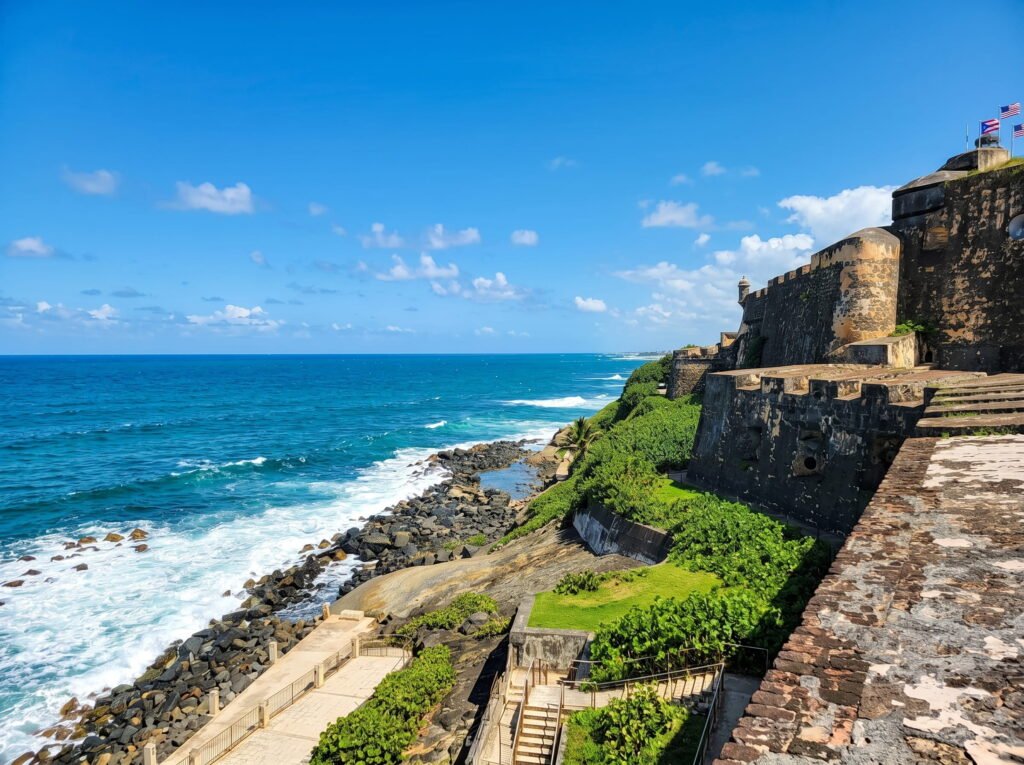
A short walk from the plaza brings you to Castillo San Felipe del Morro. The fortress. The one you’ve seen in every Puerto Rico photo.
Here’s the thing — photos don’t do it justice. It’s perched on a seaside cliff and it just looms. Built in the 16th century to protect the island from invasion, and standing there you genuinely believe it worked.
Entry is $10 per adult, and that ticket also covers Castillo San Cristóbal nearby — valid for two days. Worth every cent.
The tunnels inside are narrow and cool and smell faintly of stone and salt air. Climb the watchtowers and you get panoramic views of the Atlantic. I stood up there for maybe 15 minutes just looking out. The lawn outside the fortress is this huge stretch of green where people fly kites — which sounds random but is actually one of the more peaceful things I’ve seen.
A few things to know:
- Bring a hat and sunscreen — the sun on that cliff is relentless
- Walk the Paseo del Morro trail behind the fortress for quieter ocean views
- It’s cashless now, so have a card ready
Lunch at El Jibarito
By the time we got to El Jibarito it was almost 1pm and I was hungry enough to order two things.
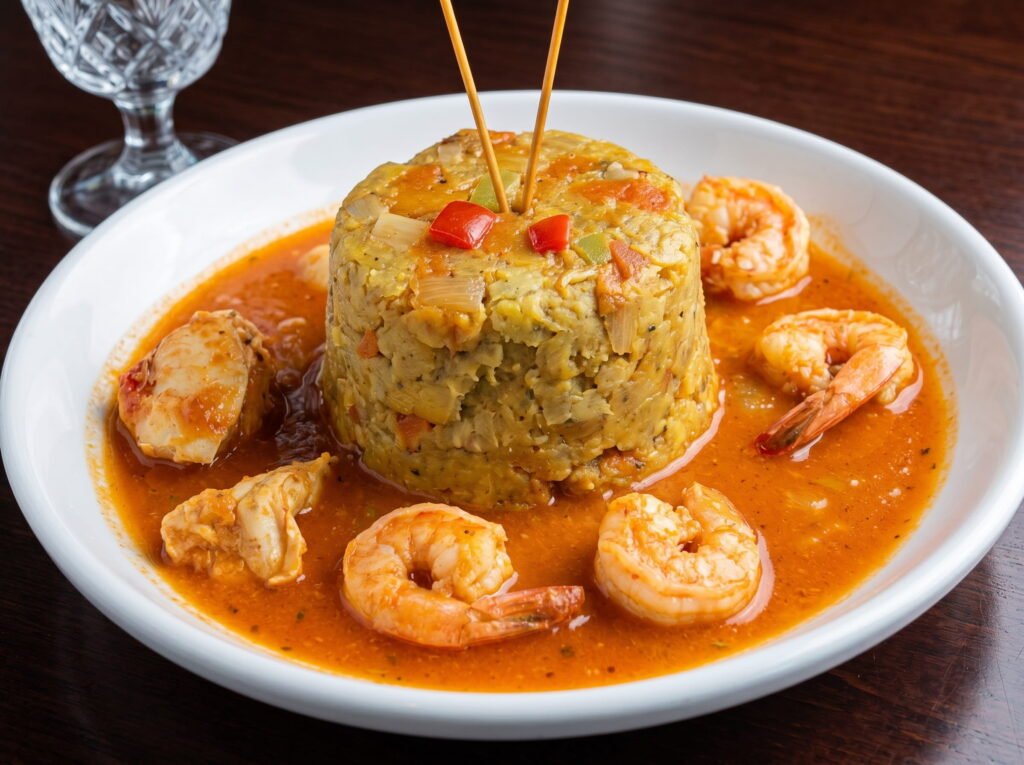
This place is a local institution. Small, unpretentious, tables close to the windows where the breeze comes in. The mofongo relleno is what you’re here for — mashed plantains stuffed with your choice of shrimp, chicken, or pork. I had the shrimp version. It was dense and savory and completely satisfying. Washed down with a passionfruit juice.
Meals run about $15–$20 each. Not fancy. Just really, genuinely good.
The Cathedral and Plaza del Quinto Centenario
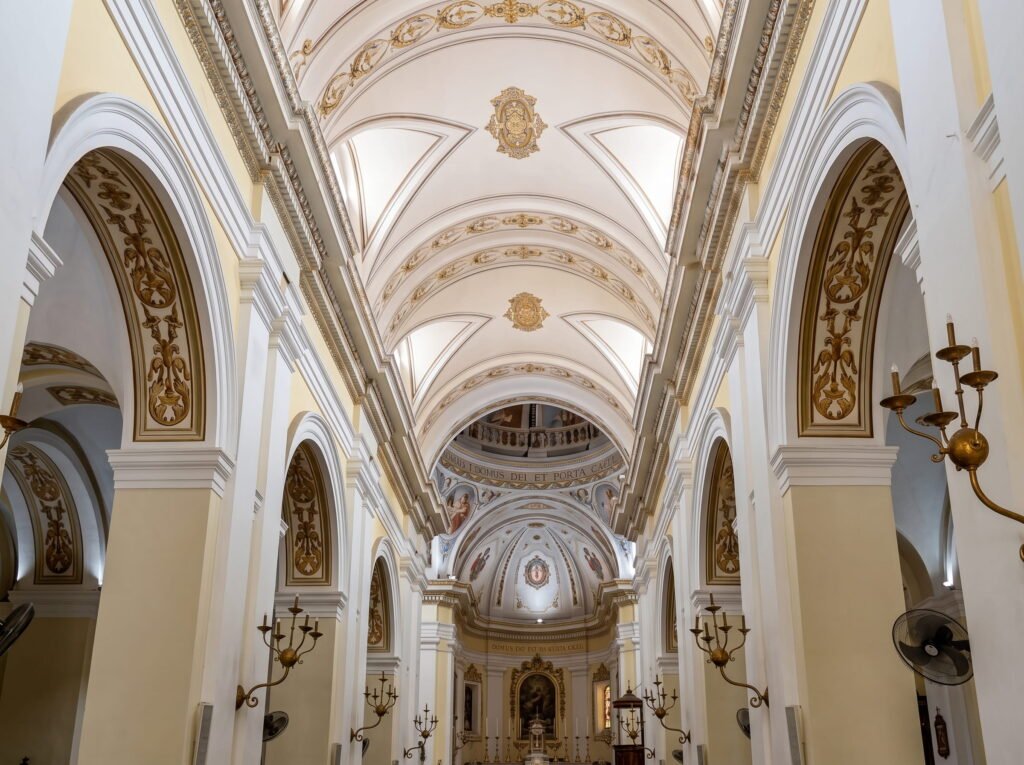
The afternoon was slower. San Juan Cathedral first — one of the oldest churches in the Americas. Entry is free. The stained glass inside is stunning, and the silence after a morning of walking cobblestone streets felt earned.
Then a short walk to Plaza del Quinto Centenario. There’s a towering totem pole sculpture in the center, built to mark the 500th anniversary of Columbus arriving in the New World. The views of the Atlantic from that plaza are sweeping. It’s one of those spots where you just sit on a bench for a while and let the place do its thing.
Read: Vieques Island, Puerto Rico
Museo de las Américas — Don’t Skip This One
I almost did skip it. Admission is $6 and I thought, okay, how interesting can a museum really be after a full morning outside.
Very. Very interesting.
The Museo de las Américas is inside the historic Cuartel de Ballajá building and it covers everything — Taíno indigenous culture, the island’s colonial history, African heritage, modern Puerto Rican art. The section on local contemporary art alone was worth the stop. Give yourself an hour at least.
The courtyard is a hidden gem. Quiet, arched, perfect for five minutes of doing absolutely nothing.
Sunset at Paseo de la Princesa
As the day wound down, we walked to Paseo de la Princesa. It’s a promenade that runs along the old city walls — lantern-lit, lined with gardens, street performers scattered throughout.
At the far end is the Raíces Fountain. A large sculpture representing Puerto Rico’s cultural roots — Taíno, Spanish, African. At sunset, the golden light hits the water in a way that stops you mid-step.
On weekends the whole promenade comes alive with artisan markets and live music. We happened to be there on a Saturday and stood at a stall eating fried snacks from a vendor for about $5 while a band played somewhere nearby. That moment cost almost nothing and is the one I keep coming back to.
Dinner at Marmalade
Okay. This one is a splurge. But if you’re going to spend money once in Puerto Rico, spend it here.
Marmalade is on Calle Fortaleza — same street as the umbrellas — and it is genuinely one of the best meals I’ve had anywhere. They do a five-course tasting menu only. No à la carte. For groups of five or fewer, it’s $155 per person right now. That’s not cheap. But every single course was something I hadn’t tasted before — creative, precise, locally sourced.
Add wine pairings if you can. Ask your server for recommendations — they know the menu inside out.
Book well in advance. This place fills up every night.
Day 2 — The Rainforest, the Beach, and Something Glowing in the Dark
La Bombonera Before the Drive
Day two starts earlier. We were on the road to El Yunque by 8am, but first — La Bombonera.
One of Puerto Rico’s oldest bakeries. The kind of place that feels like it’s been there forever because it has. Mallorcas — soft sweet rolls, lightly toasted, filled with ham and cheese, dusted with powdered sugar — and a café con leche that reminded me of the Caficultura coffee from the morning before. Maybe even better.
Breakfast for two came out to around $20. The nostalgia in that place is thick. Old photos on the walls, the smell of fresh bread, locals at the counter reading newspapers. Show up early before the line builds.
El Yunque — The Only Tropical Rainforest in the U.S. National Forest System
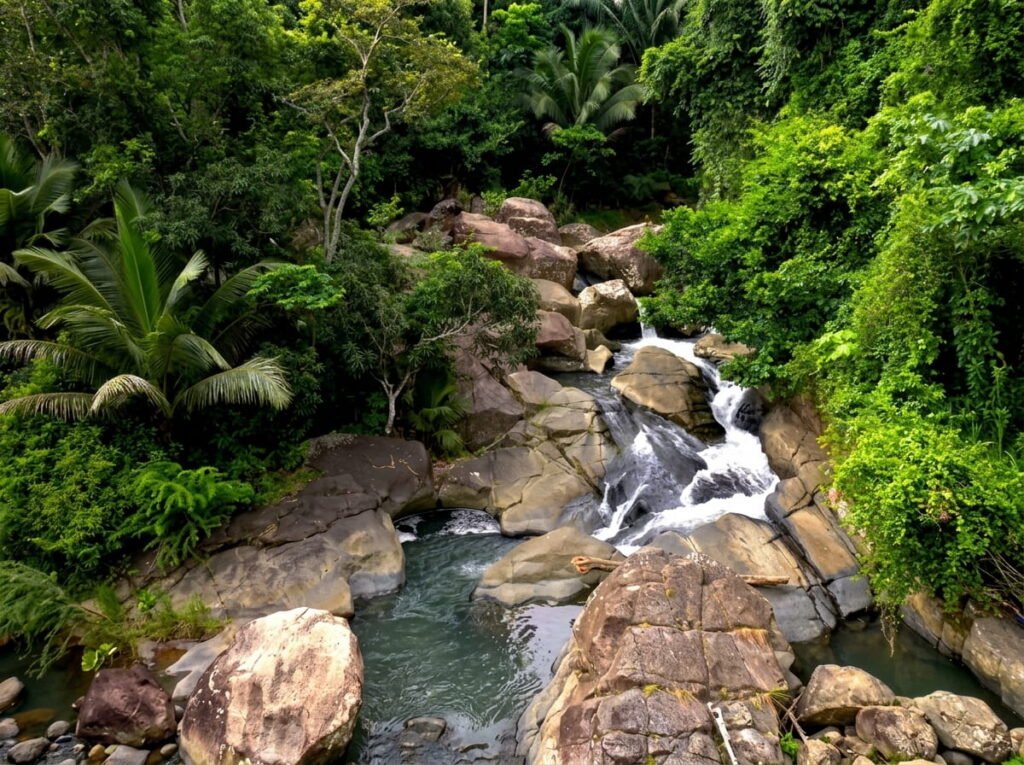
About 45 minutes east of San Juan and suddenly you’re in a different world entirely.
El Yunque National Forest is the only tropical rainforest in the entire U.S. National Forest System. And right now — good news — entry is free and no reservations are required as of early 2026. That can change, so check before you go, but we just drove up, found parking early, and walked straight in.
The hike to La Mina Falls is where you start. Moderate trail, about 30–40 minutes each way, ending at a 35-foot waterfall with a cool, clear pool beneath it. The trail smells like wet earth and something sweet I couldn’t identify. Tropical birds in the canopy above you the whole way. My shoes were soaked within the first 10 minutes and I genuinely didn’t care.
Swimming in that pool is cold and perfect.
A few things to know:
- Wear waterproof shoes and bring a change of clothes
- The trail gets slippery after rain — which is often
- Get there early, parking fills up by mid-morning
- No vendors inside the park, bring water and snacks
After the falls, we climbed the Yokahu Tower — a 69-foot observation tower with views across the entire rainforest canopy out to the coastline. On a clear day it’s UNREAL. Then tackled the Mt. Britton Trail, steeper, leading to a stone tower at the summit. The 360-degree views from up there were some of the best of the whole trip.
We were back at the car by noon, completely soaked, grinning.
Lunch at the Luquillo Kiosks
Drive to Luquillo Beach and you’ll find a row of over 60 food stalls along the road. The Luquillo Kiosks. This is where locals eat and it’s exactly as good as it sounds.
I had alcapurrias — fried plantain fritters stuffed with seasoned meat — and bacalaitos, crispy codfish fritters. Both running $3–$5 each. My travel partner went full meal: lechón asado, roast pork with rice and beans, around $12. We ate at a picnic table with a direct view of the beach.
One thing: cash only at most stalls. Bring small bills.
Luquillo Beach — Capital of the Sun
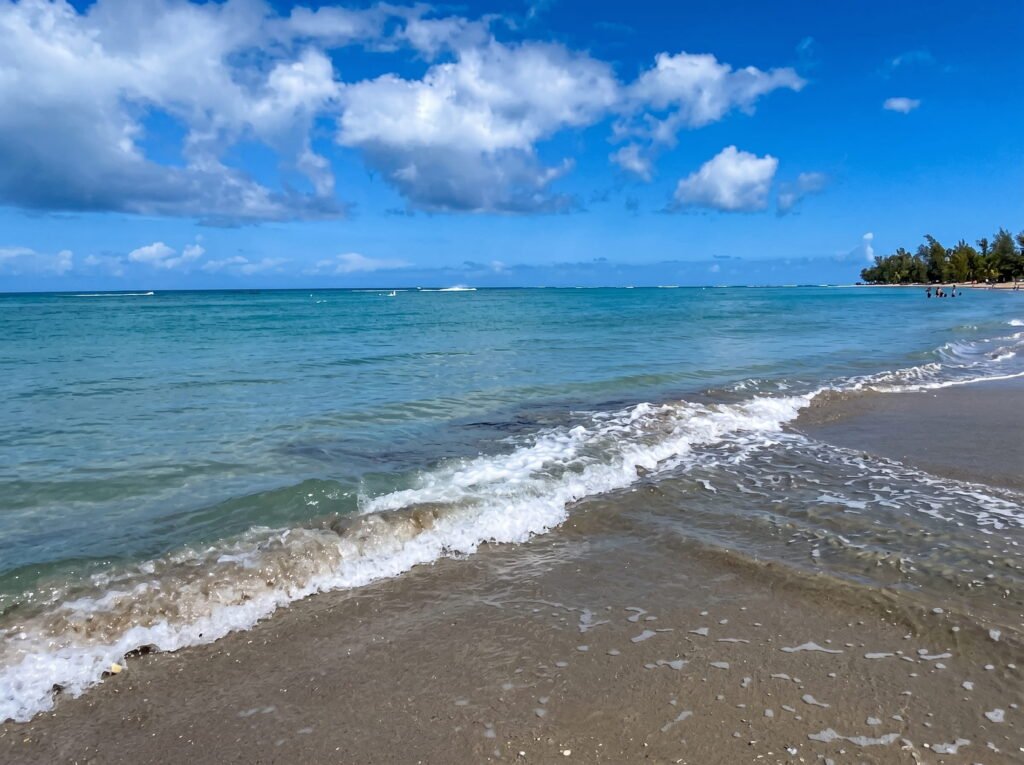
After lunch we just… stayed. For hours.
Luquillo is called the “Capital of the Sun” and that’s not marketing speak — it earns it. White-gold sand, turquoise water calm enough for easy swimming, palm trees along the edge offering real shade. Kayak and paddleboard rentals are available for around $20–$25 per hour if you want to be on the water rather than in it.
I napped under a palm tree for 45 minutes. No apologies.
Carabalí Rainforest Adventure Park
This was my travel partner’s idea. I thought it would be cheesy.
Was it worth it? Absolutely.
Carabalí Rainforest Adventure Park sits right at the foothills of El Yunque — 600 acres, and they offer horseback riding, ATVs, UTVs, and go-karts. We did the horseback riding through the rainforest trails. Our guide Angel was patient, funny, and seemed to genuinely love those horses. The trail runs alongside the Mameyes River and there’s a midway stop where you can jump in for a swim and grab a snack.
Book in advance — tours fill up. And wear long pants and closed-toe shoes, they’re strict about it and for good reason.
Bio Bay Kayaking at Laguna Grande — Save This Night
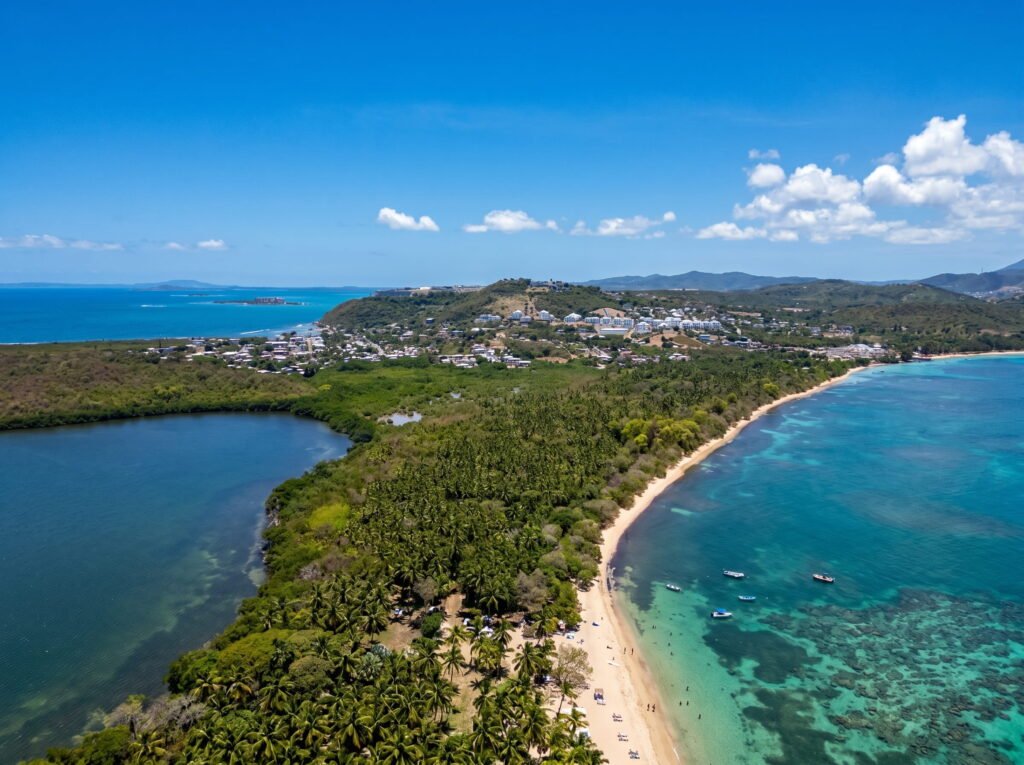
I’m going to be honest. When someone first described bioluminescent kayaking to me, I thought it sounded like something you do because you feel like you should, not because it’s actually incredible.
I was so wrong.
As the sun drops, you paddle through a mangrove channel toward Laguna Grande in Fajardo. The water around your kayak starts to glow. Every stroke of your paddle leaves a trail of blue-green light — millions of microscopic dinoflagellates lighting up when the water moves. You put your hand in and pull it out glowing.
Tours currently run around $50–$75 per person depending on the operator and last about two hours. Our guide explained the science behind it the whole way — the biology, how fragile the ecosystem is, why you can’t use bug spray (it kills the organisms, so skip it entirely that evening).
I’ve seen a lot of things. This is one I’ll actually remember.
A few things to know:
- Book ahead — this sells out regularly, especially on weekends
- Wear lightweight quick-dry clothes, you will get wet
- Darker nights mean brighter glow — go on a new moon if possible
- No bug spray. Seriously.
Dinner at El Varadero Seaside Grill
After the bio bay, we were hungry and slightly stunned. El Varadero Seaside Grill in Fajardo was the right call — waterfront, relaxed, exactly what you want after two hours in a kayak.
Garlic shrimp, a side of mofongo, a tropical cocktail. Meals run around $25–$40 per person. We asked for deck seating and got it. The ocean breeze did the rest.
Day 3 — A Ferry, an Island, and Flamenco Beach
Breakfast in Fajardo, Then the Ferry
Staying in Fajardo for the night made day three easier. Breakfast at Hacienda San Pedro Café — rich local coffee, a quesito (cream cheese pastry), a toastada with guava jam. Simple, cozy, around $10. Exactly right before catching a ferry.
The Ceiba Ferry Terminal is where you board for Culebra. Current fares for non-residents are around $11.25 each way plus a $2 environmental preservation fee — so budget about $27 round trip per person. The crossing takes roughly an hour.
Get there at least an hour before departure. Tickets sell out on weekends and holidays, and the check-in window closes 10 minutes before the ferry leaves. Buy online in advance through the Puerto Rico Ferry app.
The ride itself is lovely. Open ocean, other islands visible in the distance, and on our crossing a small pod of dolphins showed up off the bow for a few minutes. Just that part alone.
Flamenco Beach
There are beaches. And then there is Flamenco.
Consistently ranked among the most beautiful beaches in the world, and standing on it you understand why immediately. Powdery white sand, turquoise water so clear you can see the bottom at chest depth, green hills behind you closing the whole thing in.
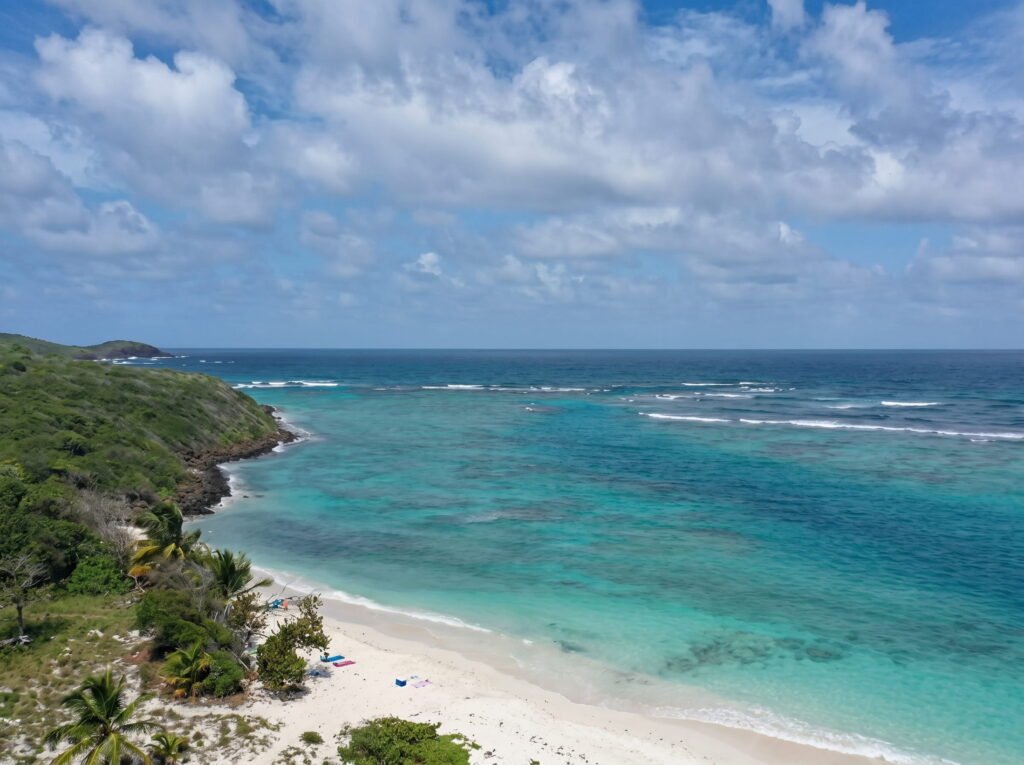
We spent the whole morning here. Snorkeling gear rental runs about $15–$20 and the underwater world is genuinely colorful — reef fish, sea turtles if you’re patient. I rented an umbrella for $10 for the day and set up camp.
The crowds build by midday. Get there when you arrive on the island for the quietest version of it.
Lunch at Zaco’s Tacos
Culebra town is small and Zaco’s Tacos fits right into it. Quirky spot, bright colors, fish tacos that are actually excellent — fresh catch, good seasoning, not overpowered. Meals run about $12–$20.
We had the house-made margaritas and asked about the daily specials. Got something with local mahi-mahi that I’m still thinking about.
Read: Tours of Puerto Rico
Tamarindo Beach — For the Snorkeling
After lunch, a short ride to Tamarindo Beach. Calmer and shallower than Flamenco, and significantly less crowded. This is the snorkeling spot.
The water here is so shallow and clear in places it feels almost artificial. Sea turtles move through it slowly, unbothered. Rays drift along the bottom. Rent gear for $15–$20 and spend an hour just floating.
Tamarindo doesn’t get much attention compared to its more famous neighbor, and that’s entirely to its benefit.
Culebra National Wildlife Refuge
I thought this would be a quiet walk. It was — but quiet in the best sense.
The Culebra National Wildlife Refuge covers miles of untouched coastline and hiking trails. Entry is free. Brown pelicans, white-cheeked pintails, other native birds move through if you’re paying attention. The trails aren’t long but they’re genuinely peaceful. After three days of moving fast, this felt right.
Bring binoculars if you have them.
Sunset at Melones Beach
Before the evening ferry back, we walked to Melones Beach. It’s just a few minutes from the terminal and it’s one of those places that doesn’t make many lists.
Rocky, less crowded, faces directly west. The sun drops into the Caribbean Sea from here and turns the sky through orange, pink, and something close to red before it disappears. We sat on the rocks for about 40 minutes and said almost nothing.
Some things don’t need commentary.
Dinner at Dinghy Dock Before You Head Back
Right at the harbor, Dinghy Dock Restaurant is the last meal on the island — and a good one. Lobster pasta, grilled mahi-mahi, a piña colada while watching boats bob in the water. Meals run $25–$40 per person. Check the chalkboard for the fresh catch — it changes daily based on what the local fishermen brought in that morning.
Then the evening ferry back to Ceiba. An hour on the water in the dark. The lights of the main island appearing slowly on the horizon.
Three days. And somehow it still felt like we’d only just started.
Don’t miss