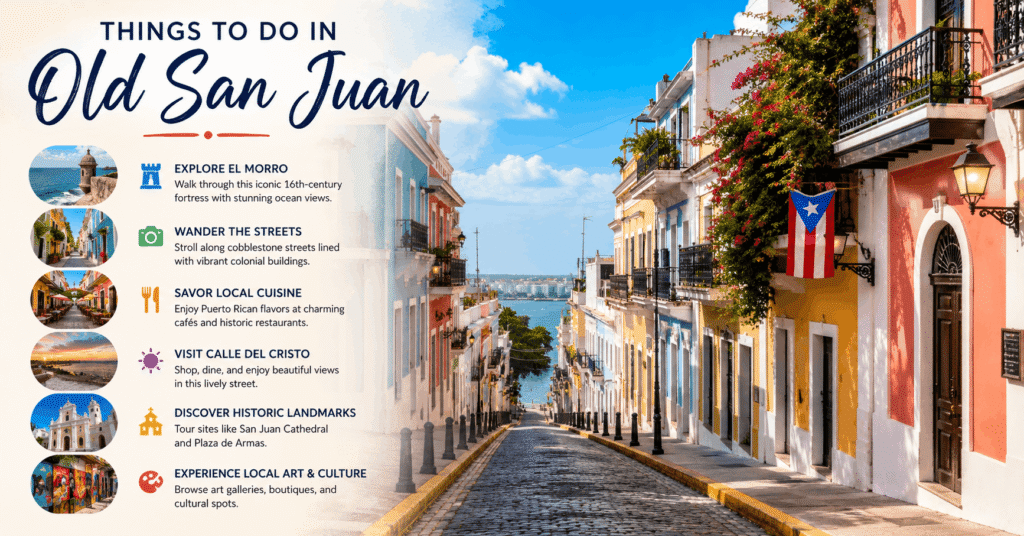
And I mean that literally. The jet bridge door opened and the air just — landed on me. Warm, wet, heavy. Like the island was already daring me to keep up.
San Juan does not ease you in. It just starts.
I’d been wanting to go for years. One of those cities you keep pushing back on the list until finally you just book the flight and figure it out later. That’s exactly what we did. And what I came home with was not what I expected — not because it disappointed, but because it was so much more than I’d prepared myself for.
Here’s everything you need to know about things to do in Old San Juan if you’re going tomorrow.
Start at the Beach — Seriously, Just Go
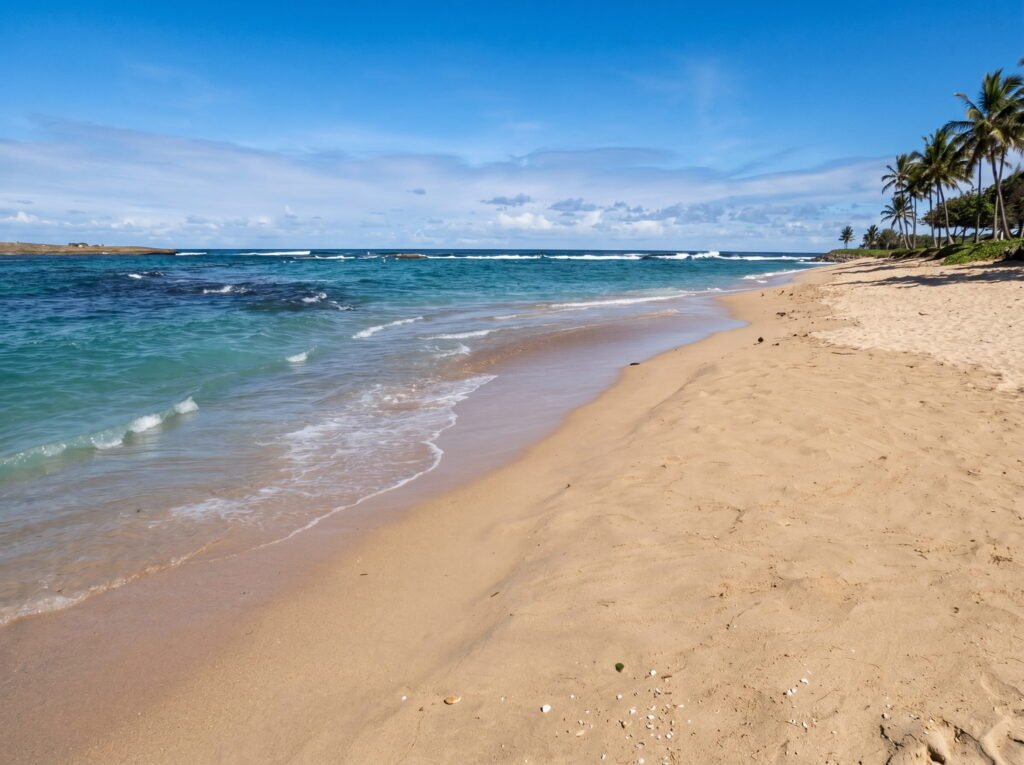
I almost skipped Playa Escambrón entirely. The name didn’t exactly fire me up and someone online had described it as “just okay.”
Glad I ignored that.
It’s a five-minute Uber from Old San Juan — maybe $7 depending on the time of day — and the water is this insane turquoise that looks staged. Warm, calm, protected by a natural breakwater so the waves stay manageable. You can see the silhouette of El Morro in the distance from the sand, which is surreal.
It’s not the flashiest beach on the island. I’ll say that clearly. But convenient? Absolutely. It’s the kind of spot you hit for 90 minutes between sightseeing, shake off the sweat, float for a bit, and feel human again.
A few things to know:
- Parking runs about $5–$7 if you drive
- There’s a coffee shop called La Mezcla right by the entrance — genuinely good coffee
- Go early morning for the best chance of spotting turtles in the water
Also — wear shoes over the rocky reef sections near the water’s edge. Found that out the hard way.
The Free Walking Tour Isn’t Optional
I do this in every city I visit. Every single one. And the one in Old San Juan might be the best I’ve taken anywhere in the world.
It starts in the morning and lasts around two hours. Tip-based — the recommended amount is around $10 per person, which is genuinely the best value you’ll spend in San Juan. Our guide knew this city the way you only know a place you grew up in. She walked us through cobblestone streets, explained the colonial architecture in ways that actually stuck, and pointed out details I would have walked past 50 times without noticing.
Old San Juan is a UNESCO World Heritage Site. The blue cobblestones. The Spanish colonial gates. The walls that have been standing since the 1500s. You could wander it alone and still be impressed. But having someone explain why things are the way they are? That’s a completely different experience.
She also gave us half a dozen food and bar recommendations by the end of the tour that we ended up using. That alone was worth the tip.
Book it. Show up on time. Tip generously.
Casa Blanca Is the Hidden Gem Nobody’s Talking About
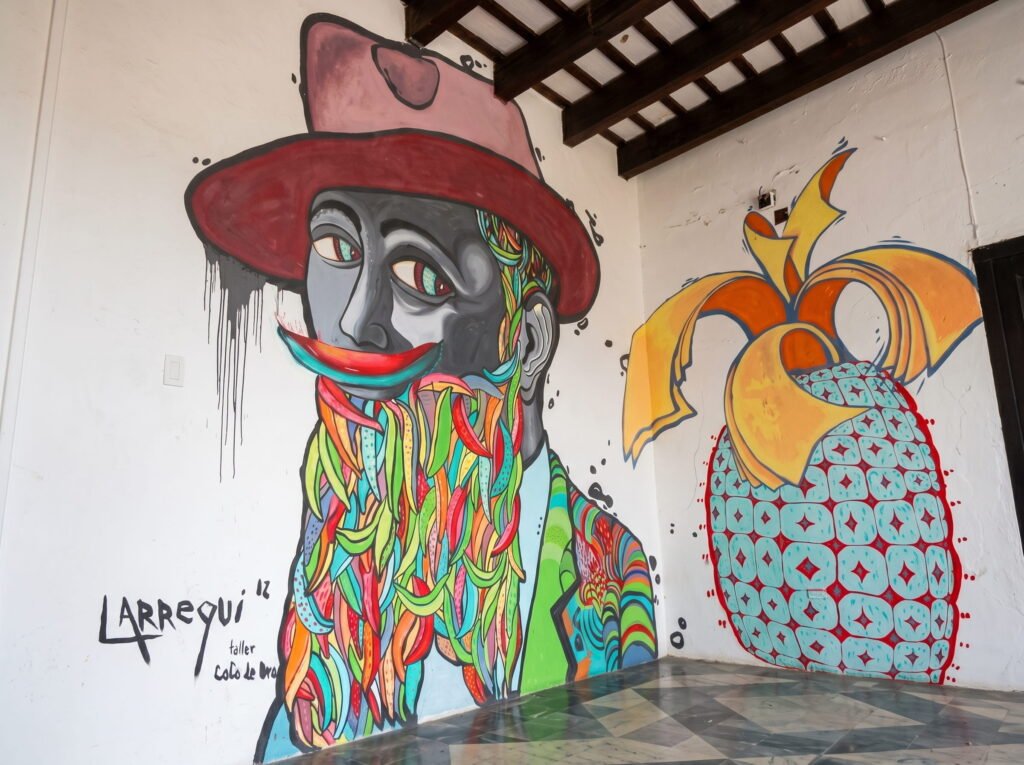
I’d done my research before the trip and Museo Casa Blanca barely came up. It sits near El Morro, tucked behind a big wooden door on a quiet stretch of Old San Juan, and most tourists walk right past it on the way to the fort.
Don’t do that.
Admission to the museum inside is $5. That gets you two floors of 16th and 17th-century furniture and artifacts, plus the actual history of the oldest residential structure in the Americas. Built in 1521. Originally intended for Ponce de León, who died before he ever got to live in it. His family ended up there instead, and the building has been through Spanish governors, military commanders, and finally the Puerto Rican government.
But the real reason to go — the part nobody seems to mention — is the garden out back. It’s completely free. Open to the public. And it feels like something out of a Spanish period drama. Shaded paths, old stonework, fountains, stunning views of San Juan Bay.
We went in the middle of the afternoon when it was genuinely brutal out — maybe 93 degrees — and the garden just pulled all of that heat out of the day. We sat in the shade for probably 20 minutes and didn’t want to leave.
If you have kids, bring them here before El Morro. If you don’t, come here after. Either way, don’t miss it.
The Forts Will Take More Out of You Than You Think
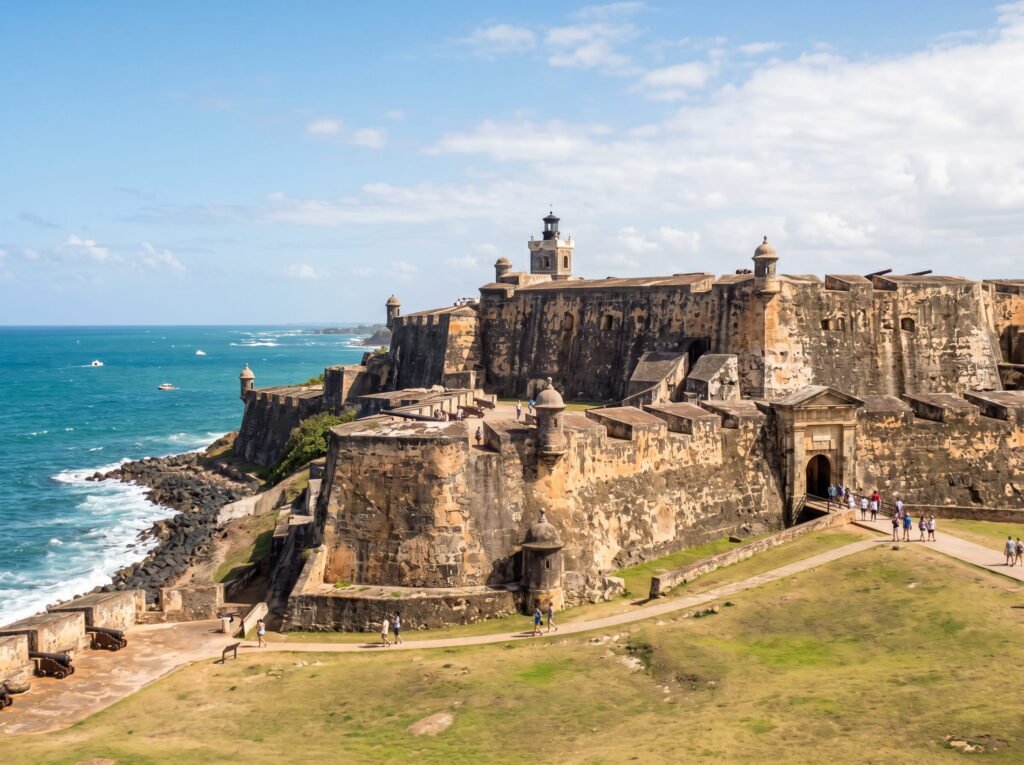
Here’s the thing about El Morro and Castillo San Cristóbal. Everyone puts them on the list, everyone goes, and almost everyone underestimates how much time they’ll spend there.
One ticket — $10 per adult, free for kids under 15 — gets you into both for up to two consecutive days. That price is good. What it doesn’t prepare you for is the sun.
I thought I was someone who could handle heat. I am not, apparently.
Go early. I cannot stress this enough. The forts open at 9:30 AM and by 11:00 the exposed stone is radiating heat back at you like a broiler. There is minimal shade inside, especially at El Morro. Bring water. A hat. Sunscreen you actually apply instead of leaving in your bag.
El Morro — or Castillo San Felipe del Morro if you want the full name — was built by the Spanish starting in 1539. The point was to protect the harbor from sea attacks. Standing at the top and looking out at the Atlantic, you get it immediately. The cannons. The walls. The way it just sits there daring anyone to try.
San Cristóbal is bigger. That’s the word. Three tiers, the largest European fortification in the Americas, and it goes on and on in a way that sneaks up on you. There were parts of it — deeper rooms, lower passages — where I genuinely didn’t see another tourist for 10 minutes. Just me and 400-year-old stone walls.
Between the two, plan for at least half a day. And drink more water than you think you need.
That Hidden Cemetery by El Morro
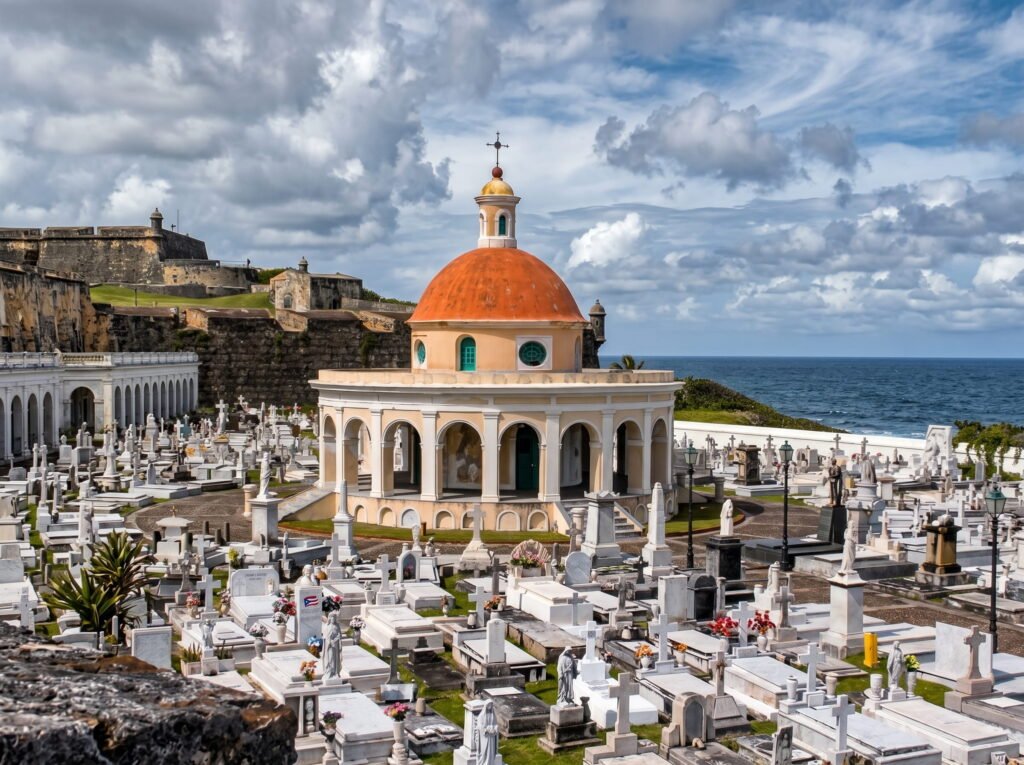
Most people see it from above and assume it’s closed.
It’s not.
The Santa María Magdalena de Pazzis Cemetery sits right along the bay wall near El Morro and it’s open to the public, free of charge, until 3 PM. You get there through a tunnel and just — walk in.
I almost felt like I was doing something I wasn’t supposed to. That quiet, slightly wrong feeling you get somewhere you didn’t expect to be allowed. But no. Completely open.
Established in 1863. Some of Puerto Rico’s most recognized names are buried there. The setting is extraordinary — white tombs against the bay, the old city wall behind you, El Morro visible from almost every angle. It’s peaceful in a way that the rest of San Juan never quite is.
Give it 20 minutes. Be respectful — obviously. And visit before heading into the fort since you’re already right there.
Casa Bacardí Is More Touristy Than I Wanted to Admit
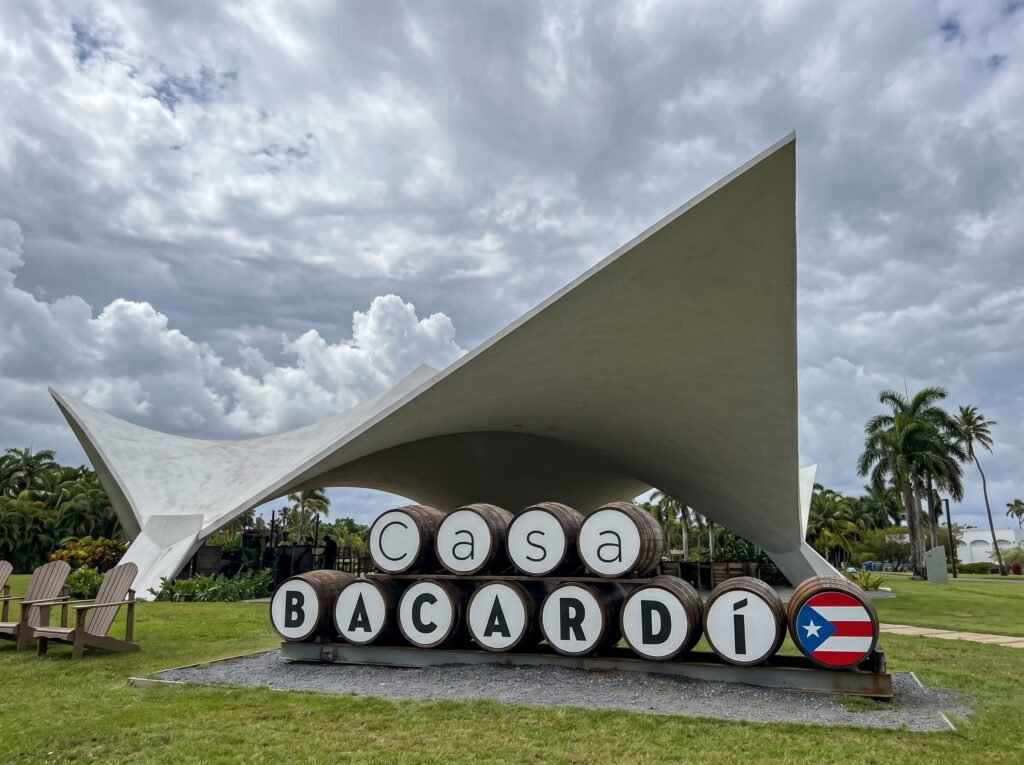
Standing in front of the place, I had a moment. A very large, very polished rum distillery with a shuttle that takes you around the grounds and a movie playing on a loop about brand history. Is this… a theme park?
Kind of. And I’m telling you to go anyway.
The most convenient way to get there is from Pier 2 in Old San Juan. Take the ferry across to Cataño — the ride is about 10 minutes and the views back toward Old San Juan are worth it alone — then either grab an Uber or a shared taxi for around $3 per person to the distillery from the dock.
The Legacy Tour runs $40 plus tax right now and includes a welcome cocktail — you pick from a mojito, daiquiri, or Cuba Libre before the tour even starts — plus a guided tasting of their Special Reserve at the end. There’s also a more in-depth Mixology class for $80 if you want to learn to actually make cocktails.
Between two of us, the Legacy Tour came out to around $90 with tax. Fine.
What I didn’t expect: the rum store at the end. There are bottles there — specific Bacardí expressions — that you genuinely cannot find in the US at any price point. We walked out with two bottles and felt good about it.
Also family friendly, no caveats. Bring kids. They’ll love the little shuttle and the grounds.
La Factoría — Yes, It’s On Every List. Yes, It Earns It.
Every Uber driver told us. Every guidebook. Every travel blog. Go to La Factoría.
I was skeptical. Things that get that level of hype usually disappoint.
This did not disappoint.
The bar is at the corner of Calle San Sebastián and Calle San José in Old San Juan. From the outside it looks like almost nothing — just a door. Inside you work your way through room after room, each with a different vibe, different menu, different music. The main bar leads to a wine room, a salsa room, a back neon room that only really gets going late. Currently counting six spaces in total when they’re all open on weekends.
The cocktails run $10–$20. Worth it. I had a mojito that was so good I sat there for a second trying to figure out what was different about it. They actually muddled it correctly, for one thing, which apparently not everywhere does.
It’s on North America’s 50 Best Bars list and has been since 2015. That’s not hype. That’s just true.
Go on a weeknight for a calmer version. Go on Friday or Saturday if you want the full thing with live music and dancing.
One heads up: they’re a 23+ establishment. Bring ID.
Calle Loiza Changed How I Thought About the City
Before this trip I thought of San Juan mostly as Old San Juan — the cobblestones, the forts, the colonial architecture. Calle Loíza broke that open a bit.
It’s in the Santurce neighborhood. Colorful, walkable, covered in street art, and full of things that have nothing to do with tourism in the best possible way.
We started at Libros Libres — which literally translates to free books — a corner setup with hundreds of books just stacked and waiting for you to take. Take one. Leave one. It’s the kind of thing that makes a city feel alive.
Then La Cueva Del Mar for fish tacos. I don’t care how many fish tacos you’ve had in your life. These were in another tier. Fresh, simple, and the kind of thing you think about for three days afterward.
For beer people: El Tap. Fifty taps. A significant number of them Puerto Rican craft beers you’ve never heard of and may not find elsewhere. We sat there for longer than we planned to.
The whole street has good energy. Come in the afternoon, walk slowly, duck into whatever catches your attention.
The Foods You Cannot Leave Without Trying
Mallorca. The famous Café Mallorca in Old San Juan does the version that lives rent-free in my head. It’s a light pastry — almost like a brioche — completely buried under powdered sugar. Simple. Absurd. We had it the first morning we arrived and set the tone for the entire trip. It’s not expensive. Just go get one.
Mofongo. Café Manolín on Calle San Justo in Old San Juan. This place has been around since the 1950s. It looks like a diner, feels like a diner, and the mofongo is outstanding. Mashed green plantain, garlic, chicharrón, stuffed with whatever protein you want — we got chicken and genuinely didn’t regret it.
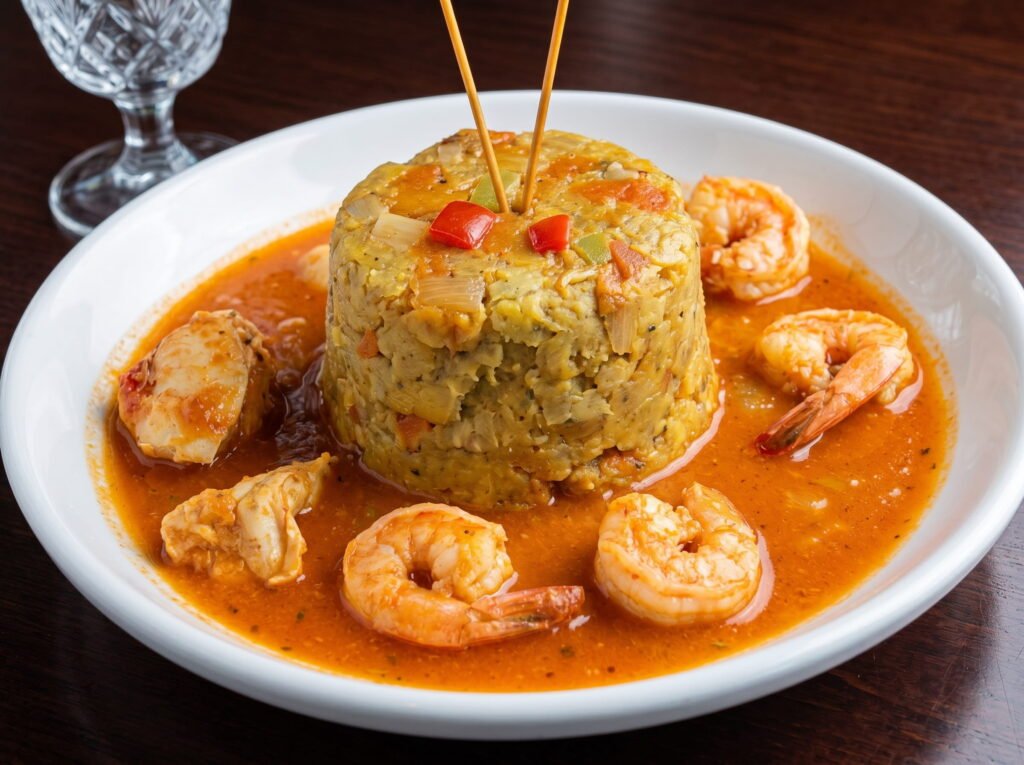
Diyana was in love from the first bite. The place is usually packed, the counter seating goes fast, and lunches are affordable by any standard — expect to pay $12–$15 for a full plate including rice and beans.
Limber. This one’s easy to miss because it sounds unremarkable. Crushed flavored ice. 75 cents. There’s a spot in Old San Juan that sells them and I’m telling you that after a full afternoon of walking in that humidity, nothing — NOTHING — on the island felt as good as that cup of limber. Find it.
The Night I Want Every Visitor to Have
During the day it’s a regular market — farmers, vendors, older guys playing dominoes outside. By 6 PM the streets close to traffic. By 10 PM it’s an open-air block party that just keeps going.
Live music from multiple spots at once. Bars with walk-up windows so you can take your drink to the street. Food everywhere. Locals and visitors mixed together in a way that doesn’t feel staged or separated.
No cover. No dress code. No velvet rope. You just show up. The real magic happens late, past 10 PM, when the energy fully shifts. Earlier is quieter. Don’t arrive at 7 and leave by 9 wondering what everyone was talking about.
We ended the trip there. Last full night in Puerto Rico. Standing in the street with a cold beer while someone played salsa maybe 40 feet away. There’s a specific kind of happy that comes from being exactly where you’re supposed to be. That was it. Right there.
Related


6 Responses