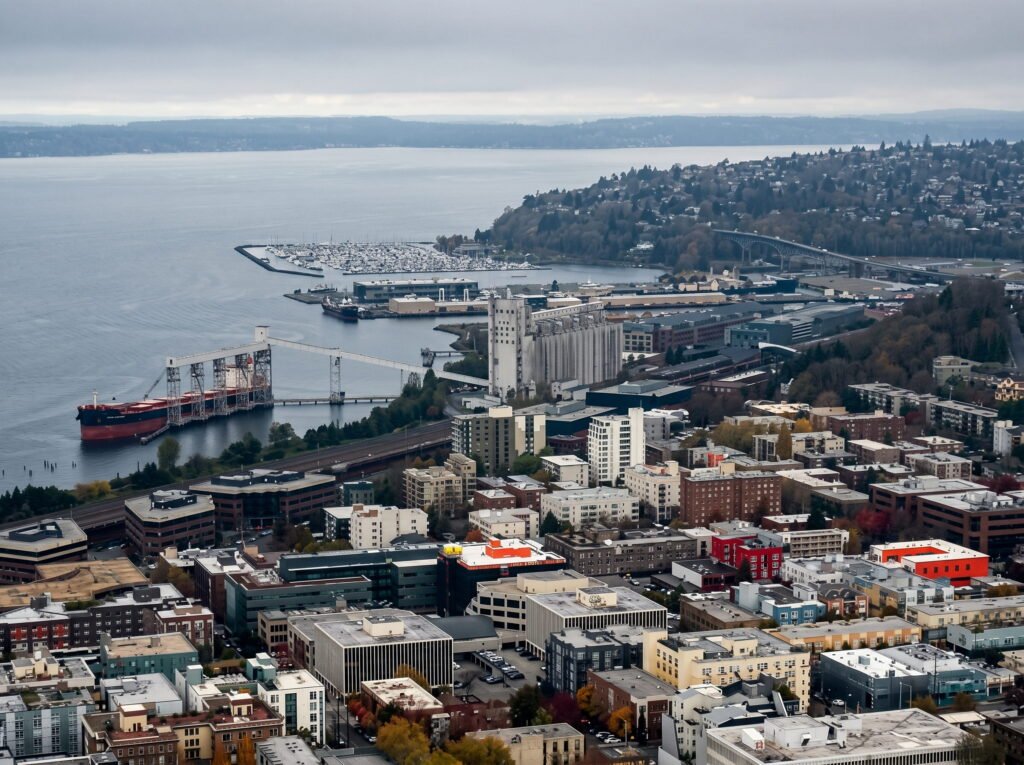
I have spent a lot of time in the “Pacific Northwest” and “Seattle” is one of those cities that keeps pulling me back. Every time I come here I end up doing something I have never done before — and I have already done most of the obvious things. That is a sign of a city with real depth.
Seattle sits in “Washington State” with a metro population of around 4 million people, making it the 15th largest urban area in the United States. It is surrounded by water, mountains, rainforests, and national parks in a way that almost no other major American city can match.
You have “Puget Sound” to the west, “Lake Washington” to the east, “Mount Rainier” visible on a clear day to the southeast, and the “Olympic Peninsula” just across the water. The city itself is interesting. What surrounds it is extraordinary.
This guide covers 24 things to do in Seattle — the city itself, the neighborhoods nearby, and the natural areas worth driving or ferrying out to. I am also going to give you the practical details: what things cost, how long to spend there, and how many days you actually need to do this place justice.
Space Needle
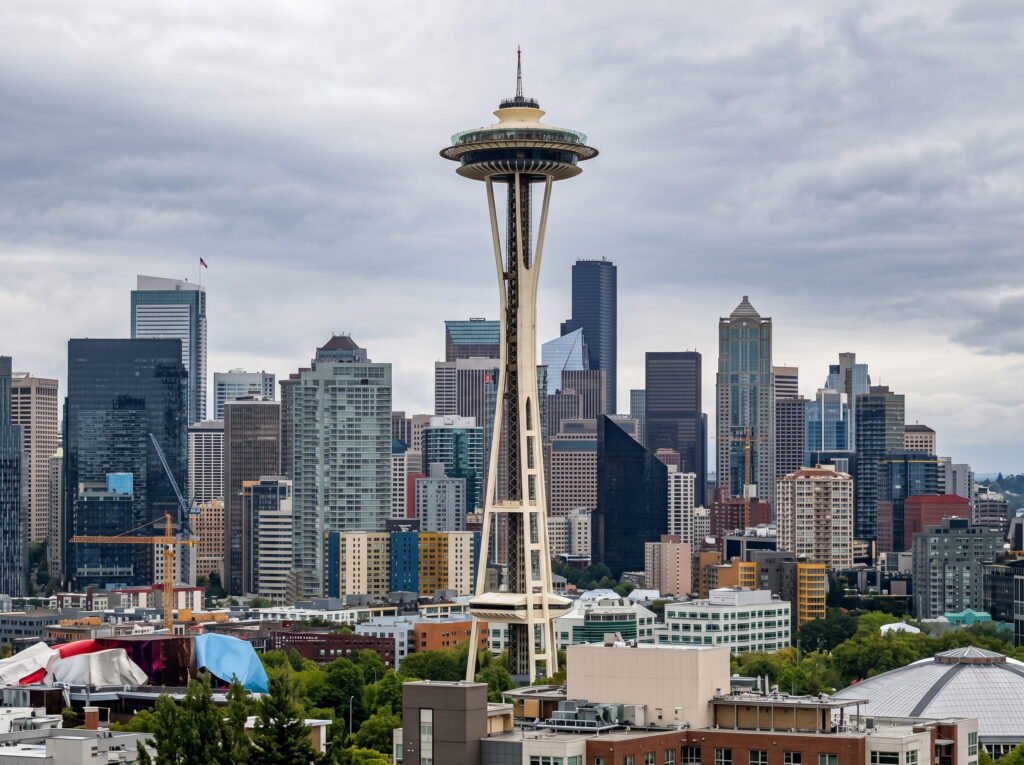
The Space Needle is the symbol of Seattle the same way the “Eiffel Tower” is the symbol of Paris. You know it before you arrive and seeing it in person is still genuinely striking.
It was originally built for the 1962 World’s Fair — the Century 21 Exposition — and it stands 605 feet tall. When it was completed it was the second tallest structure west of the Mississippi. It took just about 400 days to build, which is fast for something this ambitious.
You can go up to the top. There is a rotating glass floor up there — yes, a glass floor you stand on while looking straight down — along with a sky-high restaurant if you want to eat with a view. The whole structure is engineered to handle a 9.0 magnitude earthquake and 200 mph winds, which in a region with real seismic activity is a meaningful detail.
The elevator to the top takes 41 seconds traveling at 10 miles per hour. General admission tickets run about $35 to $45 per adult depending on the season and time of day. There are also combo tickets that bundle the Space Needle with other nearby attractions, which can save you meaningful money if you are planning to see several things in the same area.
If you want to enjoy beautiful beaches, I have covered two main topics titled as “Beaches in Puerto Rico” and “Beaches in El Salvador.” Read those posts, pick the one you like, and enjoy the scenery.
Pike Place Market
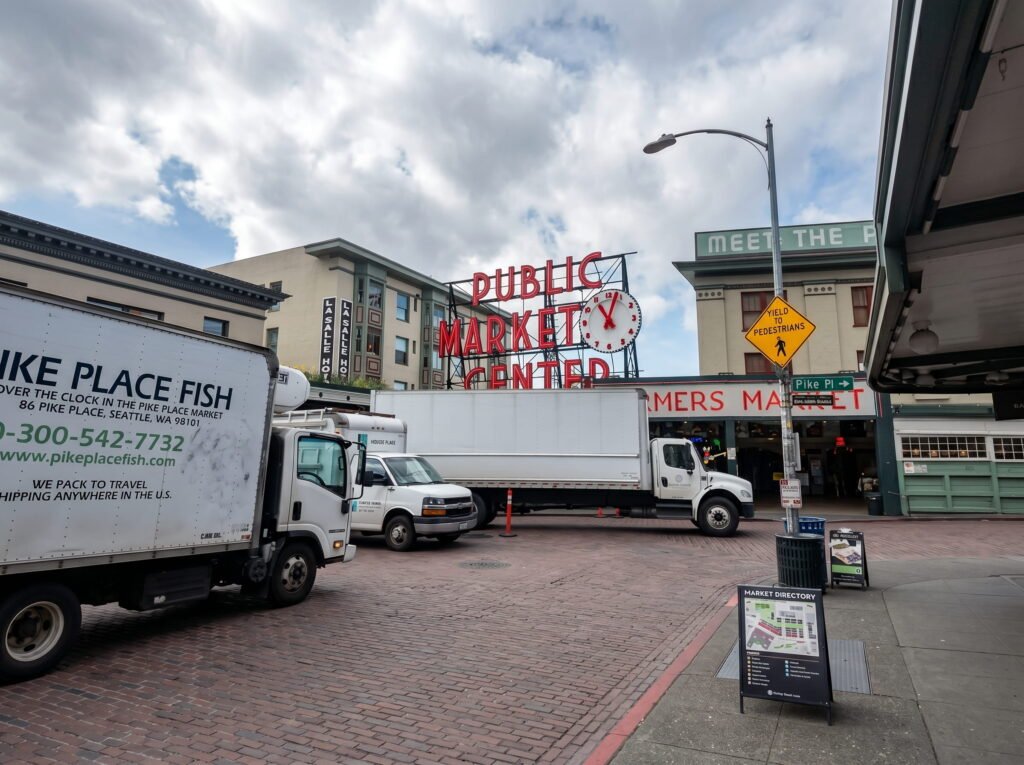
This is always the first place I go when I arrive in the city. Not because it is the most impressive thing in the city — it is not — but because it sets the tone immediately. You walk in and you understand what Seattle is about.
“Pike Place Market” is a farmers market right on the waterfront and one of the oldest continuously operating farmers markets in the United States. It opened in 1907. They actually tried to tear it down in the 1970s but the community fought back and got it designated as a historic area. Good decision.
It is open seven days a week, 363 days a year — closed only on “Thanksgiving and Christmas”. There are around 200 artisan vendors and craftsmen selling everything from fresh seafood and produce to ceramics, handmade soaps, arts and crafts, and homemade soups. There are also restaurants inside if you want to sit down and eat.
Read: Things to do in PR
Bubblegum Wall
Read: Visiting of Russia ( Important things to understand )
Right near Pike Place Market is the Bubblegum Wall, which is exactly what it sounds like. A wall completely covered in chewed bubblegum that people have stuck there over the years. It is colorful in a chaotic, slightly unsanitary way. People stop, take a photo, sometimes add their own piece of gum to the wall, and move on.
It is free. It takes five minutes. If you are already at Pike Place you might as well walk over and see it.
Read: Places to visit without passport
The First Ever Starbucks
Also right in the Pike Place area — and this one I actually do find interesting — is the original Starbucks. The very first one, founded in 1971.
It still has the original brown logo with the two-tailed mermaid, which is different from the green version you see everywhere else today. The line is usually long because people want the experience of ordering at the original location. I think it is worth doing once just for the context of standing in the place where the whole thing started.
It is a small storefront. Do not expect anything dramatically different from a regular Starbucks inside. The novelty is entirely in the history and the logo.
Chihuly Garden and Glass
Dale Chihuly is one of the most celebrated glass artists in the world and this is the permanent home of his work in Seattle. The sculptures are massive, colorful, and completely unexpected in scale. You walk through rooms and then into an outdoor garden where giant glass pieces sit among the plants. If you have any appreciation for art or design this is worth your time. Even if you do not, it is visually stunning in a way that is hard not to respond to.
It is right next to the Space Needle so there is no reason not to include it in the same visit.
International Fountain
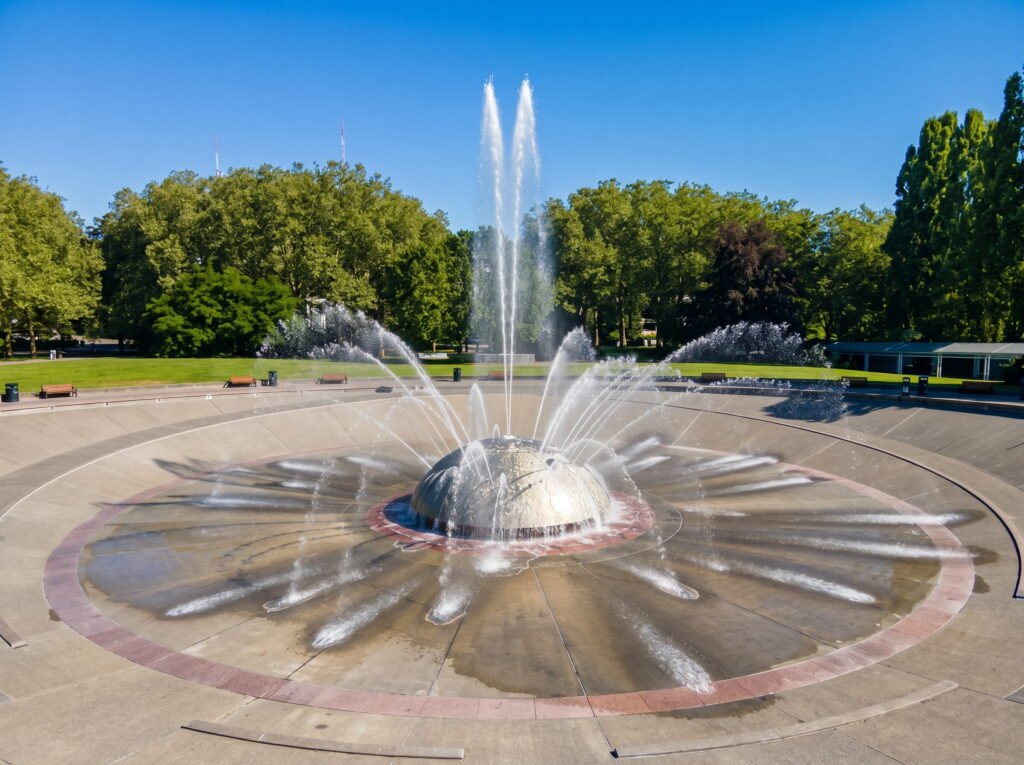
Also built for the 1962 World’s Fair — same as the Space Needle — the International Fountain sits in the same Seattle Center area. It was designed to reflect the outer space exploration themes of that era.
It is free to visit and worth a few minutes while you are already in that part of the city. On a warm day people sit around it on the grass. It is a nice place to pause between the bigger attractions.
Museum of Pop Culture (MoPOP)
Also in the Seattle Center area, right near the Space Needle, is the Museum of Pop Culture — known as MoPOP. This is a nonprofit museum focused on contemporary popular culture, built primarily around music.
It was founded by Microsoft co-founder Paul Allen in the year 2000. The building itself was designed by Frank Gehry and looks like nothing else in the city — curved, metallic, deliberately chaotic on the outside. Inside you will find exhibits on music history, science fiction, horror films, video games, and rotating special exhibitions.
Tickets run about $25 to $36 for adults. If you are into music history this is a genuine half-day stop. If you are less interested in that world, budget an hour or two and you will still get plenty out of it.
The Great Wheel
Down by the waterfront is the Seattle Great Wheel — a large Ferris wheel on Pier 57 overlooking Puget Sound.
I would recommend going in the afternoon or around sunset specifically because of the views over the water. On a clear evening with the sun going down over Puget Sound it is a legitimately beautiful thing to experience. Tickets are $23 for adults ages 12 and older.
Ferry Across Puget Sound to Bainbridge Island
This is one of my personal favorites and I do it almost every time I come to Seattle.
You can take Washington State Ferries from the downtown Seattle waterfront to several destinations. The one I keep going back to is Bainbridge Island. The ferry ride itself is enjoyable — you are out on Puget Sound with views of the Seattle skyline behind you and the Olympic Mountains ahead. About 35 minutes each way.
Bainbridge Island is a completely different pace from Seattle. Quieter, greener, more relaxed. There is a small downtown area with good restaurants, coffee shops, and local shops right near the ferry terminal. The nature on the island is worth exploring on foot or by bike.
Mount Rainier National Park
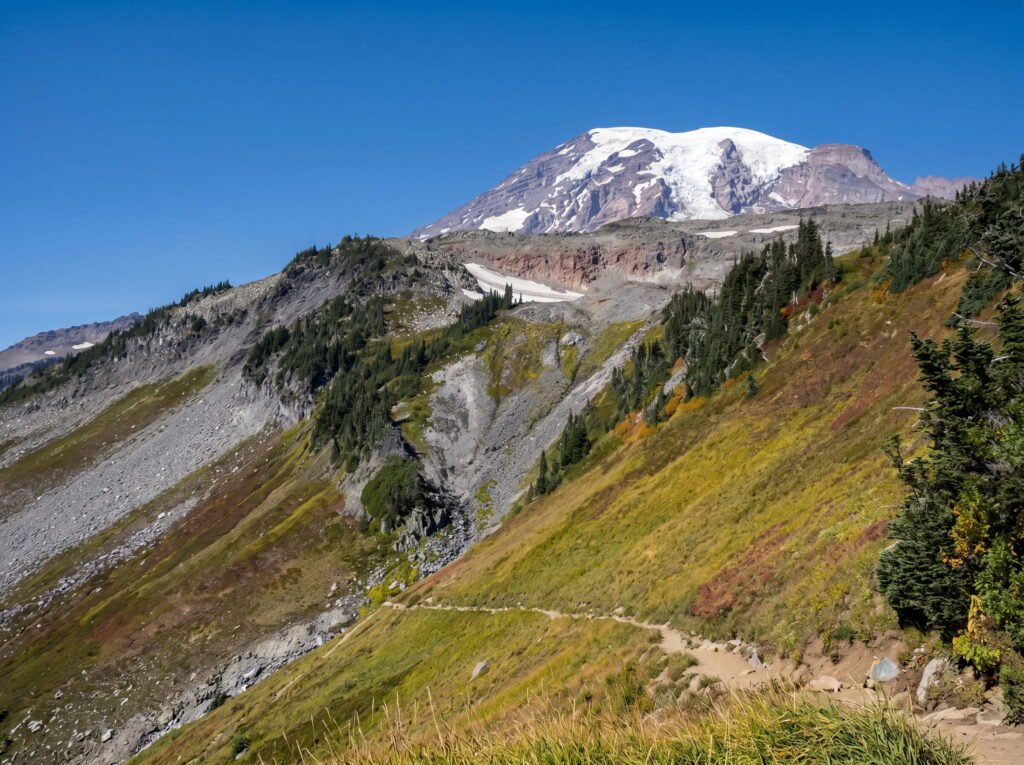
Mount Rainier is visible from Seattle on a clear day — you can see it from the Space Needle, looking off to the southeast. Seeing it from the city is one thing. Actually going out there is something else entirely.
Mount Rainier is a volcano. An active one. Scientists say that if it were to ever erupt it would be one of the largest eruptions on earth. That fact gives standing on its slopes a different kind of weight.
I would go in late spring, early summer, or just before fall starts. The roads and trails are more accessible and the weather is more cooperative than in winter when much of the park is buried in snow.
Mount Rainier is roughly an hour and a half to two hours from Seattle depending on traffic and where on the mountain you are headed. Make a full day of it.
Seattle Art Museum
Back in the city, the Seattle Art Museum is worth a few hours. You will know it from the outside because of the large Hammering Man sculpture — a giant kinetic figure that moves — standing at the entrance on First Avenue.
Tickets run about $12 to $20 depending on your age and the current exhibitions. The permanent collection covers art from around the world across many centuries.
What to Eat in Seattle
Seattle’s food scene is one of the best in the country and it is built almost entirely around the water. If you are coming here and not eating seafood you are genuinely missing the point.
Wild salmon is the signature. Local, caught in Washington waters, and as fresh as it gets anywhere in the world. The flavor is richer than farmed salmon and the texture is different. Order it grilled, smoked, or however the restaurant is serving it that day.
Dungeness crab is another Seattle staple — sweet, tender, and typically served steamed. Alongside it you will find Alaskan king crab on many menus, which is exactly as indulgent as it sounds.
Oysters on the half shell are everywhere. Taylor Shellfish has locations around the city and is one of the most respected names for oysters in the Pacific Northwest. Order a dozen and take your time.
Pike Place Chowder is something I look forward to every single time I am in Seattle. It is a thick, creamy clam chowder served in a sourdough bread bowl — a hollowed-out round loaf you tear apart as you eat. On a cold Seattle day, which is most days, this is exactly what you want. There are locations near Pike Place Market and around the waterfront.
Geoduck clam is one of those things worth trying at least once. It is native to Washington, it looks bizarre, and it tastes excellent. Just try it.
Seattle Central Library
The Seattle Central Library is one of those buildings that makes you stop on the street and stare. It opened on May 23rd, 2004 and the architecture is unlike anything you have seen in a public building.
The building is a glass and steel structure with a four-story book spiral inside — an unbroken continuous ramp that winds up through floors of books organized by the Dewey Decimal System. There is also a large open space called the Living Room on one of the upper floors. The whole thing is strange and striking and completely worth going inside even if you have no intention of borrowing anything.
It is free to enter. Give it 30 to 45 minutes.
Washington Park Arboretum
It is a large park on the eastern edge of the city, bordering Lake Washington. Inside there is a Japanese Garden — one of the finest traditional Japanese gardens I have seen in the United States — along with walking paths through trees and plantings from around the world.
I walked through here one late afternoon just to decompress after a full day of tourist activities and it was exactly what I needed. Quiet, beautiful, and unhurried. It is a public park so it is free to enter. The Graham Visitor Center inside has maps showing all the trails and areas.
Kirkland
Kirkland is where a significant portion of the Pacific Northwest tech industry has settled. Amazon, Microsoft, Google, and others all have presence here, and many of the senior people from those companies live in the area. But that is not why you go. You go because the Kirkland waterfront on Lake Washington is genuinely lovely.
Read about ” things to do in Tauranga ”
It is a walkable waterfront with restaurants, coffee shops, parks, and views across the lake. Strong community spirit, well-preserved green spaces, and a vibrant local economy that does not feel corporate or sterile. If you can get out on a boat on Lake Washington from here, do it.
Seattle Seahawks Game
The Seahawks have one of the most passionate fan bases in professional football. They are called the 12s — referring to the fans as a twelfth player — and the noise at Lumen Field during a game has literally broken records. It is a genuinely different experience from watching most NFL teams play.
The season runs from around August or September through December or January depending on whether they make the playoffs.
Seattle Mariners Game
Baseball season runs from around March through October — longer if the Mariners make the playoffs. T-Mobile Park, their stadium, sits just south of downtown and is one of the better ballparks in the league. It has a retractable roof for when the Seattle weather does what it does and the sightlines are good throughout.
Lake Washington
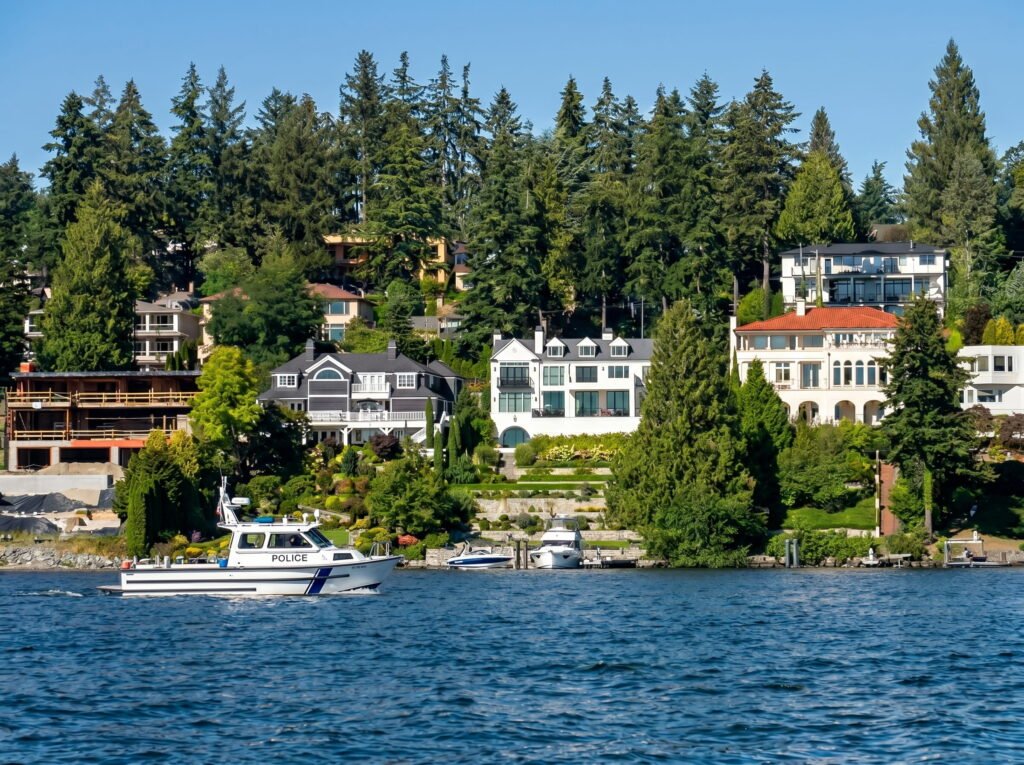
Lake Washington is the largest lake in King County — where Seattle is located — and the second largest natural lake in the entire state of Washington. It sits on the eastern boundary of the city, separating Seattle from the Eastside suburbs including Bellevue and Kirkland.
In summer the lake comes alive. Sailboats, kayaks, paddleboards, and motorboats all out on the water at the same time. Seattle does not get a lot of sunshine but when it shows up in summer the whole city moves toward the water and Lake Washington is where a lot of that energy goes.
Olympic National Park
Olympic National Park is about an hour and a half to two hours from Seattle depending on how you get there and whether traffic is cooperating. Go. Do not skip this one.
Olympic is one of the most ecologically diverse national parks in the country. It contains temperate rainforest, glacier-capped mountains, and over 70 miles of wild Pacific coastline — all within the same park boundary. The Hoh Rainforest is one of the few temperate rainforests in the world. The moss hangs off the trees in thick curtains, the forest is dense and impossibly green, and it is one of the more otherworldly landscapes I have walked through anywhere in the United States.
Hurricane Ridge offers mountain views above the tree line — on a clear day you can see across to the Cascade Range. Rialto Beach and Ruby Beach are wild Pacific beaches with sea stacks rising out of the water just offshore. Lake Crescent, tucked in the mountains, has some of the clearest blue water you will find anywhere.
Wildlife is abundant throughout the park. California sea lions and Steller sea lions are common along the coast. Elk, black bear, and bald eagles show up regularly in the interior. You never quite know what you are going to encounter.
San Juan Islands
The San Juan Islands are an archipelago in the Salish Sea between mainland Washington and Vancouver Island in Canada. You reach them by ferry from Anacortes — the Washington State Ferry system serves several of the main islands including San Juan Island, Orcas Island, and Lopez Island.
Each island has its own personality. San Juan Island is the most developed and has Friday Harbor as a proper small town with restaurants, shops, and lodging. Orcas Island is more mountainous and has Moran State Park with excellent hiking. Lopez Island is the flattest and most agricultural, popular with cyclists.
The thing the San Juan Islands are most famous for — and the main reason I would go specifically — is orca whale watching. The waters around the San Juans are some of the best places in the world to see wild orcas. They are here regularly, hunting salmon in the channels between the islands. The local pods are well-documented and well-studied.
If you do a whale watching tour, expect to be out on the water for about half a day. There is no guarantee of seeing orcas — this is wildlife, not a performance — but the odds are genuinely good in the right season and even without orcas you are going to see seals, bald eagles, and spectacular scenery.
Snoqualmie Falls
About 35 minutes east of downtown Seattle is Snoqualmie Falls, and this is one of the best half-day trips you can do from the city.
The falls drop 268 feet — taller than Niagara Falls — over a cliff face into a gorge below. The volume of water is impressive year-round but especially dramatic in spring when the snowmelt is pouring off the Cascades and the water just thunders over the edge.
You can view the falls from the top from a public observation deck right off the parking lot. There is also a trail that takes you down to the base if you want to get closer and feel the mist. It is one of those places that is beautiful in a simple, uncomplicated way.
There is no entrance fee for the main viewpoint. Go in spring or early summer for the most dramatic water levels, but any time of year is worth the drive. I would call this one of the best things to do outside of Seattle and one that does not get enough attention compared to the bigger national parks.
Seattle Monorail
One of the more charming ways to get between two specific points in the city is the Seattle Monorail. It connects Seattle Center, where the Space Needle and MoPOP are, to Westlake Center in the downtown shopping area.
It was also built for the 1962 World’s Fair. One-way tickets are $4 per person. You can also get round-trip tickets or an all-day pass which saves a little money. It is a short ride — the whole line is about a mile — but it is a fun one and genuinely useful for getting between those two areas without dealing with traffic or parking.
Read: Cities of PR
Seattle CityPASS
Before moving on I want to flag something practical. If you are planning to visit multiple paid attractions — Space Needle, Chihuly, MoPOP, Seattle Aquarium, and others — the Seattle CityPASS is worth looking at.
It runs about $129 for adults and $99 for children. Depending on what you plan to do it can save you a meaningful amount compared to paying for each attraction individually. Look at what is included, do the math against your itinerary, and buy it if it makes sense.
Read: Warm places to visit in December
Amazon Headquarters and The Spheres
Amazon is headquartered in “Seattle’s South Lake Union” neighborhood and the campus is worth walking through even if you are not going inside any of the buildings.
The most distinctive feature is The Spheres — three large glass domes that look like giant biospheres sitting in the middle of the urban campus. Inside there are over 40,000 plants from around the world, making it a literal indoor rainforest in the center of a city. Amazon does offer tours and visits accessible to the public including guided tours. Check their current availability before you go because the schedule changes.
How many days do you need
You can cover the main city highlights in about three days. But if you plan to get out to the national parks, take the ferry to the San Juans, and explore the areas around the city properly, I recommend seven days minimum. Seven to ten days gives you the full experience — city, nature, islands, waterfalls, and everything in between.
The Best Way to Do It
The way I would structure a week in Seattle is this: spend the first two or three days in the city — Pike Place, the Space Needle, the waterfront, good food every night. Then use the remaining days to get out. One full day for Mount Rainier. One full day — better yet two — for “Olympic National Park”. A night or two in the San Juan Islands. A half day at Snoqualmie Falls. A ferry afternoon to Bainbridge Island worked in somewhere along the way.
That’s it.
If you found my guide to the best things to do in Seattle helpful, please share it with your friends and family. Your support helps me create more useful travel guides.
4 Responses