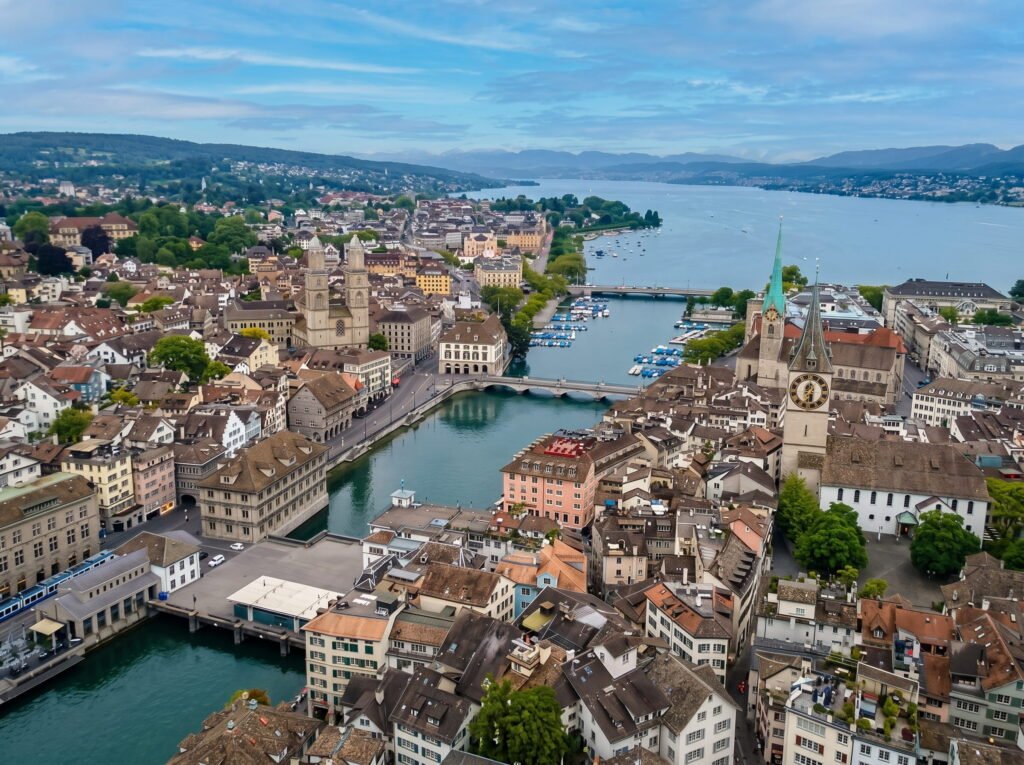
There’s a common perception that Zurich is very expensive, corporate, and somewhat cold-hearted. That perception isn’t accurate. Only the old town is such that you can spend a whole day there. The lake view looks like it’s straight out of a painting. The trains here make everything incredibly easy.
And September—September really is the best time to visit. The summer crowds have thinned, the weather is pleasant, and the Alps are still fully accessible for day trips.
These are all the important things to know before you come.
Best Things to Do in Zurich at a Glance
📍See the Old Town (Altstadt)
📍Climb the Lindenhof Hill
📍Take a stroll on Bahnhofstrasse
📍Stroll along the Limmat River
📍Visit the Zurich Lake promenade
📍See the Grossmünster Church
📍Visit the Fraumünster Church
📍See the St. Peter’s Church
📍Rent a bike and explore the city
📍Hike or take a train to Uetliberg
📍Visit the Swiss National Museum
September Weather — What to Actually Expect
In early September, daytime temperatures are around 20°C (68°F). Daytime temperatures in early September are around 20°C (68°F) and when the sun comes out, it feels almost like summer. By the last week of the month, daytime temperatures drop to about 17°C (63°F), while morning and evening temperatures fall to around 10–11°C (50°F).
There can be about 13 rainy days throughout the month, so it’s best to carry a lightweight waterproof jacket. The rain is usually heavy but doesn’t last long, and the weather often clears up after midday.
Layering your clothes is best. It can feel quite cold in the morning, the temperature becomes pleasant in the afternoon, and it cools down again in the evening.
Read: Places to visit in Destin, Florida
Start in the Old Town — Altstadt
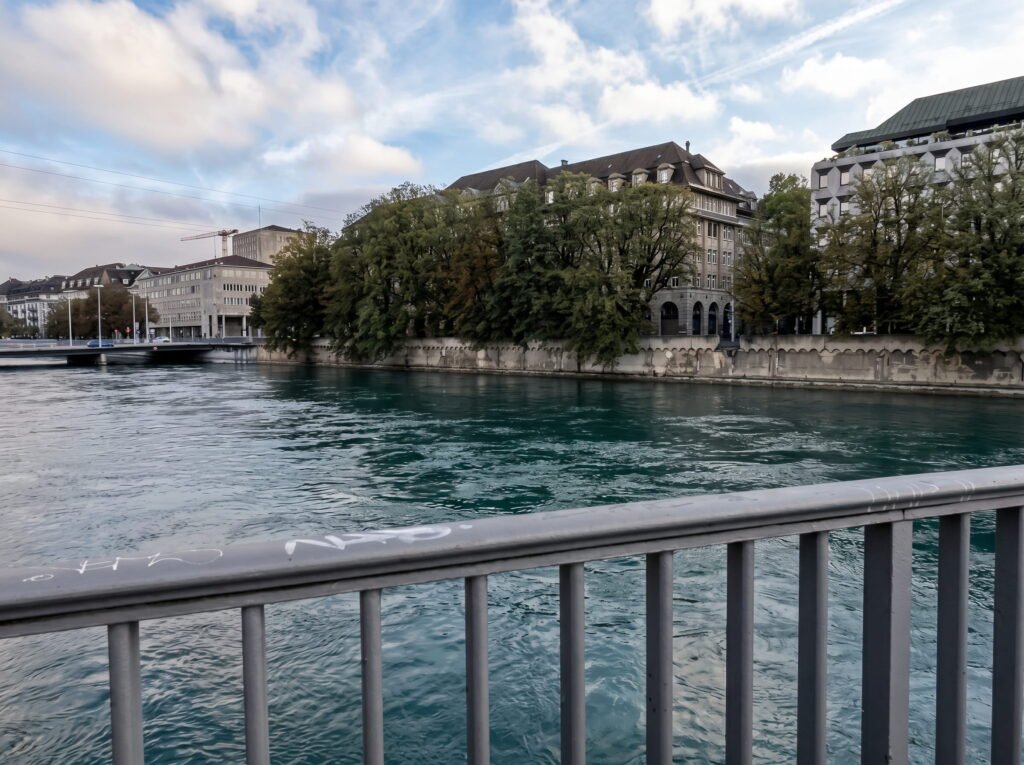
Altstadt is the oldest part of the city and the perfect place to start any visit. The city began more than 2,000 years ago as a Roman settlement, and the medieval streets that grew up around the river still reveal glimpses of their history at every corner.
The guild halls lining the main streets were built between the 14th and 18th centuries. They reflect the commercial prosperity that shaped the city as it is today. A morning stroll through these streets—before most of the day’s tourists arrive—is truly a special experience. The atmosphere is peaceful, the light is soft, and the cobblestones still hold the chill of the night.
Hotels near the Altstadt are more expensive than in other parts of the city, but staying close to the old town makes the whole trip easier and more enjoyable.
Read: Places to visit in Tampa Bay
Lindenhoff Hill — Best View in the City
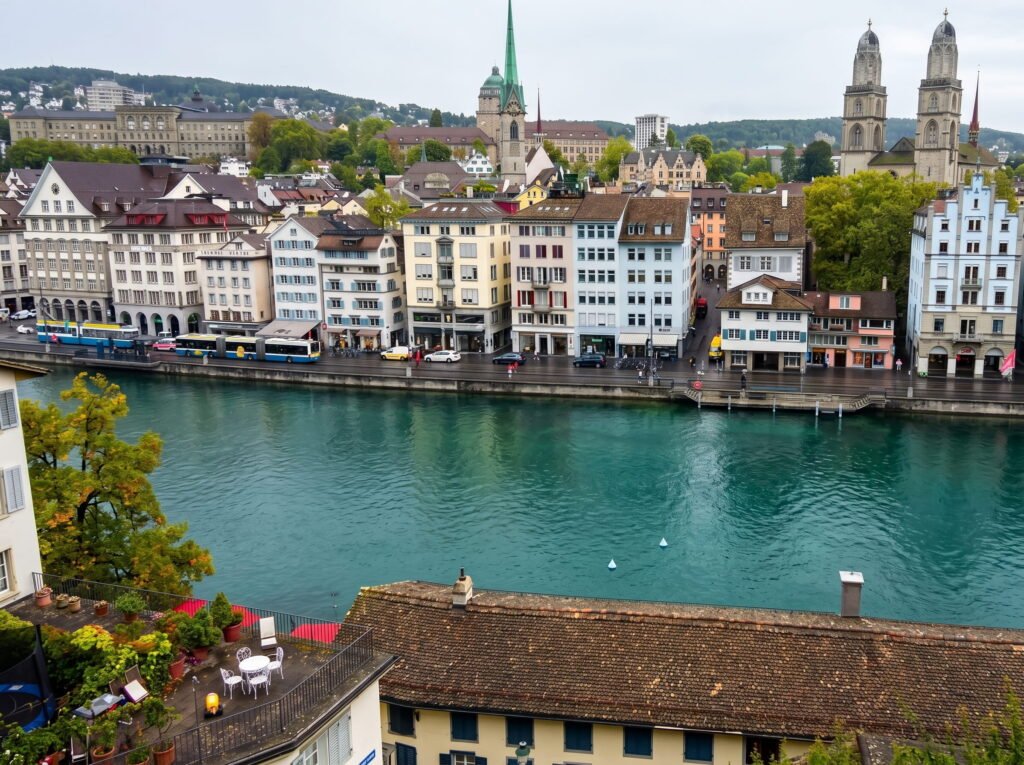
A short walk uphill from the Altstadt brings you to Lindenhof. It’s the highest point in the old town and is considered one of the best viewpoints in the entire city. It takes about five minutes to get there.
From above, you can enjoy a beautiful view of the Limmat River, the rooftops below, and the hills surrounding the city.
In the summer, locals swim here in the river during an organized event called Limmat Schwimmen. By September, these regular swimming activities begin to wind down, but the riverside area remains busy with cyclists and walkers.
Walk Bahnhofstrasse

Bahnhofstrasse is Zurich’s main street. It is approximately 1.4 kilometers long and runs straight from the central train station to Lake Zurich. Trams run down the middle of the street, while designer boutiques and watch shops line both sides. The entire street can be easily explored on foot.
It is one of the most expensive shopping streets in the world, so the prices here can surprise many people. But whether you buy anything or not, strolling here is a wonderful experience in itself.
In the small streets off Bahnhofstrasse, there are several nice cafés where you can sit with a coffee and peacefully watch the city’s daily life. September is especially pleasant for this.
Read: Places to visit in Naples, Florida
Rent a Bike and Explore on Two Wheels
Renting a bike is one of the best ways to see the city. Electric pedal-assist bikes are available through Uber Bikes and several other rental companies. The electric assist makes even hilly routes feel quite easy.
You can start your ride from Altstadt, follow the banks of the Limmat River, and then continue to the Lake Zurich promenade. It’s one of the city’s most pleasant routes. The city’s layout is quite compact and ideal for cycling. In September, the weather is also perfect for this activity.
The Three Famous Churches of the Old Town
Grossmünster is one of the city’s most famous buildings. Its two tall towers stand out prominently on the eastern bank of the river. In the sixteenth century, the Protestant reformer Ulrich Zwingli preached here. Climbing one of its towers offers a beautiful view of the city’s rooftops and the river, which makes the effort worthwhile.
On the other side of the river, on the west bank, stands the Fraumünster, which was founded in 853 by King Louis the German for his daughter. For centuries it served as a powerful abbey for noblewomen. Today it is famous for its five stained-glass windows designed by Marc Chagall. They are counted among the most beautiful religious artworks in Europe. Its green clock tower is also one of Zurich’s most recognizable landmarks.
Nearby is St. Peter’s Church, which houses Europe’s largest clock face. It may sound like an ordinary bit of trivia, but when you see it in person, you appreciate its grandeur. Be sure to give it a few minutes—it truly deserves the attention.
The Riverside Walk and Lake Promenade
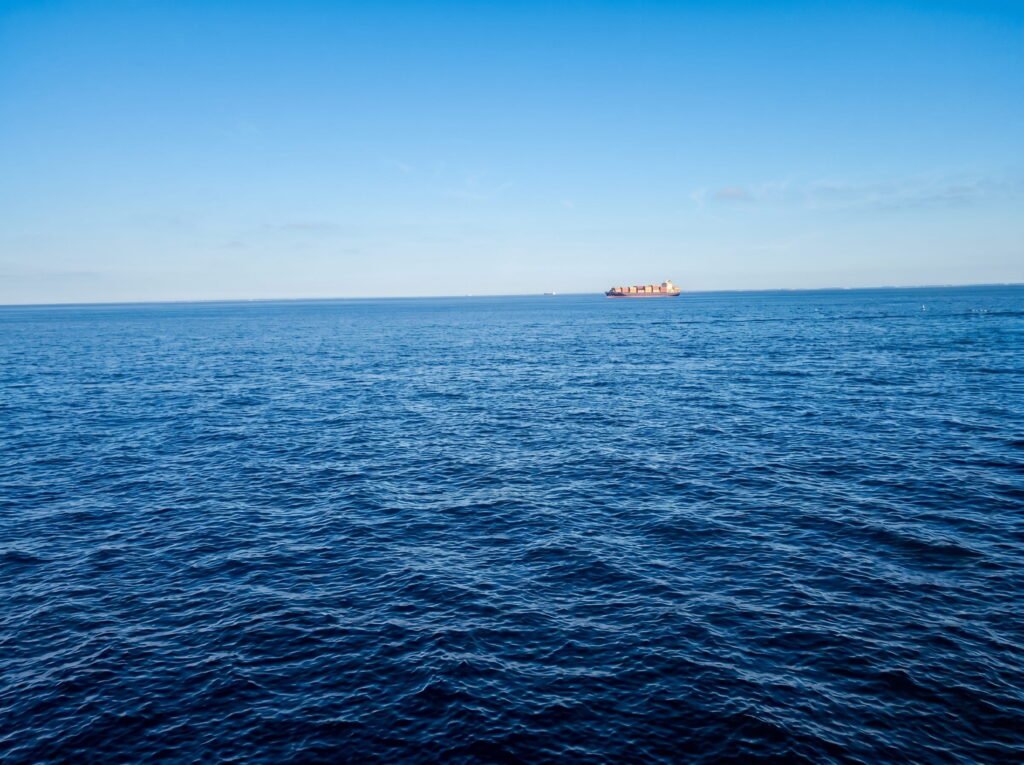
A stroll along the banks of the Limmat River is one of the simple pleasures that Zurich presents so beautifully. You can walk along either side of the river, cross to the other side via various bridges, and, following the river, reach the point where it flows into Lake Zurich.
The river’s water has that same blue-green hue for which Swiss rivers are famous. At first glance, the color feels somewhat unreal.
The Swiss National Museum
The Swiss National Museum is located right next to the main train station, and it’s the perfect place to spend a few hours. Often, the museum turns out to be far better than people expect before coming here. The building itself is also worth seeing — a beautiful, castle-like structure built in 1898, with a modern wing added in 2016.
Inside, there are permanent exhibitions that trace Switzerland’s history from the prehistoric era to the present day. In addition, about eight temporary exhibitions are held each year. The current “Wars and Us” exhibition will run until January 2027 and has received very positive reviews.
Admission for adults is CHF 13, while children under 16 enter free of charge. The museum is open from Tuesday to Sunday, 10 a.m. to 5 p.m. On Thursdays, hours are extended until 7 p.m. It is closed on Mondays. Admission is completely free for Swiss Travel Pass holders. Zurich Card holders also get free admission, and the card covers 21 museums in the city.
Read: Trips from Orlando
If you speak English, be sure to get an audio guide, as many exhibit labels are primarily in German.
Getting Around — Trams and the Swiss Travel Pass
Zurich’s tram network is one of the most efficient urban transport systems in Europe. Trams run frequently on various lines throughout almost every part of the city, and in September they operate at full service with no schedule changes. Within about 20 minutes of arriving, the tram system becomes quite easy and straightforward to understand.
For traveling throughout Switzerland — especially for the day trips you’ll take — the Swiss Travel Pass is the best choice. In 2026, a 3-day consecutive second-class pass costs CHF 254 (approximately US$ 330).
This pass provides unlimited travel on trains, buses, and boats in over 90 cities and towns, free admission to more than 500 museums, and discounts of 25 to 50 percent on most mountain railways and cable cars. Children under 16 can travel for free with their parents using the Swiss Family Card.
Read: Things to see in Pensacola, Florida
Day Trips from Zurich in September
Lucerne is the best day-trip recommendation from the city. It’s about a 90-minute train ride that passes through Zug. Lucerne sits on the shore of its lake, with the towering Alps right behind it. As soon as you step off the train, you’re immediately in the heart of the city. — the famous carved stone lion monument, the medieval wooden Chapel Bridge, and the lakefront promenade are all close by.
Grindelwald is for those who want to travel a bit further into the heart of the Alps — it’s about a 2-hour, 40-minute train ride away. The village sits in a valley, with the towering north face of the Eiger mountain above it. The Swiss Travel Pass covers this journey and also offers a 25 to 50 percent discount on the ascent to the Jungfraujoch, should you wish to visit Europe’s highest railway station.
A Side Trip to Liechtenstein
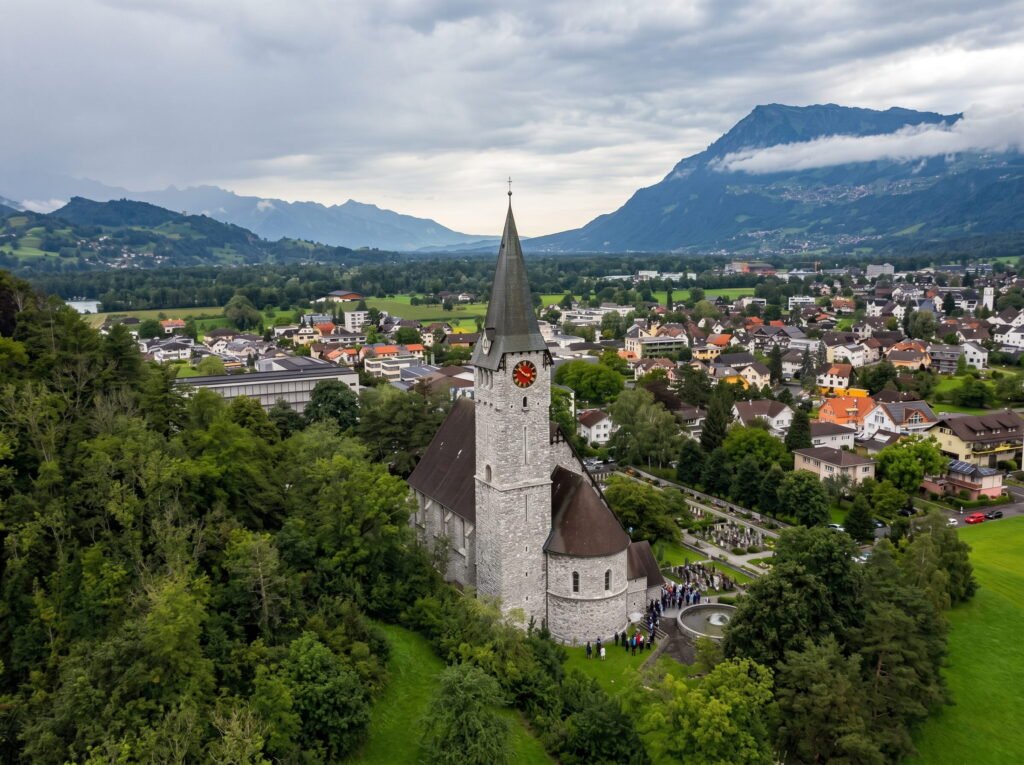
If you’re thinking of adding another country to your itinerary, Liechtenstein is about a 90-minute train journey away, involving a few connections. It’s considered one of the smallest and safest countries in Europe. Its capital, Vaduz, is perfect for spending a few hours. — Get your passport stamped at the tourist office, have lunch, explore the small town, and head back. Less effort, more memorable experience.
Food Worth Knowing About
Swiss food is quite hearty and comforting, which is perfect for the cool evenings of September. Fondue is the most famous dish — melted cheese into which you dip bread. It tastes even more delicious on a chilly evening when you’re sitting in a warm, cozy restaurant in the old town. Raclette is less well-known but an equally tasty version: melted cheese poured over potatoes, served with pickles and cured meats.
The döner kebab here is also very good and is an inexpensive, easy lunch option. The pizza is better than you’d expect. German-style sausages are available everywhere, and in the first part of September the weather is so nice that you can comfortably sit outside and eat.
Practical Notes Before You Go
The airport is just a 10 to 15-minute direct train ride from the city center—one of the easiest airport connections in Europe. As soon as you land, Switzerland’s transport system makes everything easy and makes the journey very smooth.
Accommodation near the Altstadt and the lake is quite expensive. If you stay a bit outside the city center or in nearby cities like Winterthur, costs can be lower, while train access to the city remains very fast. Basel and Bern are also good base options if you want to explore beyond Zurich while keeping accommodation costs down.
Packing for September is very easy: layered clothing, a lightweight waterproof jacket, and comfortable walking shoes. The city rewards those who explore it on foot, and you’ll walk more than you think.


4 Responses