PR does not get enough credit for its food. People talk about the beaches, the history, the bioluminescent bays — and all of that is worth talking about. But the food is one of the strongest reasons to go, and it is the thing I kept thinking about long after coming back.
Puerto Rican cuisine is built on a foundation of three cultures — Taíno, Spanish, and African — and what came out of that combination over hundreds of years is something that does not taste like anything else in the Caribbean. It is heavy in the best way. It is seasoned deeply. It rewards people who eat where locals eat and skip the tourist-facing menus.
I ate my way through this island from San Juan to Rincón to the mountain towns, and these are the nine dishes that stood out. Not because they are the fanciest or the most photogenic — but because they are the ones that actually define what Puerto Rican food is.
so let’s discuss 9 best foods to try in Puerto Rico.
Mofongo
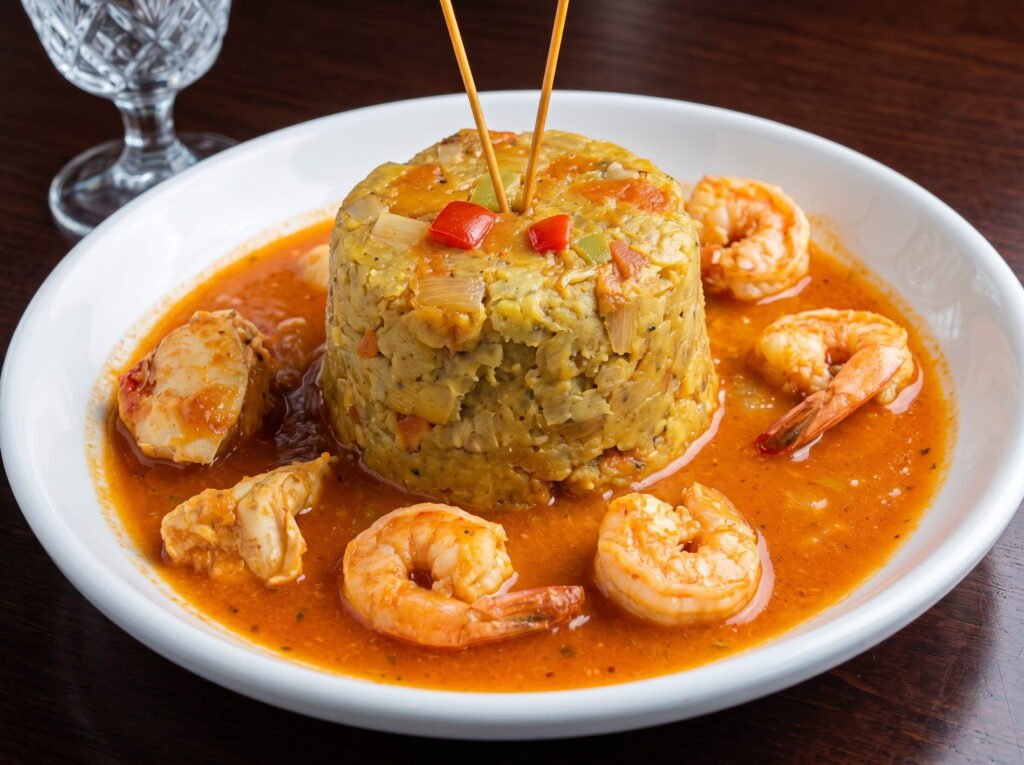
Mofongo is the dish most associated with Puerto Rico and the one that every first-time visitor needs to try before leaving.
The base is fried green plantains — tostones — that get mashed in a wooden mortar called a pilón with garlic, olive oil, and chicharrón, which is crispy pork skin. The result is a dense, garlicky, slightly crispy mash that is pressed into a bowl or dome shape and served as the centerpiece of the plate.
What goes with it varies by restaurant. Some places serve it stuffed with seafood — shrimp, octopus, or lobster in a garlic butter sauce. Others serve it with stewed chicken, braised beef, or pork. The broth or sauce that comes alongside it soaks into the mofongo as you eat and changes the texture entirely as the meal goes on.
Every restaurant in Puerto Rico has its own mofongo and they taste noticeably different from each other. The quality of the garlic preparation, the ratio of chicharrón, how tightly it is packed — all of it matters. The best versions I had were not in the tourist restaurants of Old San Juan but in small local spots where the pilón looked like it had been used for decades.
Lechón
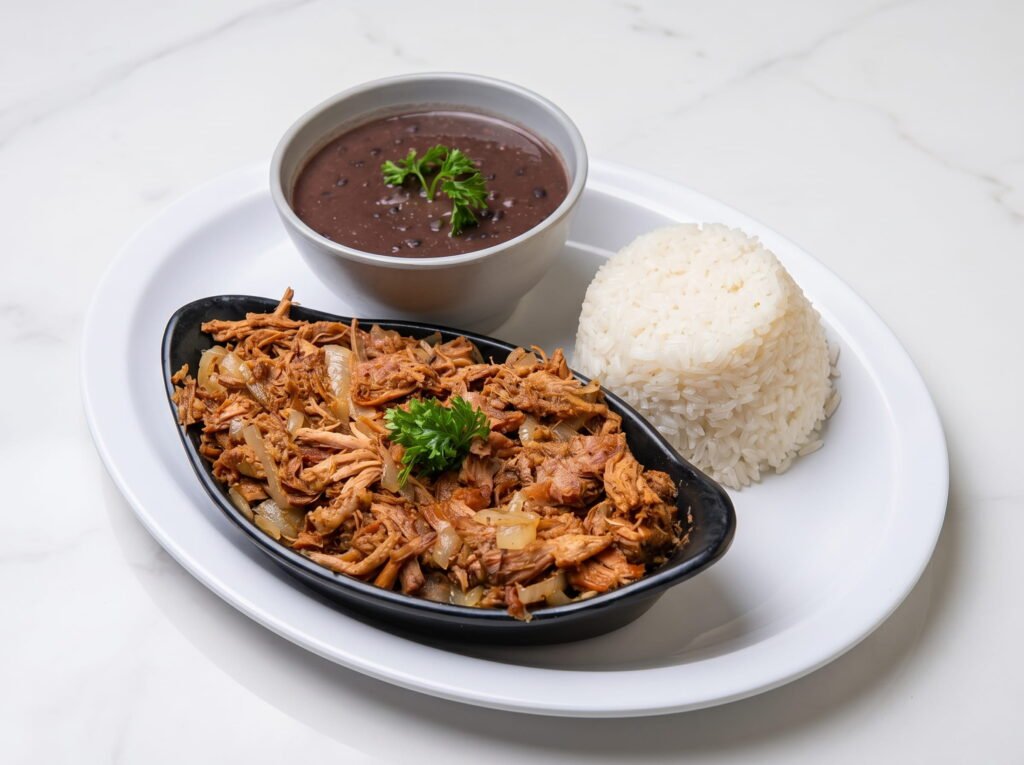
Lechón is whole roasted pig cooked over a wood fire, and in Puerto Rico it is not just a dish — it is an event.
The pig is seasoned the night before with adobo — a mixture of garlic, oregano, salt, vinegar, and black pepper — then slow-roasted over a wood fire for hours, sometimes up to eight. The skin crisps to a deep mahogany and shatters when you bite into it. The meat underneath is tender and falls apart. The combination of that crackling skin and the slow-cooked pork is one of the better things I ate on the entire island.
The place to eat lechón properly is along Route 184 southeast of San Juan, in the mountains near Guavate. This stretch of road is known as La Ruta del Lechón — the Pork Highway — and it is lined with open-air restaurants called lechoneras that do one thing and do it all day on weekends. You pull up, you point at what you want, they carve it in front of you, and you eat at a picnic table with rice, beans, and tostones on the side.
Going on a Saturday or Sunday is the move. The lechoneras are at full capacity on weekends — the fires are going, the music is playing, families are at every table. It is one of the more memorable eating experiences on the island and it costs almost nothing compared to what you would pay for a fraction of the food in San Juan.
Tostones
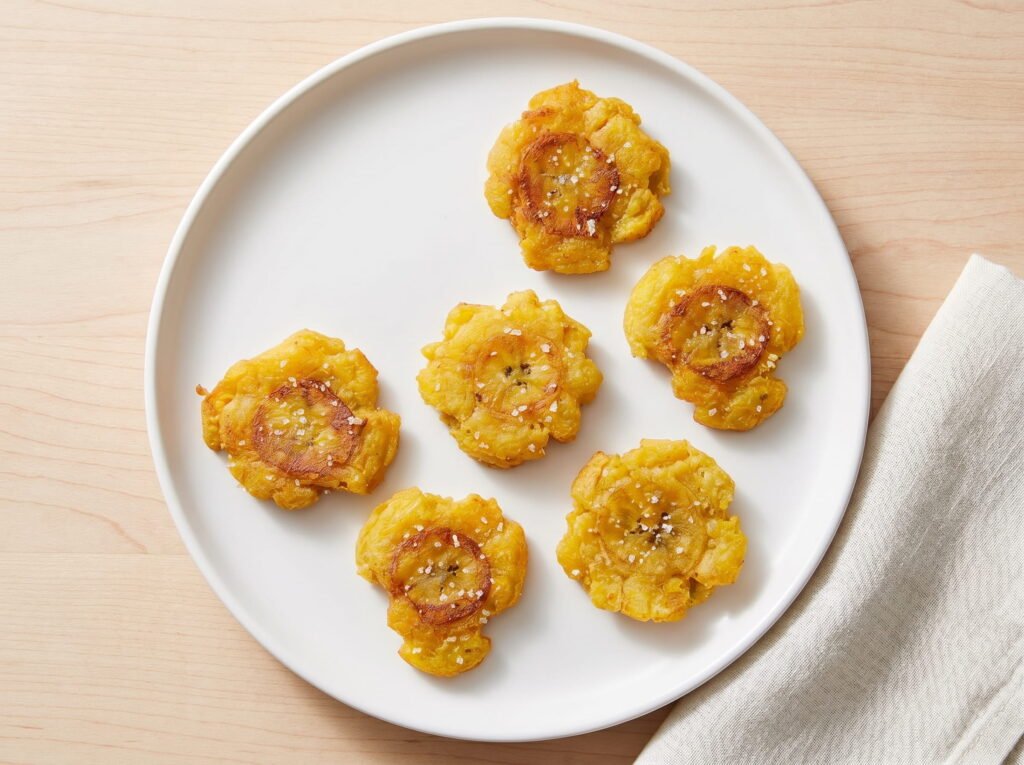
Tostones are fried green plantains and they appear on almost every table in Puerto Rico. They are simple, they are everywhere, and when they are made well they are genuinely hard to stop eating.
The process is straightforward. Green plantains are cut into thick rounds, fried once until just cooked through, then smashed flat with a tostonera — a wooden press — and fried a second time until golden and crisp on the outside. The result is a flat disc with a crispy exterior and a soft, starchy interior that tastes somewhere between a potato and a banana but is really neither.
They are served as a side dish with almost everything — alongside mofongo, with lechón, next to rice and beans, or just on their own with a dipping sauce. The most common accompaniments are mayo-ketchup — a sauce that is exactly what it sounds like and works better than it has any right to — or garlic mojo.
Tostones are not the same as maduros, which are made from ripe, sweet plantains and have a completely different flavor profile. Both are worth eating. But tostones are the savory, crispy version and the one that shows up most consistently across Puerto Rican cooking.
The difference between a good tostone and a mediocre one comes down to the second fry. They need to be hot enough and long enough that the exterior genuinely crisps. Soft tostones are a disappointment. The good ones have a snap to them.
Pernil
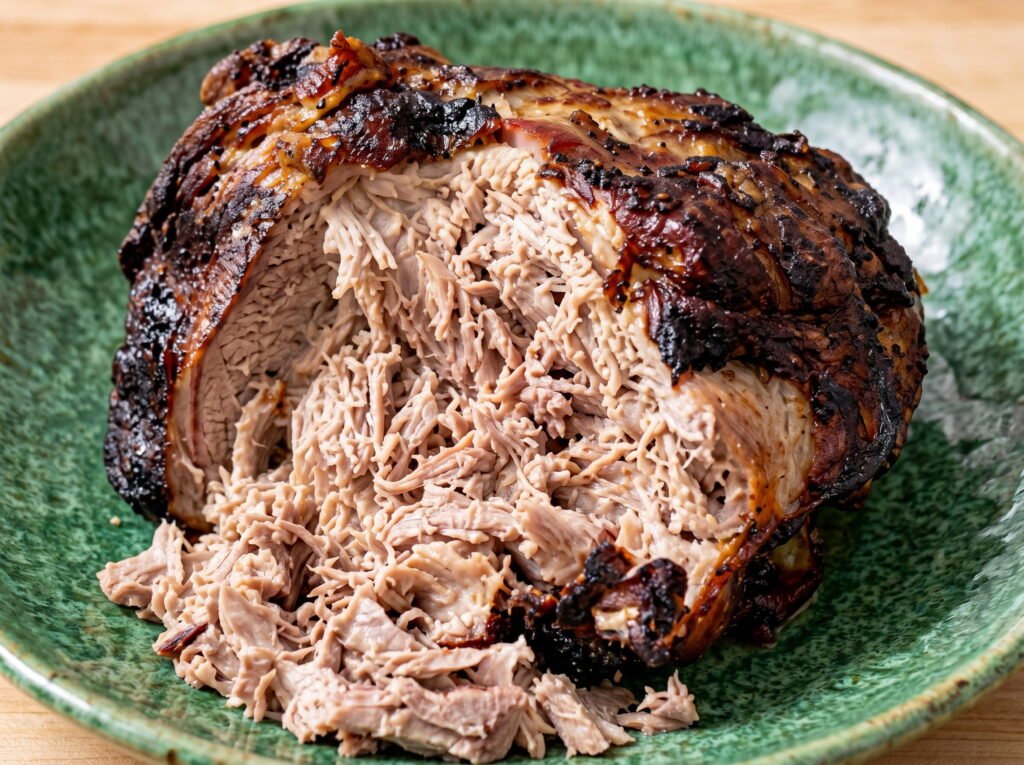
Pernil is slow-roasted pork shoulder and one of the cornerstone dishes of Puerto Rican home cooking. It is the dish that appears at Christmas, at family gatherings, at celebrations — and for good reason.
The pork shoulder is marinated overnight in a paste of garlic, oregano, adobo seasoning, olive oil, and sazón — a Puerto Rican spice blend that includes coriander, cumin, annatto, and garlic powder that gives the meat a deep orange color. It then goes into the oven for hours at low heat, covered, until the meat is completely tender and falling off the bone. Then the temperature goes up and the skin — the cuero — crisps to the same kind of mahogany crackling you get with lechón.
The difference between pernil and lechón is the cooking method and scale. Lechón is the whole pig over a wood fire. Pernil is the shoulder, oven-roasted, and the version you are more likely to find in homes and at fondas rather than at the lechoneras in the mountains.
At a good fonda — one of the small, family-run local restaurants that are the backbone of Puerto Rican everyday eating — a plate of pernil with rice, beans, and tostones costs a few dollars and feeds you completely.
Arroz con Gandules
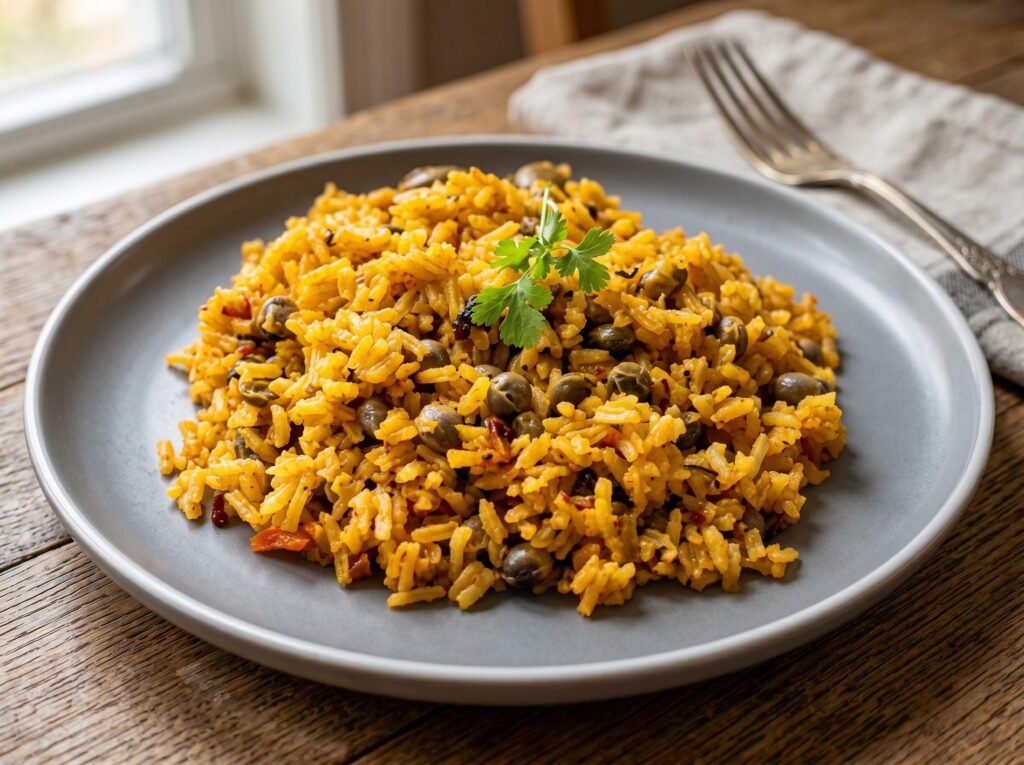
Arroz con gandules is rice cooked with pigeon peas and sofrito, and it is the dish that most clearly shows what Puerto Rican cooking is built on.
Sofrito is the foundation — a cooked blend of recao (culantro), ají dulce peppers, onion, garlic, tomatoes, and herbs that is prepared first and forms the flavor base for the rice. The pigeon peas go in with the rice along with sazón, olives, capers, and sometimes pork. Everything cooks together in one pot until the rice has absorbed all the liquid and the flavors have merged into something that is significantly more complex than its ingredients suggest.
The smell of arroz con gandules cooking is one of the more specific things I remember from the island. It is the smell of sofrito hitting a hot pan — herbal, slightly sweet, deeply savory — and it fills every kitchen and fonda that makes it properly.
Alcapurrias
Alcapurrias are one of Puerto Rico’s most important street foods and the snack that I kept going back to at every beach kiosk and roadside stand I passed.
They are fritters made from a dough of grated green banana and yautía — a starchy root vegetable — mixed together, stuffed with a filling of seasoned ground beef or crab, then deep-fried until the exterior is dark and crisp. The result is a thick, dense fritter with a chewy, slightly gluey exterior from the banana-yautía dough and a savory, well-seasoned filling inside.
They are not delicate. They are not refined. They are street food that has been feeding people on this island for a long time and they taste like it in the best sense — like something that was developed to be satisfying and filling rather than to look good on a plate.
The best alcapurrias I had were at a kiosk at Luquillo Beach, which has a famous row of food stands called El Nuevo Kiosko. You eat them standing up, hot out of the fryer, with a cold drink in the other hand, looking at the ocean. That is the correct way to eat them.
Bacalaítos
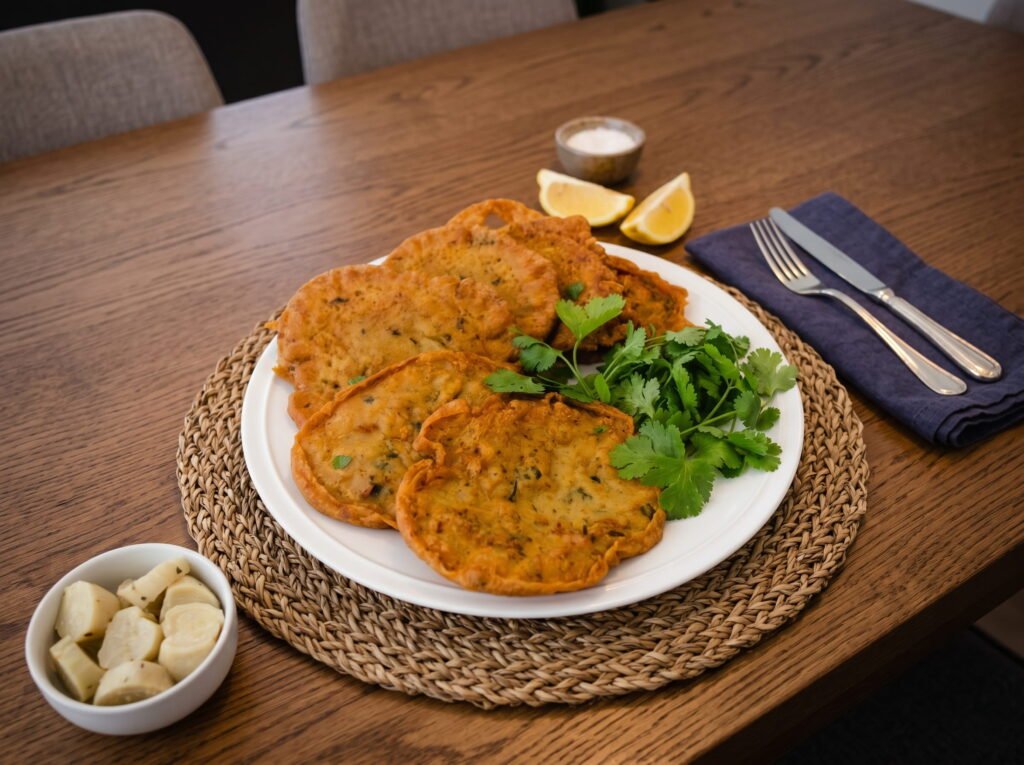
Bacalaítos are fried codfish fritters — thin, crispy, salty, and one of the more addictive things on this list.
Salt cod — bacalao — is soaked to remove most of the salt, then mixed into a thin batter with flour, water, garlic, herbs, and peppers and dropped into hot oil in thin rounds. They fry quickly and come out flat, lacy at the edges, and deeply golden. The texture is crispy throughout — not like a thick fritter but more like a flat, crunchy pancake packed with shredded salt cod.
The saltiness is pronounced even after the soaking process, which is part of what makes them work. They are salty, savory, and crispy in a combination that makes it difficult to stop after one.
Sancocho
Sancocho is a slow-cooked stew that is the closest thing Puerto Rican cooking has to a dish that defines comfort food. It is the kind of food that takes a long time to make properly and tastes like it.
The base is a rich broth built from bones — typically beef, chicken, or pork — cooked down for hours. Into that broth go root vegetables: yautía, ñame, apio, plantain, corn on the cob cut into rounds, and whatever else the cook has available. The result is a thick, heavy, deeply flavored stew that is more of a complete meal than a soup.
It is seasoned with sofrito, sazón, and culantro and served with white rice on the side, which is added directly to the bowl and eaten together with the stew. The combination of the rich broth, the soft root vegetables, and the rice is filling in a way that lasts for hours.
Sancocho is more common at fondas and in home cooking than at tourist-facing restaurants, which means finding a good version requires getting off the main tourist strips. It is also more commonly found on weekends or as a special at certain restaurants rather than as a daily menu item everywhere.
The best version I found was at a roadside fonda in the mountains on the drive toward Guavate. It was served in a large clay bowl, the broth was so dark it was almost brown, and there was enough in the bowl to justify skipping the next meal entirely.
Piraguas
Piraguas are shaved ice cones sold by street vendors from brightly colored pushcarts, and they are one of the most visible and immediately recognizable features of street life in Puerto Rico.
The ice is shaved finely from a large block using a hand tool, packed into a cone-shaped paper cup, and then doused with flavored syrup. The most traditional flavors are tamarind, passion fruit, coconut, cherry, and lime. Some vendors make their own syrups from scratch using real fruit — those are the ones worth seeking out.
A piragua costs almost nothing — usually a dollar or two — and on a hot afternoon in San Juan or at any beach on the island, it is one of the more sensible things you can put in your hands.
There are many other options you can explore. If you liked my tested list, don’t forget to share it with your friends and family. Also, let me know in the comments section which one is your favorite and which one you liked the most.
Read Also




One Response