I’ve been to a lot of countries. Costa Rica still gets me. Every single time. There’s something about this place that just hits differently — the jungle sounds at night, the way the clouds sit on the mountains, the fact that you can drive two hours and go from volcano to beach without blinking. It’s a lot. In the best way.
This isn’t a perfect roundup. Some of these places are touristy. Some require real effort to reach. A few surprised me completely. But all of them are worth your time, and I want to give you the honest version of each one — not the brochure version.
Let’s start with the best things to do in Costa Rica.
I’ve been to a lot of countries. Costa Rica still gets me. Every single time. There’s something about this place that just hits differently — the jungle sounds at night, the way the clouds sit on the mountains, the fact that you can drive two hours and go from volcano to beach without blinking. It’s a lot. In the best way.
This isn’t a perfect roundup. Some of these places are touristy. Some require real effort to reach. A few surprised me completely. But all of them are worth your time, and I want to give you the honest version of each one — not the brochure version.
Let’s start at the beginning.
15. San José — Don’t Write It Off Before You Get There
Every travel guide tells you to skip San José as fast as possible and head somewhere greener. I almost did that on my first trip. Big mistake.
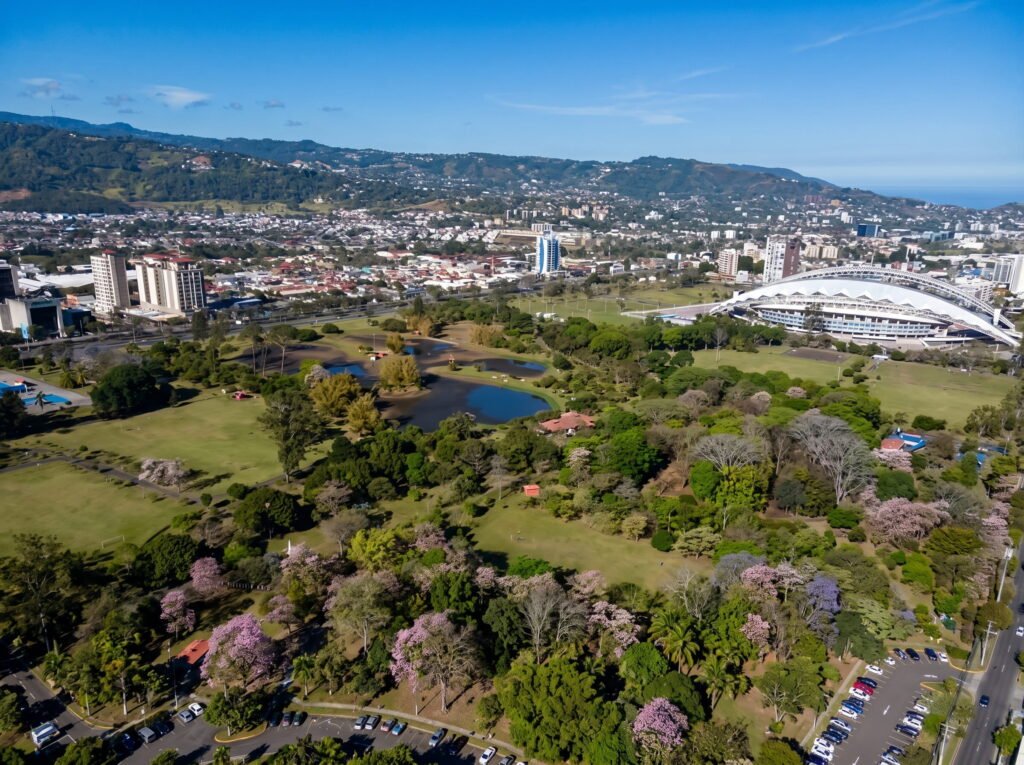
Yes, it’s a city. Yes, it has traffic and noise and all the things cities have. But it’s cleaner than you’d expect, friendly in a way that surprises you, and packed with things worth slowing down for.
The National Museum of Costa Rica alone could eat a full morning. It’s housed in an old military fortress — the building itself is interesting before you even walk inside — and the exhibits cover everything from the country’s pre-Columbian history to its decision to abolish its own military in 1948. That fact alone blew my mind a little.
Plaza de la Cultura sits in the middle of the city and has this great mix of colonial architecture and street life. Spend time there. Wander. The Gold Museum is right underneath it, which sounds strange but works, and the collection of pre-Columbian gold objects is genuinely remarkable — not “museum remarkable,” actually remarkable.
Mercado Central is where I ate the best cheap meal of my entire trip. Loud, crowded, a little chaotic, totally worth it. Get there before noon.
La Sabana Park has botanical gardens that give you a green exhale in the middle of the city noise. Go late afternoon when the light is soft.
A few things to know:
- Most major museums cluster around Plaza de la Cultura — plan those together
- Mercado Central gets packed at lunch; arrive by 11:30 or wait for a seat
- San José works best as a 1–2 day stop, not a week — use it as your launch pad
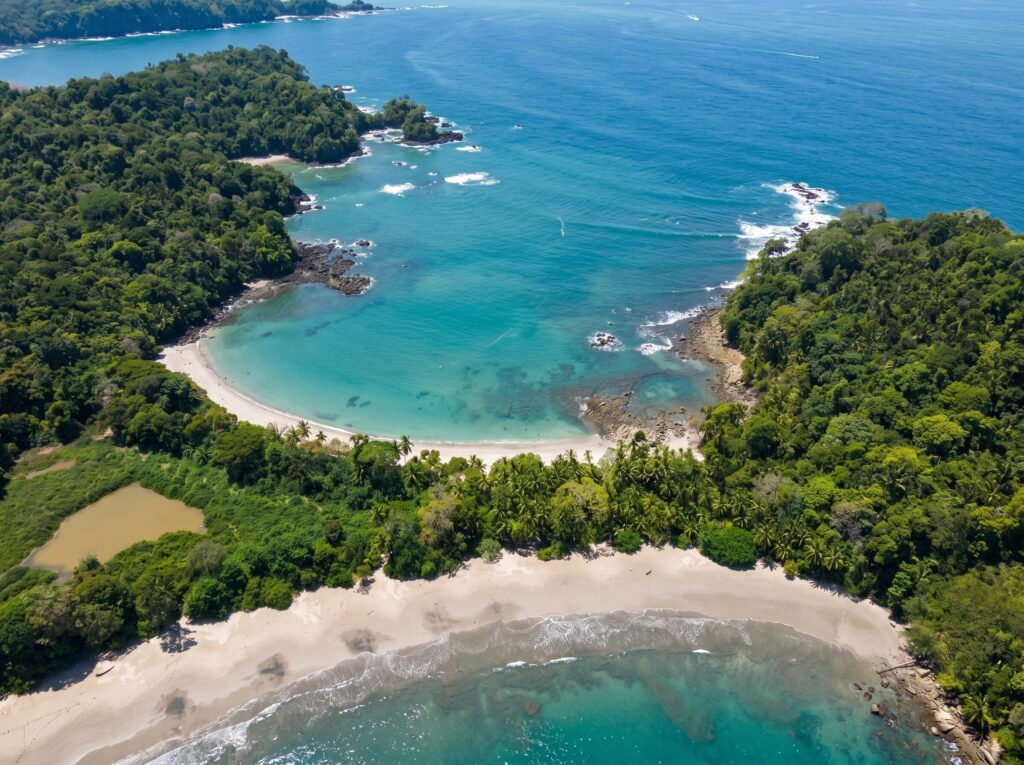
14. Manuel Antonio — It Looks Like It Was Designed to Make You Gasp
Manuel Antonio is on the Pacific coast and it came up in every single conversation I had before my trip. People said it was crowded. People said it was touristy. People said go anyway. They were right on all three counts.
The national park sits right against the coast and what’s inside is extraordinary. White sand beaches curved into the jungle. Water clear enough to see through. Trails that wind past coatimundis who have absolutely zero fear of humans — one walked up to my bag and stared me down until I moved it.
Three species of monkeys live in the park. You won’t have to go looking for them. They’ll find you. Squirrel monkeys, white-faced capuchins, howlers — they’re just everywhere, doing their thing, occasionally stealing snacks from distracted tourists. The sloths are harder to spot but the guides know exactly which trees to check.
The nearby town has hotels and restaurants in every price range. The beach outside the park is good for surfing or just lying there doing nothing while the world goes on without you for a few hours.
13. Arenal Volcano — One of Those Places That Makes You Feel Small in the Best Way
Arenal stands at over 5,000 feet and on a clear day it dominates everything around it. Even from a distance it has this presence. Like it’s watching.
The national park has hiking trails that go through old lava flows — frozen rivers of rock that the jungle is slowly reclaiming. Walking through there feels primordial. Like you’re somewhere that’s been reset and is starting over.
If you catch Arenal on a day with ash columns rising from the summit, that’s something you won’t forget. Flowing lava is rarer and depends on activity levels during your visit, but even without it the volcano delivers.
La Fortuna waterfall is close by and worth the hike down — about 500 steps each way, which sounds fine until you’re coming back up in the heat. The pool at the base is cold and wonderful. The climb back is what earns it.
The hot springs in the area are incredible. Multiple resorts and natural pools within easy reach of the volcano. Sitting in steaming water at night while clouds roll over the volcano above you is the kind of thing that ends up being the story you tell people for years.
Arenal Observatory Lodge is on a macadamia nut farm on the south side of the volcano. If the budget allows, staying there puts you right in it — volcano views at breakfast, trails from the property, the whole thing.
12. Monteverde Cloud Forest — Like Walking Into a Dream Somebody Else Was Having
I did not expect Monteverde to hit me the way it did.
The cloud forest sits on the continental divide and the clouds are not a metaphor — they move through the trees while you’re standing in them. Visibility comes and goes. The whole place is wet and green and alive in a way that feels almost aggressive. Moss on everything. Ferns the size of small trees. Over 250,000 people visit each year and it still manages to feel remote.
The quetzal is the thing everyone hopes to see. It’s electric green and red and looks like something that shouldn’t exist outside of a nature documentary. I spotted one early in the morning with a guide who knew exactly where to look. No guide, I would have walked right past it.
Howler monkeys, colorful frogs, the occasional jaguar sighting if luck is completely on your side — the biodiversity inside this reserve is staggering.
Zip-lining through the canopy here is a different experience than zip-lining elsewhere. You’re above the clouds for parts of it. The sky bridges give you a bird’s-eye perspective on the whole forest — standing on a swaying suspension bridge with the treetops below you and clouds around you is honestly a bit surreal.
11. Tortuguero National Park — 50,000 Turtle Nests a Year. Let That Sink In.
Tortuguero is Costa Rica’s version of the Amazon. That’s not an exaggeration — 77,000 acres of rivers, canals, and dense jungle, accessible mainly by boat or small plane.
Sea turtles come here to nest. TENS OF THOUSANDS of them. The park is considered the birthplace of sea turtle conservation and somewhere around 50,000 nests get laid each year. Nesting season runs May through October. If you’re there during that window, book a turtle safari with a licensed guide. Watching a sea turtle come out of the water at night and lay her eggs on the beach is one of those experiences that’s hard to put into words. It’s slow and ancient and completely overwhelming to witness.
Outside of nesting season there’s still plenty going on. Canal cruises let you drift past monkeys and sloths and birds going about their lives. Tapirs, kinkajous, peccaries — the kind of wildlife list that makes you realize how much of the world is still genuinely wild.
10. Crocodile Bridge — Two Minutes That You’ll Talk About for a Month
This one sounds like a tourist trap. It kind of is. Go anyway.
The Tarcoles River bridge on the main highway south of San José is where American crocodiles have decided to spend their time. You pull off the road, walk out onto the bridge, and look down. There are crocodiles the length of small cars just lying on the riverbanks or drifting through the water below you, completely unbothered.
It takes maybe 15 minutes. There are vendors selling snacks and souvenirs nearby. It’s not a hike or an experience in the deep-wilderness sense. But THOSE CROCODILES are something else. Wild, enormous, and right there.
It’s a perfect break on a longer drive. Stop, stare, take your photos, get back in the car.
9. Tamarindo — For When You Want Everything at Once
Tamarindo sits on the northern Nicoya Peninsula and it’s the kind of beach town that pulls people in and keeps them there longer than they planned.
The surf is the main event. The sandbars at the Estero River mouth shift and create different breaks depending on the swell. The point break at Capitan Suizo is gentler — good for people just getting started. There are surf schools everywhere and the instructors are genuinely good at what they do. I got up on my third try and couldn’t stop grinning about it.
When you’re out of the water, the tropical dry forest and wetlands around town have wildlife that’s easy to access — monkeys, birds, iguanas warming themselves on rocks. Marino Las Baulas National Park is a short drive and between October and March you can watch thousands of leatherback sea turtles come ashore to nest. That’s a big deal — leatherbacks are the largest turtles on the planet.
At night Tamarindo has actual energy. Restaurants, bars, music. It doesn’t pretend to be something quiet and remote. Embrace it.
A few things to know:
- The dry season (December to April) brings the most consistent surf and the biggest crowds
- Rip currents exist — if you’re not a confident swimmer, don’t go in past your waist alone
- Book accommodation ahead during peak weeks; the good spots fill up fast
8. Uvita — Humpback Whales. From the Shore.
Uvita is a small town and most people drive past it on the way somewhere else. That’s their loss.
Marino Ballena National Park is right there. And during whale-watching season — roughly late December through early April — humpback whales come to the area to mate and give birth. You can see them from the shore on a good day. Not like a faraway speck either. Actually see them.
Boat tours get you closer. Local guides who know the water know where the whales tend to be. The park also has the famous whale’s tail — a natural sandbar shaped exactly like a whale’s tail that appears at low tide. Worth timing your visit around it.
Even outside whale season, the park has good snorkeling and the beaches are much less crowded than the more famous spots further north. Sometimes that alone is worth making the detour.
7. Corcovado National Park — The Real Thing
National Geographic called this the most biologically intense place on earth. That description has stuck around because nothing better has come along to replace it.
Corcovado is on the remote Osa Peninsula in the southwest corner of the country. Getting there takes effort — the most practical route is by boat from Drake Bay or Puerto Jimenez. There are no crowds here in the way there are crowds at Manuel Antonio. There are no easy paved paths and gift shops nearby. Just 164 square miles of wild, dense jungle where tapirs and anteaters and scarlet macaws and venomous snakes all exist in the same space.
The Sirena Trail is the most trafficked route and still delivers consistently — coatis, pumas, wild pigs, toucans. The Los Patos trek goes through cloud forest past waterfalls. The San Pedrillo Trail winds through purple heart and mahogany trees that have been growing for longer than you want to think about.
Deserted Pacific beaches are the reward for days of hiking. Whale watching from the coast. Carate Beach with almost nobody on it.
6. Cahuita — The Slowest Good Day You’ll Have
Cahuita is tiny. One bar that gets lively sometimes. A main street that doesn’t take long to walk. And absolutely nobody there who seems to be in any hurry.
The Afro-Caribbean culture runs through everything here — the food, the music, the whole rhythm of the place. Rice and beans made with coconut milk. Fresh fish. Flavors you won’t find anywhere else in the country.
Cahuita National Park sits right on the edge of town and the snorkeling inside is stunning. Coral reefs in water so clear and turquoise you almost can’t believe it’s real. Manta rays, sea cucumbers, fish that look painted. The hiking trails through the coastal rainforest echo with howler monkeys — that sound carries like nothing else and it took me a second to realize what it was the first time I heard it.
The pace of Cahuita is the thing. You show up planning to stay two nights and then suddenly it’s been five days and you’ve read two books and eaten your weight in fresh seafood and done almost nothing on any kind of schedule. That’s not an accident. That’s what this place does to you.
5. Cerro Chirripó — For People Who Want to Earn Their View
Costa Rica’s highest peak. Over 12,500 feet of elevation gain. A two or three day slog covering about 25 miles round trip. This one is not for everyone.
But if you’re someone who responds to the idea of standing on a summit and seeing both the Pacific and Caribbean at the same time on a clear day — two oceans from a single vantage point — then Chirripó is calling you.
The hike starts in montane forest and the canopy overhead gradually changes as you climb. Eventually you break out into the Talamancan páramo, a high-altitude grassland that feels completely unlike anywhere lower on the mountain. Rare plants. Cold air. A silence that’s different from jungle silence.
Quetzal sightings happen on the way up if you go early. Endangered monkey species too. The mountain rewards patience.
4. Rio Celeste — That Color Isn’t Real. Except It Is.
Rio Celeste sits inside Tenorio Volcano National Park and the waterfall here is bright blue. Not metaphorically blue. Not “blueish.” BRIGHT ELECTRIC BLUE, the kind you’d expect from a filter applied to a photo, except no filter was applied.
The color comes from a chemical reaction — minerals in the water interact with sunlight in a way that produces that specific shade and it changes slightly depending on the angle and time of day. The science makes it less magical exactly zero percent.
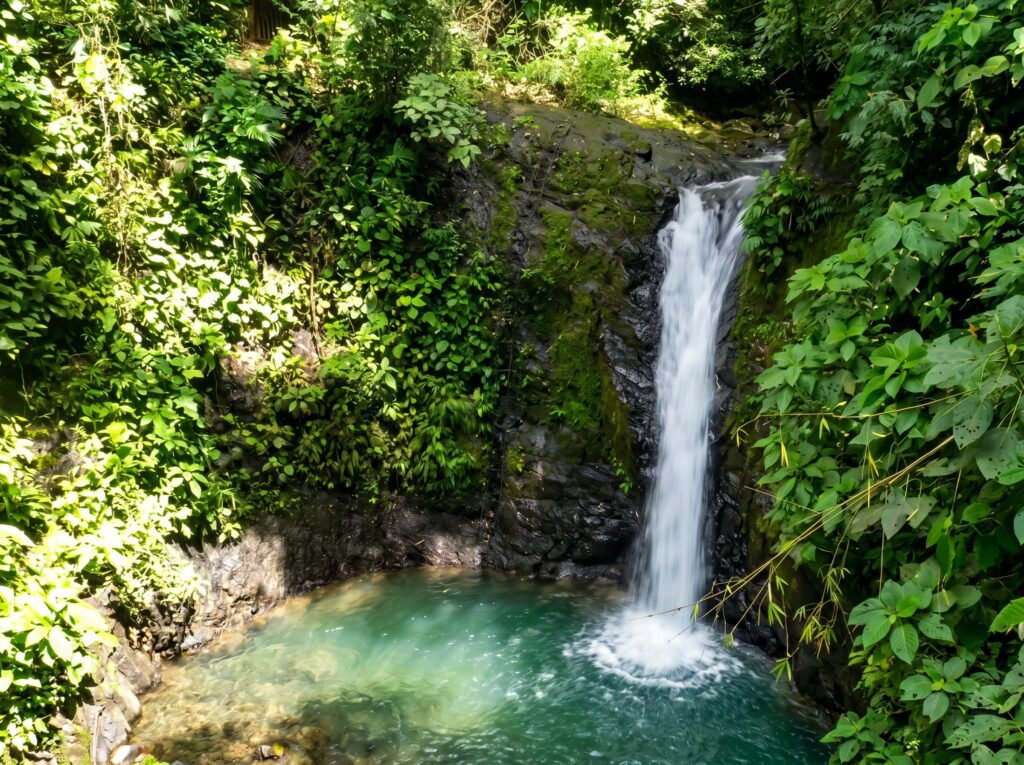
The hike to the waterfall is manageable — a couple miles through forest that’s beautiful in its own right. The pool at the base is clear and cold and perfect. You can swim there. You should swim there.
Guided tours are available if you want context about the geology and the ecosystem around the river. The whole area is worth understanding beyond just the waterfall itself.
3. Santa Teresa — The Town That Keeps People Longer Than They Planned
At the southern tip of the Nicoya Peninsula, Santa Teresa operates on a completely different schedule from the rest of the world.
The surf here is the draw for most people who come. A-frame waves that break consistently, intermediate-friendly but with enough punch to challenge experienced surfers too. Surf shops, board rentals, lessons for beginners — the infrastructure for getting in the water is everywhere and unpretentious about it.
But people stay for everything else. The yoga studios. The food — genuinely great food from all over, sitting right there on a beach road with chickens wandering past outside. The forests behind town. The warm water at sunset when the light goes orange and everyone on the beach seems to exhale at the same moment.
The Montezuma Waterfall is a hike away through jungle and emerges into a series of plunge pools and cascading drops that feel genuinely dramatic. Not a quick stop — budget a half day for the full experience.
Santa Teresa has nightlife too if that’s what you need. International DJs, outdoor spots, dancing that goes late. It’s not trying to be a quiet escape. It’s alive in the daytime and alive at night, and somehow both versions coexist without one ruining the other.
Weeks turn into months here for some people. I get it completely.
2. Diamante Eco Adventure Park — Zip Down a Mountain Head First. Yes Really.
I’ll be honest — I almost skipped this one. Adventure parks can feel like manufactured experiences. This one is not that.
The wildlife at Diamante is real and looked after. On-site biologists care for animals that can’t be released back into the wild — jaguars, pumas, sloths, monkeys. You’re not watching a show. You’re walking through actual habitat and the animals are just doing what they do. The butterfly enclosure is one of those places where you stand very still and wait and eventually a butterfly lands on your arm and you feel weirdly honored by it.
The zip-line is something else entirely. The Superman course has you jumping off a mountaintop and zipping a full mile toward the ocean HEAD FIRST. Not seated. Head first. I have never made a sound like that in my life.
Day passes with lunch let you move through everything at your own pace. The Cultural Experience tour is worth it if you want more context — guides walk you through local plants, Tico food traditions, and the kind of daily life stuff that doesn’t show up in guidebooks.
1. Irazú Volcano National Park — Standing on Top of the Whole Country
Costa Rica’s tallest active volcano sits at over 11,000 feet and you can drive to the summit. That still gets me. You just drive up.
What you find at the top is a lunar landscape. Craters. Pyroclastic rock. The kind of scenery that makes your brain reach for comparisons and come up short. The Principal Crater is over 3,400 feet across and nearly 1,000 feet deep — standing at the edge of it produces a particular kind of vertigo that isn’t quite fear but isn’t entirely comfortable either.
The Diego de la Haya Crater holds a small lake that shifts between lime green and red depending on conditions. I saw it green and the color was so wrong and so perfect at the same time that I just stood there for a few minutes without saying anything.
On a truly clear day — and this requires some luck with timing — you can see both the Pacific and the Caribbean from the summit. Two oceans from one volcano. The park was established in 1965 and covers 22 square miles of terrain that ranges from rainforest to cloud forest to lava fields to páramo.
Hot springs, waterfalls, and crater lakes all inside the same park boundary.
The most recent major eruption was around 20 years ago, which is recent enough to remind you that this place is alive.
2 Responses